Aluminum finishes – which will enhance your CNC aluminum parts
The excellent properties of aluminum make it a regular choice for CNC machining. It has an excellent strength-to-weight ratio, favorable corrosion resistance, great thermal and electrical conductivity and more. Though it may be enough for some applications, engineers often add an additional finishing step to the CNC machining process.
Why do engineers do that? That is because surface treatment improves corrosion resistance, wear resistance and aesthetics, making CNC aluminum parts last longer and look better.
Keep reading for more information.
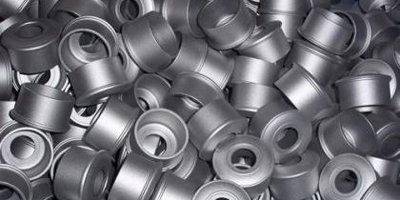
Importance of Aluminum Finishes
Corrosion resistance
Alumina is naturally resistant to corrosion, but this property can be further improved with finishes. Surface treatment ensures a longer service life for aluminum products in corrosive substances and harsh environments.
Anti-ultraviolet
Aluminum finishes are ideal for outdoor applications, including buildings that are exposed to the sun for long periods of time, which can cause fading and deterioration of aluminum components.
Lubricity
Suitable for reducing friction and enhancing surface lubrication of aluminum alloys.
…
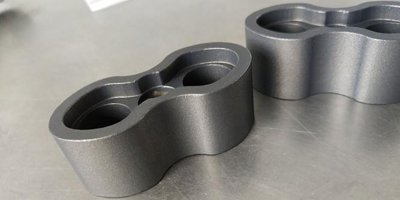
Methods of surface treatment
1. Chromising
Refer to the process of creating a chromate layer on the surface of a metal by the action of a chromate solution on the metal.
The surface of the product will form a layer of chemical conversion film, with a thickness of 0.5-4um, which has good adsorption properties and is mainly used as a coating base layer. Available in golden yellow, aluminum color, green and more, but it is soft and not wear-resistant.
Machining processes: degreasing – oil removing – chromising – packaging
Requests: uniform color, meticulous film layer without roughness, and thickness is 0.3-4um.
2. Anodic oxidation
The process of forming an oxide film on an aluminum product by applying an electric current under the appropriate electrolyte and specific process conditions.
Make the product surface form a uniform, dense oxidized layer, which can make the surface hardness of the product reach 200-300HV. Specialty products can have a hard anodizing, which can make the product surface hardness up to 400-1200HV. Anodic oxidation can greatly improve the wear resistance of the product.
The difference between anodic oxidation and hard anodizing is that the previous can be colored and is more decorative than the latter. However, anodic oxidation is very strict on material requirements, and different material surfaces will have different decorative effects.
Machining processes: oil removing – alkaline etching – chemical polishing – neutralizing – acid etching and sanding – neutralizing – anodizing – dyeing – hole sealing – hot water washing – drying
Requests:
1) No mottling, rainbow colors, bruises and white spots.
2) The thickness of the film is 5-25um, the hardness is above 200HV, and the color change rate of the hole sealing test is less than 5%.
3) Salt fog test beyond 36 hours.
4) Die-cast aluminum cannot be anodized, such as A380, A365, A382.
3. Sand blasting
The process of cleaning and roughening the surface of a substrate by using the impact of a high-speed sand stream.
Used to remove debris from the surface of aluminum parts, providing a wide range of textures. Sand blasting can be used to build up the surface of an aluminum profile or to eliminate surface contaminants. It is the most thorough, versatile, quick and efficient method of cleaning.
Classification of machining methods:
Forced and inspiratory
Dry-type and liquid
Open and box type
Manual and automatic
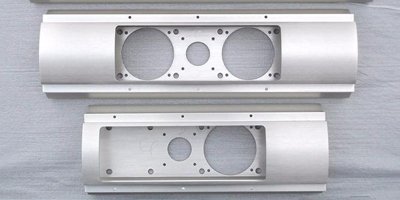
4. Electroplating
The use of electrolysis to make the surface of metal or other materials attached to a layer of metal film, which prevents metal oxidation (such as corrosion), improves abrasion resistance, electrical conductivity, reflectivity, corrosion resistance and enhances the role of aesthetics and so on.
Since aluminum is an active metal, the plated materials are all more active than aluminum. The appropriate chemical conversion must be done before plating.
Benefits of aluminum electroplating:
1) Improve surface hardness and wear resistance.
2) Reduce the coefficient of friction and improve lubricity.
3) Enhance surface conductivity.
4) Increase corrosion resistance, including combinations with other metals.
5) Easy to weld.
6) Raise the reflectivity.
7) Repair dimensional tolerances.
Machining processes: degreasing – alkaline etching – activation – displacement reaction of zinc – activation – electroplating (such as nickle, zinc and copper) – chrome plating or passivation – drying
Requests:
1) No yellowing, pinholes, burrs, blisters, bruises, scratches and other undesirable phenomena in appearance.
2) The thickness of the film is 15um or more, and the salt spray test lasts 48 hours.
3) Pass the bending test at 60 degrees.
5. Coating
Coating is divided into dip coating, spraying, drenching, rolling and brushing. It is suitable for all aluminum materials due to its good corrosion resistance, low price and color range.
The working principle of static coating:
Under the action of atomizing air pressure, the paint becomes finer and more uniform, and then evenly sprayed on the surface of the workpiece under the action of working air pressure and spinning cup or nozzle.
Since the distance between the spray gun and the workpiece on the same vertical plane is equal, the electric field strength is also the same, so the positive and negative charges are attracted to each other, and the surface of the workpiece is coated with a uniform layer of organic resin coating.
Then high temperature baking makes the resin firmly set on the surface of the workpiece to achieve the role of protecting the workpiece.
Machining processes: grinding – degreasing – antioxidant film removing – chromizing – powder or liquid spraying – baking
Common abnormalities and handling methods
| Issue | Reason | Measure |
| Tangerine peel | 1. Spray thickly
2. Mismatch of oventemperature 3. Poor quality of coating |
1. Adjust the spit of the spray gun
2. Adjust the temperature 3. Improve coating quality |
| Paint chipping | 1. Poor pre-processing.
2. Not hot enough to bake. |
1. Enhance pre-treatment
2. Adjust the temperature |
| Surface exposed | 1. Spray too thinly or not enough
2. Incomplete mechanical pre-treatment |
Change of operating method |
| Aberration | 1. The coating itself
2. Non-standard operation |
|
| Sagging | 1. Poor quality of coating
2. Spray thickly |
|
| Pinhole | 1. Oil on workpiece
2. Spray thinly |
Machining workpieces according to standards
during pre-machining |
Factors to be considered
Applications and environments
For indoor or outdoor applications. Outdoor usually requires specific surface treatment processes to increase resistance to corrosive substances, temperature fluctuations and UV radiation.
Appearances
Select the ideal surface for your design needs on demand. Aluminum in different finishes is available in a wide range of colors, textures and gloss levels.
Maintenance and durability
Select finishes for desired durability based on expected service life. Certain finishes make it easier to clean and maintain aluminum surfaces.
Cost
There’s a big difference in upfront costs, so it’s best to choose the right finish by considering your budget. Choosing a more durable finish can reduce long-term costs and can make up for the high initial cost.
Summary
All in all, aluminum surface treatment is a great idea to get more benefit from your products. Aluminum can be used in a variety of applications through diverse surface treatments.
Good properties of aluminum are important, but great CNC machining techniques are even more important.
Consider which finish is better suited for your product when you’re starting a new project.CYCO, the experts in CNC machining, work with us in order to enhance your products.
In order to avoid wasting your valuable time, you can choose CYCO as your partner without any hesitation!
Work with us for a worry-free experience now!