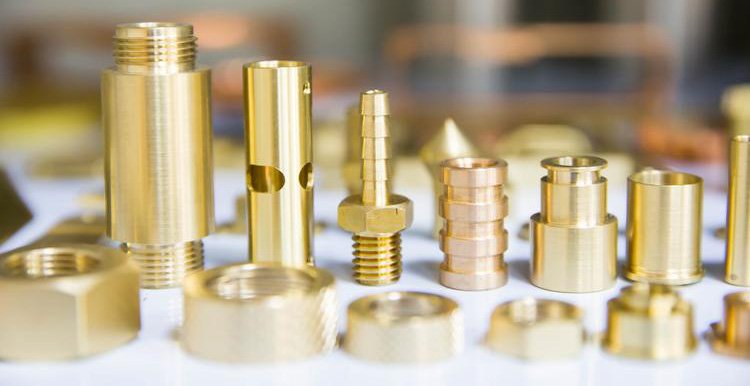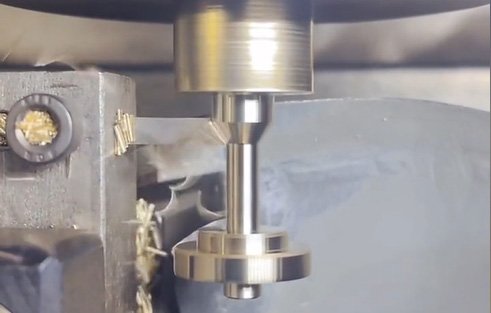
5 axis CNC machining, which uses cutting tools working on 5 axis to cut a workpiece into the desired shape and size, is one of the most advanced techniques available today, offering unlimited possibilities for part manufacturing. The increase of axis number gives the 5-axis milling machine superior performance than comparable milling machines, and provides higher accuracy, efficiency and reliability. Many reliable CNC machining service providers rely on this technology for precision CNC machining services.
In this article we will explain about 5 axis machining in detail, which will help you to fully understand and utilize 5 axis technology.
What is 5 axis CNC machining
5 axis CNC machining is very efficient in machining part sizes and shapes with unlimited possibilities. The process involves the cutting tool moving in five axes simultaneously, including three linear axes (X, Y, Z) and two rotary axes (A and B). They have different movement patterns to fulfill different technical requirements.
During machining, the workpiece is clamped to an indexing chuck or table. The spindle head assembly moves in unison with the chuck or indexing table along the travel column to precisely manipulate the workpiece and cutting tool to achieve the correct tool path for removing the material.
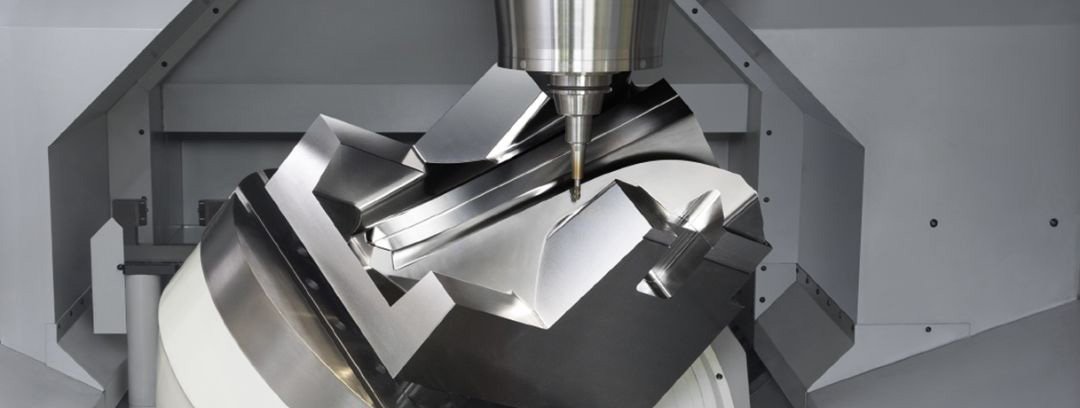
Structure of 5 axis CNC machine tools
1. Rotary spindle head: a variable-speed spindle clamps a rotary cutting tool that moves in the Y-axis (front to back) and rotates in the B-axis.
2. Cutting tools: a machine tool cuts material from a workpiece to create a part.
3. Traveling column: the Z-axis (left to right) and X-axis (top to bottom) columns are the travels of the rotary spindle head and cutting tool.
4. Spindle: the main chuck clamps the workpiece and rotates up to 2,500 RPM in the C-axis and is capable of moving in the Z-axis.
5. Subspindle: assist chucks to hold workpieces, rotate in the C-axis with speeds up to 2,500 RPM, and be able to move in the Z-axis.
6. CNC control plate: an interface used by machinists to program and control the way a CNC machine tool operates.
Classification of 5 axis machine tools
We can categorize them into the following 5 types:
1. Double rotary head form with two rotary coordinates control on the cutter axis.
2. Dropped rotary head form with two rotary axes not vertical to the linear axis on the top of the cutter.
3. Double rotary head form with two coordinates to control space rotation.
4. Dropped table with two axes not vertical to the axes on the table.
5. One swing and one rotary form with two rotary coordinates on the tool and the workpiece.
Types of 5 axis CNC machine tools
5 axis machine tools can enhance your machining process and increase scalability. These machining centers can be available in a variety of types to meet machining needs.
The three main types of 5 axis CNC machine tools are:
Head/Head
This type of rotary axis in a CNC machine is located in the head area and the tops of all these 5 axes are on a specific platform and move towards the platform that holds the workpiece. It makes this type of machine best suited for large part production because of the limited movement of the rotary axes and tilt.
Table/Head
In this machine, one rotary axis is located in the table and the other in the head. The rotary axis in the head is in a limited range, while the rotary axis in the table has an unlimited range. This setup is beneficial because it can continuously rotate the workpiece without any restrictions, but there is a limit to the number of parts it can produce. This is due to the fact that the workpiece rests on the rotating axis.
Table/Table
In the setup, the rotary axis of the 5-axis machine is located inside the table. Therefore, all rotation occurs on the table and the head does not move. However, it is not ideal for machining large or heavy parts, the limitation is because the table cannot hold too much weight.
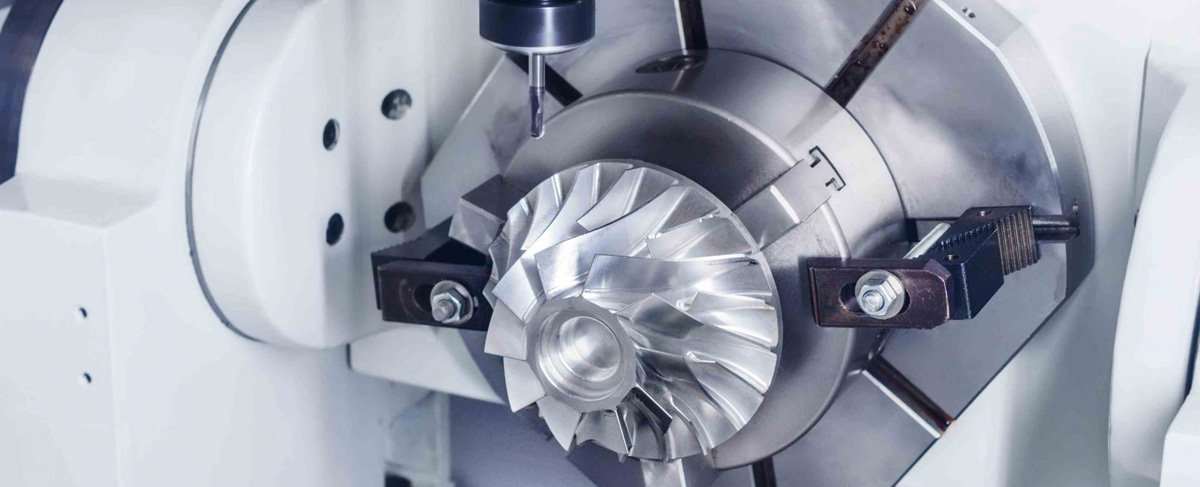
How do 5 axis machines work?
Like any other CNC machine, 5 axis CNC machines rely on computerized commands. Programming instructions for the machine control the movement of the cutting tool and the workpiece. 5 axis CNC machining starts with the creation of a CAD model, which is then imported into CAM software and converted into a running program.
The program contains toolpaths created according to the geometry of the desired part. The commands control the movement of the cutting tool along the linear axis and also control the movement of the table in the direction of the rotary axis to create the desired part.
The process allows machining of 5 sides of a workpiece in a single setup. As a result, it saves manufacturing time and costs, helping you get your product to market faster. However, please note that the speed and direction of movement depends on the type and configuration of the 5-axis machine.
Advantages of 5 axis CNC machining
The 5 axis machining is characterized by high efficiency and high precision, which not only can complete the tasks of complex parts, but also can improve the efficiency of the process and reduce the workflow.
Simple setup operation
5 axis CNC machines allow five surfaces to be machined simultaneously. With traditional 3 axis machining, you may need multiple setups to process parts with multiple faces, but 5 axis technology completes the machining of parts with multiple faces in a single setup. This allows you to manufacture complex components with complex geometries in fewer setups.
Optimal cutting conditions
During 3 axis cutting, once the tool moves towards the top or edge area of the workpiece, the cutting efficiency will gradually decrease. In order to obtain the best cutting conditions during the actual machining process, we need to rotate the table direction to different angles. For irregular flat surfaces, we have to rotate the table several times in all directions. It is clear that 5 axis machining results in better surface quality.
Improvement of machining accuracy
Since additional settings will result in more errors, 5 aixs machining with minimal settings required will significantly improve the accuracy, it also extends the life of the cutting tool. 5 axis machining allows the production of complex parts with reduced machining times and improved machining tolerances.
High quality surface finish
Since the tool of a 5 axis machine is closer to the workpiece, which will reduce tool vibration and achieve a high quality surface finish. Even for complex shapes, the additional movement of 5 axes will guarantee sufficient manufacturing space.
High cutting speed
It allows the tool to remove more material with each rotation, which reduces cycle times and overall machining costs.
Disadvantages of 5 axis CNC machining
5 axis CNC machining technology is widely used for complex surfaces as it plays an important role in the manufacturing and production industry. However, 5 axis machining is not so widespread due to the following reasons.
High initial cost
The cost of purchasing a 5 axis CNC machine and its basic software is high. It is much higher than what is required for a 3 axis machining center. Similarly, the maintenance requirements of the machine are quite challenging compared to traditional machine tools. This aspect also directly increases the cost of machining 5 axis machined parts.
Complex and difficult programming
Multiple coordinate transformations and complex spatial geometric operations need to be conveyed during the programming process. In addition, the coordination of each motion axis should be considered to avoid interference and collision. Programming is much more difficult in order to obtain higher machining accuracy and surface quality.
High technical requirements
Advanced technology requires a higher level of operation. 5 axis CNC machining requires highly skilled operators from single programming to machining operations.
Common applications for 5 axis CNC machining
Suitable for applications in multiple industries that require high precision, complex shapes and tight tolerances.
Aerospace parts
Aerospace parts are unique and geometrically complex and should be kept as precise as possible, making 5 axis machining the ideal technology of choice.
Medical equipment
The high demand for quality and precision in the manufacture of medical devices is unquestionable.
Energy production
The energy industry often requires complex and advanced components, including solar power systems and power stations.
Conclusion
5 axis CNC machines simplify the manufacturing process, ensuring faster and more cost-effective production with improved precision and accuracy, but they are not suitable for all designs.
It is important to contact a CNC machining expert before your project begins, and CYCO is the leading CNC machining service provider in the industry.
With more than two decades of CNC machining experience and a professional team, you can fully trust our CNC machining services.
In order to avoid wasting your valuable time, you can choose CYCO as your partner without any hesitation!
Work with us for a worry-free experience now!