CNC machining is a field that requires precision and accuracy. The concepts of tolerance and allowance play a vital role in achieving these goals, but they are often misunderstood and misused. In this article, we will delve into the field of CNC machining with a deeper exploration of tolerance and allowance.
What Is Tolerance In CNC Machining?
Tolerance is a concept that plays a vital role in the design, manufacture and assembly of mechanical and electronic systems. Tolerances are used to ensure that parts fit together correctly and meet the required level of accuracy, also used to quantify unexpected deviations in the dimensions of machined parts.
It is well known that even the most sophisticated CNC machines cannot always produce parts with complete dimensional accuracy, as no machine is absolutely perfect.
The goal of engineers and machinists is to use their skills to reduce these deviations to acceptable limits defined by tolerances, which set upper and lower limits on the dimensions that can be deviated from.
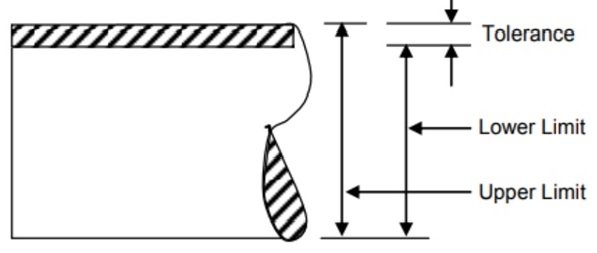
Tolerances are usually expressed using a combination of numbers and symbols, with the most common notation following the ISO standard. For example, “Ø25 ± 0.05”, where Ø25 is the nominal dimension and ±0.05 is the tolerance, indicating that the actual dimensions range from 24.95 to 25.05.
Types of Tolerance
Geometric Tolerance
Used to control the features, shape, orientation, position and other geometric properties of a part, including flatness, squareness, concentricity and parallelism.
Dimensional Tolerance
Relate to linear measurements such as length, width, height and diameter. They specify the allowable variation in these dimensions.
Important Uses of Tolerance
Ensure interchangeability
Make sure that parts produced by different manufacturers or in different production batches can be interchanged without problems.
Adapt to manufacturing variations
During manufacturing, variation is inevitable due to tool wear, temperature and material properties.
Control fit and clearance
Tolerances determine how parts fit together. For example, tight tolerances create tight fits, while looser tolerances can simplify assembly.
Tolerance stacking
Tolerances can accumulate in complex assemblies, which can lead to potential problems if not managed properly. Tolerance stacking analysis is used to ensure that the cumulative effect of tolerances on multiple parts is within acceptable limits.
Inspection and quality control
Tolerances are critical in the quality control and inspection process. Measuring and verifying that parts conform to specified tolerances is a critical aspect of ensuring product quality.
Design considerations
Engineers must carefully consider tolerances during design. It is critical to strike a balance between accuracy and practicality. Too tight tolerances can lead to increased production costs and assembly difficulties, while too loose tolerances can jeopardize product performance and safety.
Importance of Tolerance in Production
Tolerances serve a vital role in all aspects of the manufacturing process, and their significance extends to product quality, cost-effectiveness, safety, and efficiency.
Here are a few of the key reasons why tolerances are vital in manufacturing:
Quality control
Tolerances are critical to maintaining product quality. By specifying acceptable limits of variation, manufacturers ensure that each component or product meets the expected standards. This consistency is critical to meeting customer expectations and regulatory requirements.
Interchangeability
Tolerances make parts interchangeable. When components have well-defined tolerances, parts from different suppliers or production lots can be used interchangeably, which simplifies product maintenance and repair. This is especially important in industries such as automotive, aerospace and consumer electronics.
Assembly
Proper tolerances facilitate assembly. When parts fit together as intended, it reduces the need for adjustments, rework or manual assembly, ultimately increasing productivity and reducing the risk of component damage during assembly.
Cost management
Tolerances have a significant impact on production costs. Tighter tolerances typically require more precise machining, which can increase manufacturing costs. On the other hand, looser tolerances can lead to more material waste, rework and production time.
Preventing scrap and rework
Accurate tolerances help minimize scrap and rework. When parts are consistently within specified tolerances, there is less waste due to nonconformity, which reduces production costs and improves resource utilization.
Performance and safety
Tolerances are directly related to product functionality and safety. For critical applications such as aerospace or medical equipment, deviations beyond specified tolerances can lead to catastrophic failures. Maintaining the required accuracy ensures that products function as intended and do not pose a safety risk to users.
Predictability and reliability
Tolerances provide predictability in the manufacturing process. Manufacturers can anticipate variability in their products, making it easier to plan maintenance, inventory and quality control.
Predictability also improves product reliability because consistent dimensions and characteristics reduce unexpected failures.
Regulatory compliance
Many industries are bound by stringent regulations and standards that specify tolerances and quality requirements. Deviations from specified tolerances can lead to non-compliance and legal consequences.
Customer satisfaction
Products that consistently meet specified tolerances are more satisfying to customers. Inconsistent quality due to poor tolerance control can lead to customer complaints, returns and damage to the reputation of the company.
Competitiveness
Tolerances enable a company to produce high quality products efficiently, reduce costs and improve its reputation in the market. Customers usually prefer suppliers who can deliver reliable products.
What Is Allowance In CNC Machining?
Allowances are intentional deviations or clearances that are predetermined to ensure the parts will fit together and function properly. Allowances are an important aspect of engineering design because they affect the performance, safety and function of the final product.
Purpose of Allowance
Allowances are used to achieve the following objectives:
Interference fit
Ensure that parts are securely and tightly joined together and provide excellent torque transfer, load carrying capacity, and resistance to disassembly, which is commonly found in applications that require a rigid connection.
Clearance fit
Allows for easy assembly, disassembly and relative movement between parts, which is important in applications requiring free movement, such as in rotating shafts or sliding parts.
Temperature effects
Allowances can be adjusted to account for temperature changes. Expansion and contraction will affect the dimensions of the material, so allowances help maintain a proper fit at different temperatures.
Materials and lubrication
The choice of material and the use of lubrication can affect the allowances, as lubrication reduces friction and affects clearances.
Design considerations
Engineers must consider the intended function of the component, the material, and the operating conditions carefully when specifying allowances. The design should strike the proper balance between tight fit and clearance of load-bearing components to facilitate assembly and relative motion.
Standards and codes
Various engineering standards and codes, such as ISO, ANSI, and ASME, provide guidelines and tables for selecting appropriate allowances for different applications.
Importance Of Allowance In Production
It is well known that the tolerances of individual parts are chosen based on actual manufacturing constraints. This is the reason why machinists devote extra attention and resources to parts, as this also translates into precise allowance and tolerance ranges.
As mentioned above, allowance is a design feature that is used to define planned deviations in the dimensions of mating components. If neither mating component is machined to the specified allowance, the engineering fit will not work properly.
Difference Between Tolerance and Allowance
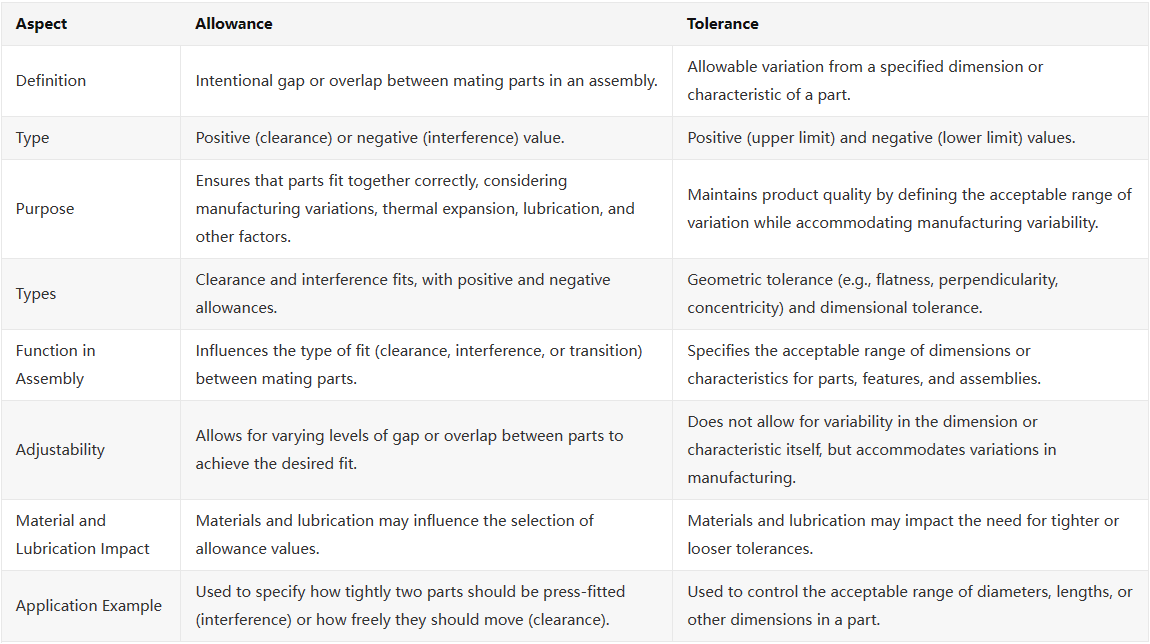
Now we can take a closer look at how allowance and tolerance differ and why they are often confused with each other.
The following picture summarizes their differences.
Conclusion
As we have discussed, tolerances are acceptable ranges of variation in the specified dimensions of a part, which ensure that the product maintains consistent quality and conforms to standards. Tolerances play an important role in quality control, enabling engineers to design and manufacture parts that fit together precisely.
On the other hand, allowances indicate intentional deviations or gaps between parts. It determines the level of interference or clearance between these parts and ensures that they fit together correctly. Allowance is critical to specifying the fit of parts, which requires a balance between tight joints and ease of assembly.
They are interrelated but different.
Why CYCO
CYCO is an industrial specialist in rapid manufacturing and prototyping services including CNC precision machining. Our state-of-the-art CNC machines coupled with our experienced team allow us to meet high quality production and exacting standards.
Whether you need tight tolerances on critical components or the right allowance to work with your project, we are your go-to partner.
Contact us immediately for any needs!