

Anodizing Finishing Services
CYCOSPRAY provides quality anodizing services to enhance the durability and aesthetics of parts.
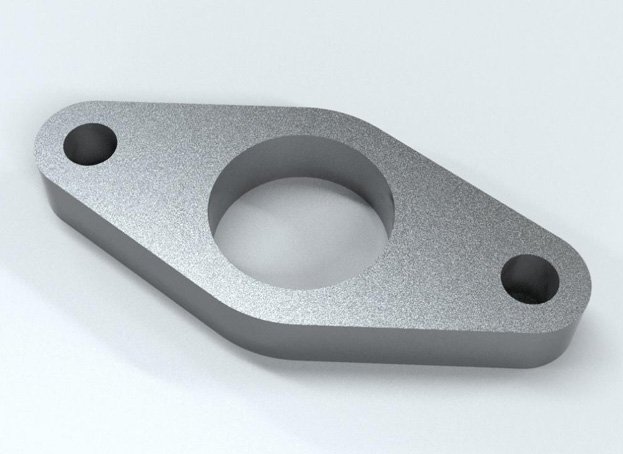
Overview of Anodizing
Anodizing is an electrochemical process used primarily for the surface treatment of aluminum and aluminum alloys. In this process, an aluminum or aluminum alloy part is placed into an electrolyte as an anode and an electric current is applied. Under the action of the current, an oxidation reaction occurs on the surface of the aluminum, forming a dense oxide film.
The main purpose of anodizing is to improve the corrosion and abrasion resistance of aluminum and to give it various appearance effects. After anodizing, a porous oxide film forms on the surface of the aluminum, which adsorbs dyes and other compounds to change its color and texture. In addition, due to the porous structure of the oxide film, subsequent coatings are better able to adhere to the surface, thus improving the overall performance of the coating.
Processes of Anodizing
- Preparation: Preparation of the metal surface is required prior to anodizing. This may include the removal of grease, dirt and oxides to ensure that the metal surface is clean.
- Preparation of the electrolyzer: This contains an acidic electrolyte, usually sulfuric or oxalic acid. The electrolyzer also contains a cathode, usually made of aluminum or lead.
- Energized: A direct current is flowed into the electrolyzer so that the metal part becomes the anode in the electrolyte. The density of the current and the duration of the flow will affect the formation of the oxide film.
- Oxidation: The key step in changing the surface properties of the metal. In an electrolyzer, the metal on the anode reacts with the oxygen in the electrolyte to form an oxide film. The thickness of the oxide film can be controlled by adjusting the current density and electrolysis time.
- Sealing treatment: After completion of the oxidation, a sealing treatment is usually applied to improve the sealing and corrosion resistance of the oxide film. This may include hot sealing (by heating) or cold sealing (by chemical means).
The execution of conductivity restoration and coloring can be selected according to specific needs.
Benefits of Anodizing
Improved Corrosion Resistance
The formed oxide film significantly improves the corrosion resistance of the metal, preventing the metal surface from being eroded by environmental factors such as moisture and chemicals.
Aesthetics
Oxide films can take on different appearances, including a metal luster and various colors. This provides an aesthetic appearance for decorative and design applications.
Insulation
The oxide film formed by anodizing is an insulator, which helps prevent electrolytic corrosion of metal surfaces and provides insulating properties in some applications.
Thermal Resistance
Oxide films have poor thermal conductivity, so anodized metals may reduce thermal conductivity to some extent for some application scenarios that require reduced thermal conductivity.
Improved Wear Resistance
Anodized surfaces are typically harder than untreated metals, providing better wear and scratch resistance.
Environmentally Friendly
The anodizing process generally involves no harmful organic solvents, and the anodized metal can be more easily recycled and reused.
Types of Anodizing CYCOSPRAY Offers
Depending on the metal used
- Anodizing of Aluminum
- Anodizing of Magnesium
- Anodizing of Titanium
- Anodizing of Niobium
- Anodizing of Tin
- Anodizing of Zinc
Depending on the electrolyte used
- Sulfuric acid anodizing
- Oxalic acid anodizing
- Chromic acid anodizing
Depending on the process used
- Hard anodizing
- Micro arc oxidizing
- Color anodizing