Overview of Sheet Metal Fabrication
Sheet metal is a metal fabrication technology that is mainly used to machine thin metal sheets to make various parts and components. These metal parts are usually made from metal sheets (e.g., steel, aluminum, copper) with a thickness of less than 6.0mm through processes such as shearing, stamping, bending, welding, and stretching. This involves a series of machining steps such as cutting, bending, stamping, welding, and assembling the sheet metal to form the final product.
Characteristics of sheet metal include light weight, high strength, relatively low cost, and the ability to be mass produced. As a result, it has been widely used in many industries, such as electronics and electrical appliances, communications, the automotive industry, medical devices and the construction industry. As technology develops, the design and manufacture of sheet metal has become more precise and efficient, making it possible to meet the needs of products in different fields.

Main Techniques of Sheet Metal Fabrication
Cutting
To cut a sheet of metal into the desired shape and size.
- Shearing: The sheet metal is sheared to the desired shape and size by using a shearing machine. There are two types of shears: manual and electric.
- Laser Cutting: A laser beam is used to cut metal sheets to achieve high precision and complex shapes.
- Plasma Cutting: High temperature plasma is generated by a plasma arc to cut metal and is suitable for thicker plates.
- Waterjet Cutting: Metal sheets are cut by high pressure water jet with abrasive material. Suitable for a variety of materials, both metallic and non-metallic.
- CNC Cutting Machine: A machine that uses computerized numerical control technology to automatically cut according to predetermined design paths and drawings.
Bending
To bend sheet metal along one or more axes to a desired shape, often used to make side walls, shrouds, housings, and other parts.
- Bending Machine: A bending machine is used to bend sheet metal to form a desired curve or angle. Bending machines include cylinder, hydraulic and CNC machines.
- Roll Bending: The use of a set of rollers to continuously roll a sheet metal to bend it along a curve, usually used to make cylindrical parts.
- Tension Bending: Sheet metal is bent by applying a tensile force on both sides. This method is usually used to make parts with large curved surfaces.
- Groove Bending: A sheet metal is placed in a V-shaped groove and bent by applying force through upper and lower bending tools.
Stamping
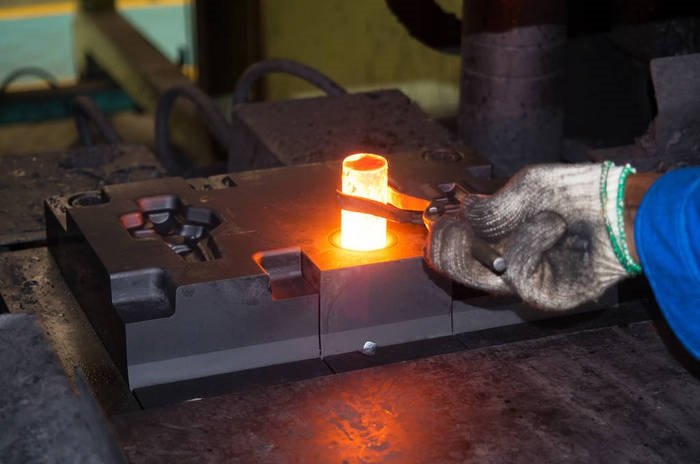
Cutting, forming, punching, and other fabrications of sheet metal are achieved through the interaction of a punch, a die, and the sheet metal.
- Punch: A punch is used to impact a metal plate to form holes, depressions, or other shapes.
- Stamping Die: A die is used to apply pressure to a metal surface to shape it.
Welding
An important process of joining two or more metal parts together by melting and cooling.
- TIG Welding: The use of argon as a shielding gas prevents the ingress of oxygen and other impurities. Often used in applications where the weld is critical.
- Pulsed Laser Welding: Utilizes a pulsed laser beam for high precision and low heat input welding.
- Spot Welding: Forms a welded joint by applying a high electric current at the weld point, causing the metal to melt instantaneously at the point of contact. Suitable for joining localized areas of sheet metal.
- Plasma Arc Welding: Uses a plasma arc to generate high temperatures that melt and join metals together. This method is suitable for different types of metals and thicker plates.
Stretching
The extension of a sheet metal by applying a tensile force to increase its length or shape, often used to make slender parts.
Advantages of Sheet Metal Fabrication
Lightweight
Sheet metal is usually fabricated from thinner sheets of metal. Compared to conventional cast and forged parts, sheet metal parts have a lower weight, making them suitable for applications that require lightweight design, such as automobiles and aircraft.
High Strength
Despite the relative thinness of sheet metal materials, sheet metal parts can be made to have sufficient strength and stiffness through proper design and process treatment. This makes them competent in structural applications as well.
Flexibility
Sheet metal fabrication allows precise control of the shape and structure of the sheet metal to be achieved through a variety of process steps such as cutting, bending and stamping, making sheet metal parts adaptable to a wide range of complex geometrical requirements.
High Precision
Sheet metal fabrication usually employs precise processes and equipment to ensure a high degree of consistency in the size and shape of the final product, making it suitable for applications that require high precision, such as electronic equipment.
Good Electrical Conductivity
Many metals have good electrical conductivity, so sheet metal parts are commonly used for electromagnetic shielding or as enclosures for electrical equipment.
Cost Effective
Sheet metal fabrication can be cost-effective through mass production and automated production lines. The ability to produce large quantities of standardized parts quickly provides advantages in mass manufacturing. It can also provide an economical solution for customized production.
Corrosion Resistance
Some metal materials such as stainless steel and aluminum are naturally resistant to corrosion, making sheet metal parts more durable in certain environments.
Recyclability
Most sheet metal materials, such as steel and aluminum, have good recyclability, helping to reduce resource waste and environmental impact.
Extensive Material Choices
From steel to aluminum to stainless steel and other alloys, different metal materials can be selected to meet specific performance needs.
Diversified Surface Finishes
Sheet metal parts can be surface treated by painting, plating, anodizing, etc. to improve appearance and enhance weather resistance.
Challenges of Sheet Metal Fabrication
Design Constraints
Although sheet metal can be made into complex shapes, some complex designs may require multiple parts to be stitched together, which may result in reduced structural strength or increased assembly costs. In applications where greater strength is required, alternative processing methods may need to be considered.
High Initial Costs
Although cost-effective compared to traditional methods, sheet metal fabrication usually requires expensive equipment. Acquiring equipment such as high-precision laser cutting machines, punching machines and bending machines still requires a large initial investment, which may put financial pressure on some small manufacturing companies.
Material Limitations
Sheet metal fabrication is mainly suitable for thin sheet metal and may be less suitable for thicker metal parts. For very thick sheet metal, traditional sheet metal processes may be limited. If materials thicker than 6mm need to be processed, other forming techniques such as casting or forging may be required.
Cutting Scrap
Although there is relatively little scrap in sheet metal fabrication, some scrap is still generated during the cutting and stamping process. These scrap materials need to be properly disposed of or recycled and may pose environmental and economic challenges.
Tips to Avoid Challenges
Optimize design
Consider the feasibility of the manufacturing process at the design stage to minimize complex shapes and structures for reduced machining requirements and costs. Use standardized parts and modular designs to increase production efficiency.
Proper Material Selection
Select materials with reasonable cost under the premise of ensuring product performance. Select materials by considering their mechanical properties, processability and cost. Different materials respond differently to bending, stretching, stamping and other processing, so choosing the right material can improve the stability of processing.
Reasonable Layout
Optimize the layout of sheet metal nesting to reduce scrap and increase material utilization. Accurate calculation of material requirements can reduce scrap generation.
Use of New Technology
Utilize technologies such as computer-aided design (CAD), computer-aided manufacturing (CAM), and automated systems to improve productivity and accuracy.
Technological Optimization
Reduce unnecessary processes and improve process continuity and productivity through continuous process optimization. Ensure the normal operation of the equipment, regular maintenance of the equipment, and the use of efficient processing technology. Regularly maintain and calibrate equipment such as shearing machines, punching machines, bending machines to ensure their precision and stability.
Applications of Sheet Metal Parts
Due to their malleability, relatively low manufacturing costs and suitability for a wide range of shapes and sizes, sheet metal parts are widely used in a number of industries.
Automotive
Sheet metal fabrication is able to meet the complexity and appearance requirements of automotive design, so sheet metal parts are widely used in automotive manufacturing, including automotive exterior, structural and functional parts.
Structural parts made from sheet metal, such as body frames, car frames, and support columns, have sufficient strength and rigidity to ensure the safety and stability of the vehicle.
Many decorative parts in the interior of automobiles are also made through sheet metal fabrication, including instrument panels, seat skeletons, door panels, and center consoles, which not only satisfy functional requirements, but also meet the aesthetic and comfort requirements of the design.
Aerospace
The application of sheet metal fabrication in aerospace requires materials with high strength, light weight, corrosion resistance, high temperature performance and wear resistance. These characteristics make sheet metal parts one of the ideal materials in the aerospace industry.
Light weight, high strength and stiffness are the key properties of sheet metal parts in aircraft structures, which help to improve aircraft performance and fuel efficiency. Major structural components such as aircraft fuselages, airfoils, and tail fins are usually manufactured using sheet metal.
Structural components of missiles and rockets, such as missile casings, booster covers, are usually manufactured using sheet metal fabrication. These structures need to be lightweight, highly rigid and resistant to high temperatures.
Medical
In the medical field, material safety, hygiene and corrosion resistance are often key considerations. Therefore, the materials used in sheet metal fabrication need to comply with the relevant medical industry standards and regulations.
Some medical equipment, such as medical instruments, monitors and X-ray machines, often require enclosures to protect the internal electronic components and to ensure the proper functioning of the equipment. These enclosures are often manufactured using sheet metal to provide stable external protection.
Sheet metal parts are also used to manufacture housings and brackets for medical testing equipment, such as MRI and CT scanners that require housings with electromagnetic shielding properties. In addition, some medical instruments require brackets made of sheet metal to provide structural support and exterior protection.
Electronic and Electrical Equipment
In the manufacturing of electronic and electrical equipment, sheet metal parts are usually required to have good precision, corrosion resistance and aesthetic appearance to meet the functional requirements and exterior design of the equipment. At the same time, these parts also need to comply with relevant safety standards and electrical performance requirements.
Sheet metal parts are used to manufacture brackets and fixings to secure and support circuit boards, electronic components and connectors to ensure their stability inside the equipment. It is commonly used in the manufacture of circuit board supports and monitor housings.
In addition, some electronic devices require heat sinks or thermal enclosures to effectively dissipate the heat generated. These heat sinks are often made from sheet metal fabrication to increase the heat handling capacity of the equipment.
Furniture
In furniture manufacturing, sheet metal fabrication provides a flexible way to enable designers to realize a wide range of shape and structure requirements. In addition, sheet metal fabrication allows for mass production, reducing production costs while ensuring the quality and consistency of the product.
Furniture frames, leg structures, supports and connectors are often manufactured using sheet metal to provide stable structural support. This is widely used in a variety of applications, including chairs, tables, beds, and other types of furniture.
In addition, the assembly of furniture often requires connectors and fittings such as screws, nuts and bolts that may be manufactured by sheet metal fabrication.
Summary
Sheet metal fabrication is a flexible and efficient manufacturing method that provides a viable solution for producing parts of various shapes and functions. It has a wide range of applications and is important for meeting industrial manufacturing needs and realizing design innovation. Therefore, applying sheet metal to part manufacturing is a good choice.
However, it is vital to understand the techniques, benefits and challenges you may face during sheet metal fabrication. Making the right choices will help you get the maximum benefit out of your parts for your project, and this article is designed to help you make the right decisions.
If you are interested in sheet metal fabrication or are looking for a provider of sheet metal fabrication services, CYCO will be your best choice. Deeply committed to CNC precision machining and manufacturing services for more than two decades, CYCO has a wealth of experience in sheet metal fabrication. No matter how precise parts you need, we can fulfill your needs.
Contact us to start a new project now!