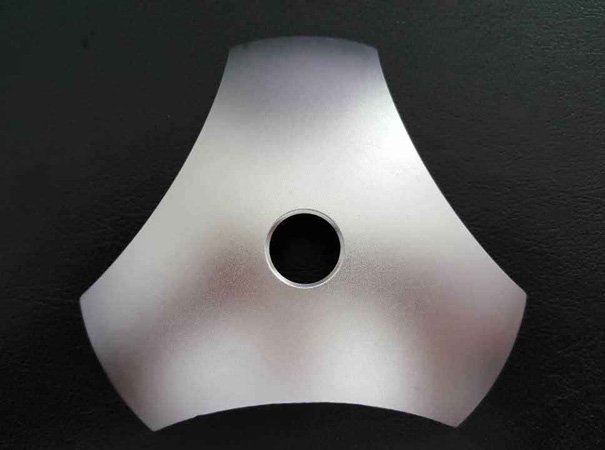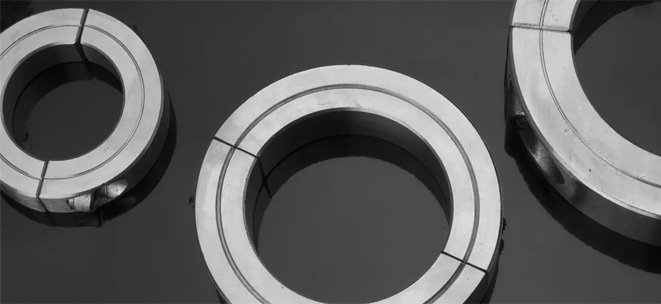
Flanges are an important part of most mechanical systems. They provide a mechanical means of connecting or assembling parts such as pipes and valves. In addition, they can be disassembled during use, which makes them ideal for use with systems that need to be maintained.
If a flange is something you are considering for your project, keep reading for more information.
What Is A Flange?
Flanges, also translated as rims, are symmetrical disc-shaped structures used to connect pipes, vessels, or fixed-shaft mechanical parts, usually secured with bolted and threaded structures.
Flanges are the most common disk-shaped parts in pipelines and are usually used in pairs.
In addition, flanges have bolt holes. Two flanges are usually connected to the pipe end by a gasket in the center, and the connection between them is made with bolts.
Characteristics of Flange
- Flanges have precisely drilled holes for easy assembly.
- They have controlled grain flow for optimum strength and stiffness.
- The flanges are machined beveled for good welding.
- The flanges are smooth and have accurate bore sizes for use in piping systems with unrestricted flow.
- The assembly has a spotlight to ensure that fastener seats remain true and square.
What is a Flange Connection?
Flange connection is a removable joint that fixes the pipes, pipe fittings or equipments each on a flange, and then adds a flange gasket between the two flanges, then finally bolts the two flanges tightly so that they are tightly combined.
It can realize the connection between the stationary pipes to the rotating or reciprocating motion equipment. The flange connection is easy to use and can withstand high pressure.
Types Of Flange
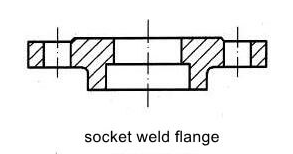
Socket Weld Flange
Socket weld flanges have a connection where you can insert the pipe into the flange, similar to a snap-on fitting. Multiple fillet welds help ensure a strong connection, and eliminate the constraint of threaded ends, making this form easier to set up than other welded flanges.
Socket weld flanges are ideal for smaller pipe diameters at low temperatures and low pressures.
Loose Flange
Usually used in conjunction with water supply and drainage fittings. When shipped from the factory, there is a flange at each end of the expansion joint, which is directly connected to the pipes and equipment in the project.
The flanges are made of low-grade materials because when the pipe material is special and expensive, flanges of the same material are costly.

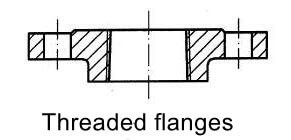
Threaded Flange
Also known as a flange screw, this design has a thread in the flange hole that matches the external threads on the pipe or fitting. With a threaded connection, you can eliminate welding in many applications. Compared to welded flanges, threaded flanges offer ease of installation and maintenance for use on some pipes where welding is not permitted. To use a threaded flange, it is best to match the threads to the pipe to be connected.
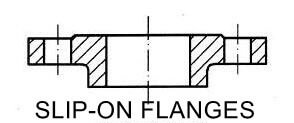
Slip-on Flange
Widely used and available in various sizes to support systems with higher and full flow rates. All you need to do is match the outside diameter of the pipe to the flange, which must be securely fastened to the pipe on both sides, making installation more technical.
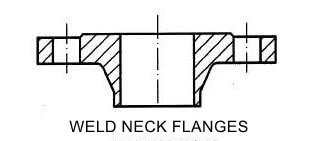
Weld Neck Flange
It requires a shaft weld to install, and like lap flange fittings, their reliability makes them a popular choice for process piping. They also perform well in systems with multiple repetitive bends, making them ideal for high temperature and high pressure systems. It is also suitable for conveying expensive media, flammable and explosive media as well as toxic gases.
Lap Joint Flange
Made with a two-piece construction by welding the shaft end to the pipe or fitting and using a backing flange. Due to its design, it is well suited for use in systems that are limited in size or require frequent disassembly and maintenance.
Blind Flange
Simple blanking disks that are easy to bolt on and can be used for isolation or termination of piping systems. When correctly placed and used with the appropriate gaskets, they create an excellent seal and are easy to dismantle when necessary.
Other Flange Types
- Long Neck Welding Flange
- Orifice Flange
- Expanding Flange
- Nipo Flange
- Reducing Flange
- High Hub Flange
- Ring Type Flange
- Groove and Tongue Flange
- Spectacle Blind Flange
Different Face Of A Flange To Connect
Face type is an important concept to consider when selecting a flange. The reason for this is that the face type of a flange determines the type of gasket required to install and the type of seal it will create.

Flat Face
With a flat and even surface, also a full face gasket that covers most of the flange surface.
Raised Face
Having a bore circular gasket and a tiny raised portion around the bore, different types of raised face flanges are available for various pressure and temperature ratings. In addition, the most commonly used form of flange in oil, gas and chemical engineering is the RF flange.
Ring Joint
This face type is used for high pressure and high temperature applications with a groove where a metal gasket is placed to maintain a seal.
Male and Female Face
In order to hold the gaskets well, these flanges have raised parts and matching grooves. Typically the gasket is secured to the female face to provide more precise positioning and a wider range of materials.
Tongue and Groove
The grooves and raised areas are the same as on the male and female flanges. This facilitates installation because the design encourages self-alignment of the flanges and creates a reservoir for gasket glue.
Dimensions of Flange
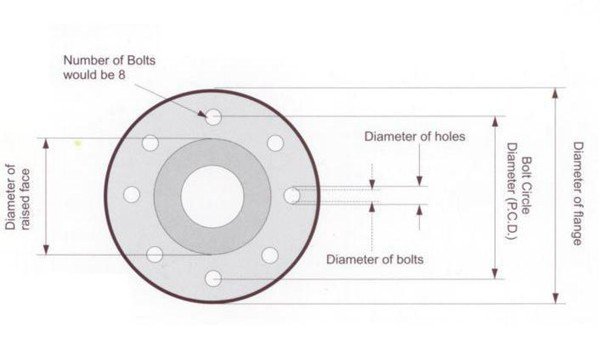
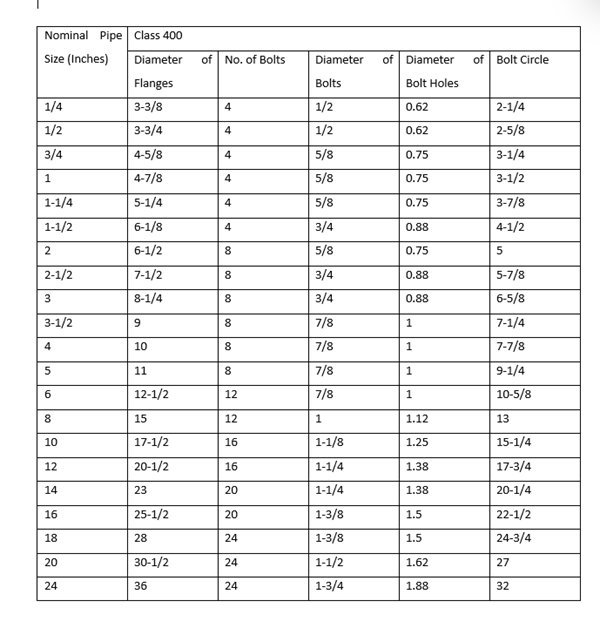
When developing, maintaining or enhancing a piping system, flanges are most likely to be affected by size. To ensure that the flange has the correct size, you must consider how it will be connected to the pipeline and the gaskets that will be used.
Here are some things to consider when selecting a flange size:
- Thickness: when selecting a flange, it is a good idea to consider the thickness of the outer connection edge.
- Normal bore diameter: used to measure the inside diameter of the flange connector.
- Bolt circle diameter: when measured from center to center, this is the distance between the bolt holes on opposite sides.
- Pipe size: the size of the pipe suitable for the used flange.
Flange dimensions are shown in the following pictures:

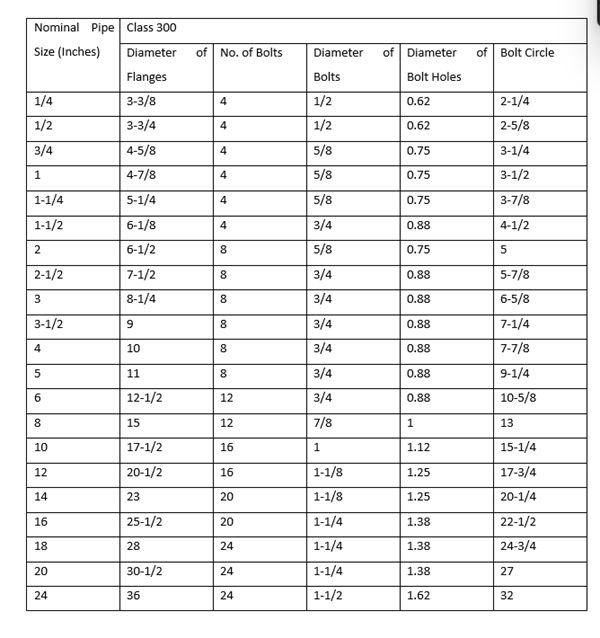

Standards and Markings of Flange
Flange design is governed by international standards ASME B16.5 and B16.47 for ease of comparison. These standards were developed by the American Society of Mechanical Engineers (ASME).
All flanges must be marked to aid in the replacement or verification of existing parts. Usually these markings are located on the outer perimeter of the flange.

Machining Process Of Flange
Material Selection
Selecting the right flange material is the first stage of the process. The most popular materials are alloy steel, carbon steel or stainless steel, but the ideal material usually depends on the temperature, pressure and corrosion resistance needs of the application.
Material Cutting and Molding
After selection, the material is sliced and molded. Large metal sheets are cut into smaller pieces to obtain the right size for the flange. Then the produced parts are heated to the appropriate temperature to prepare for further machining.
Heat Treatment
Depending on the material and use of the flange, it can be annealed, quenched or tempered. Heat treatment improves the mechanical properties of the flanges, as well as enhances their elasticity, toughness, wear and corrosion resistance.
Forming and Forging
The heating process makes the metal part ductile and facilitates the formation of the flange shape. Machinists use different methods to forge flanges, including hot forging and cold forging.
Forged flanges are not easy to rust. They have smooth flow lines, uniform internal organization and better mechanical properties than cast flanges. However, if an incorrect forging process is used, it can also cause the appearance of large grain size, unevenness and solidification cracking.
Machining
After initial cutting and molding, flanges are machined to precise tolerances. This operation includes finishing, sealing, chamfering edges and drilling holes for bolted joints.CNC machines are often used for automation and precision machining.
Surface Finish
Flanges may be ground or polished to achieve the desired smoothness, remove surface defects and improve their total appearance.
Inspection and Quality Control
Quality control is an important stage in the production of flanges. Flanges need to be inspected completely to ensure that they meet specifications.
Conclusion
Manufacturing or machining of flanges involves several processes to obtain the best quality, including standardized management, production and marking that helps in verification in case of replacement or manufacturing.
In addition, there are different types of flange assemblies, all of which have their specific and specialized uses.
Why CYCO
CYCO is a professional CNC machining service provider specializing in machining all kinds of parts, including flange parts.
With over twenty years of experience in CNC machining, we offer a high standard and cost-effective service to different industries.
Our team is available at all times, feel free to contact us if needed!