Aluminum is a widely used material in CNC machining due to its favorable properties and versatility. Its lightweight, good machinability, corrosion resistance, and thermal conductivity make it suitable for various industries and applications.
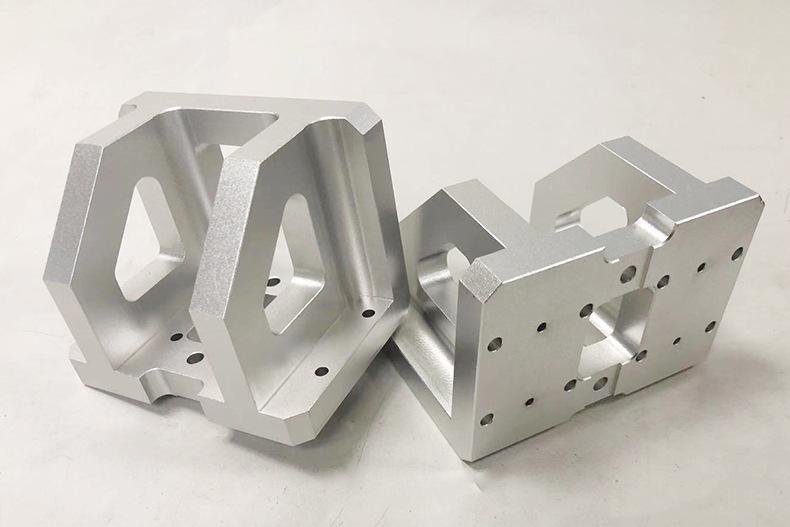
Here are some common applications of aluminum in CNC machining:
1. Automotive Components: Aluminum is frequently used in the automotive industry for components like engine blocks, cylinder heads, intake manifolds, transmission housings, and suspension parts. Its light weight helps improve fuel efficiency and overall vehicle performance.
2. Aerospace Parts: Aluminum is a key material in aerospace manufacturing due to its combination of strength and low weight. It’s used for components like aircraft frames, wing structures, landing gear components, and interior parts.
3. Electronics Enclosures: Aluminum is often used for electronic enclosures and housings due to its electrical conductivity, corrosion resistance, and ability to dissipate heat. These properties are important for maintaining proper functioning and cooling of electronic devices.
4. Consumer Goods: Aluminum is used in various consumer products like smartphones, laptops, tablets, and home appliances. Its lightweight nature, along with its ability to be precisely machined, makes it suitable for creating intricate designs and functional components.
5. Industrial Machinery: Aluminum components are used in industrial machinery, such as pumps, valves, and processing equipment. The material’s corrosion resistance and machinability are advantageous in these applications.
6. Prototyping and Rapid Manufacturing: Aluminum is commonly used for prototyping due to its ease of machining and availability. CNC machining allows for quick and accurate production of prototypes and small batches of parts.
7. Sporting Equipment: Aluminum is used in the production of sporting equipment like bicycle frames, tennis rackets, golf clubs, and firearms. Its strength-to-weight ratio and durability make it well-suited for these applications.
8. Medical Devices: Aluminum is used in the medical field for producing components like surgical instruments, orthopedic implants, and diagnostic equipment. Its biocompatibility and machinability are important factors in medical device manufacturing.
9. Lighting Fixtures: Aluminum’s ability to be molded into various shapes and its reflectivity make it a suitable material for manufacturing lighting fixtures, reflectors, and housings for light sources.
10. Custom Parts: Aluminum is often chosen for custom CNC-machined parts in various industries due to its versatility and the ability to meet specific design requirements.
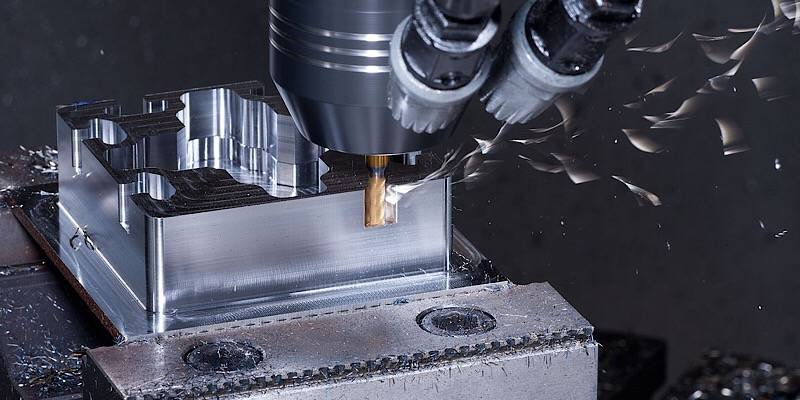
When CNC machining aluminum, factors such as tool selection, cutting speeds, feeds, and coolant use need to be carefully considered to achieve optimal results. Aluminum alloys with different properties, such as 6061, 7075, and 5052, are commonly used in machining and offer a range of strength, corrosion resistance, and machinability characteristics.
1. Aluminum 6061-T6
6061-T6 is one of the most popular aluminum alloys on the market, and most manufacturing companies use it as the standard grade for CNC machining. It’s versatile and easy to machine, and 6061 can even be heat treated differently.
6061-T6 is an excellent general purpose material for a variety of use cases. Although this material has a good strength-to-weight ratio, it is not suitable for high-stress applications. Common applications include automotive parts such as chassis, bicycle frames, valves, computer parts, and more.
Mechanical Specifications:
Ultimate tensile strength: 310 MPa
Elongation at break: 17%
Elastic modulus: 68.9 GPa
Hardness: 60 HRB
2. Aluminum 7075-T6
For high stress or high performance applications, engineers should consider the 7075-T6. Known for its excellent strength-to-weight ratio, this grade of aluminum rivals even some softer steels in hardness.
Widely used in high stress applications in the aerospace and defense industries, common applications include aircraft accessories, missile parts and fuse parts. Certain performance bicycles and sporting goods also include parts made from aluminum 7075-T6.
Although 7075-T6 has high strength and excellent mechanical properties, it also has its disadvantages. This material is less ductile and less corrosion resistant than other grades. What’s more, aluminum 7075-T6 may be too expensive for some product teams.
Mechanical Specifications:
Ultimate tensile strength: 434 – 580 MPa
Elongation at break: 10-15%
Elastic modulus: 69 – 76 GPa
Hardness: 79-86 HRB
Maximum operating temperature: 100°C
3. Aluminum 2024-T4
Aluminum 2024-T4 is a medium to high strength alloy with good fatigue resistance and fracture toughness. Aluminum 2024-T4 is not as strong as 7075-T6 but is still suitable for aerospace applications.
Common applications for aluminum 2024-T4 include aircraft fuselages, transportation vehicle components, and wing tension members. However, product teams should be aware that this grade of aluminum has poor corrosion resistance and is highly sensitive to thermal shock.
Mechanical Specifications:
Ultimate tensile strength: 200 – 540 MPa
Elongation at break: 14 – 20%
Modulus of Elasticity: 71 – 73.1 GPa
Hardness: 70 – 120 HB
Maximum operating temperature: 200 °C
4. Aluminum MIC 6
Aluminum MIC 6 is unique because the specific combination of its alloy and casting method has been developed to produce stable, high tolerance plates. The MIC 6 offers impressive strain relief, excellent precision and high machinability. Aluminum MIC 6 is also non-polluting and non-porous. This sleek, lightweight option can be found in machined components, electronics, and even laser technology.
One downside is that MIC 6 threads are not as strong as threads made from 6061, and extremely fine threads can lead to early thread failure. Product designers should keep this limitation in mind during the material selection phase.
Mechanical Specifications:
Ultimate tensile strength: 166 MPa
Elongation at break: 3%
Elastic modulus: 71 GPa
Hardness: 65 HB
Maximum operating temperature: 427°C
5. Aluminum 6082
Aluminum 6082 has similar properties to Aluminum 6061; however, 6082 has slightly higher tensile strength. Additionally, this type of aluminum has the highest strength of all 6000 series alloys and is very resistant to corrosion. The 6082 is a good choice for engineers who want more strength than the 6061 but don’t want to invest in the 7000 series.
Aluminum 6082 is ideal for general purpose applications requiring added strength and toughness. The material is popular in the construction industry and can be found in many bridges, towers and trusses. However, product designers should keep in mind that it is difficult to produce thin walls with aluminum 6082.
Mechanical Specifications:
Ultimate tensile strength: 140 – 340 MPa
Elongation at break: 6.3 – 18%
Elastic modulus: 69 – 71 GPa
Hardness: 35-56 HRB
Maximum operating temperature: 130 – 150 °C
Choose the right material for the job
If product teams choose to machine parts from aluminum, they can be confident that they are choosing a material that is strong, conductive and corrosion-resistant. Aluminum alloys 2024-T4, 7075-T6 and 6082 are best suited for high performance applications, while 6061 and MIC 6 can be used in most cases where general purpose aluminum will suffice.
Aluminum’s excellent combination of mechanical properties and ease of machining makes it a preferred material for CNC machining in a wide range of applications across industries.