Casting and forging are common methods used to manufacture aluminum parts for different industries. However, cast and forged aluminum have different properties and advantages.
Cast aluminum parts are typically more versatile and affordable, while forged aluminum parts offer superior strength and wear resistance.
What is Cast Aluminum?
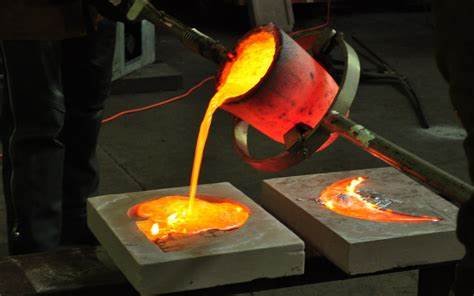
Cast aluminum is made by melting aluminum and pouring it into a cavity containing the desired casting shape. Once the aluminum has cooled and solidified, the desired part is obtained. It is basically a solidification process and defects such as segregation, cracks and shrinkage porosity are also associated with solidification.
Molds for casting aluminum can be made from different materials such as sand, metal or ceramic. There are different types of casting methods including die casting, sand casting, investment casting and permanent mold casting.
Advantages of Cast Aluminum
Cast aluminum alloys are versatile and offer a variety of beneficial properties.
Light weight
Corrosion resistant
Heat resistant
Easy to weld
Accurate products
High compressive strength
Disadvantages of Cast Aluminum
The casting process requires close inspection and control.
Defects such as cracks, shrinkage porosity, oxides and lack of volume.
Applications of Cast Aluminum
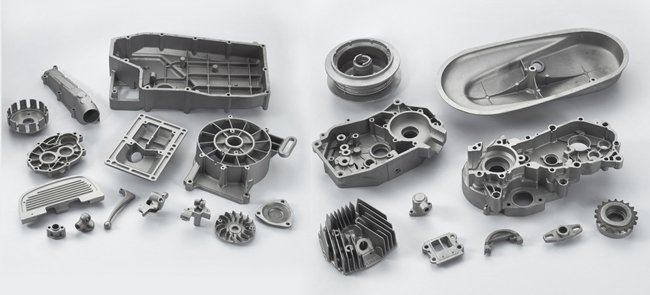
Automotive parts: such as airbag housings and steering knuckles that support wheel bearings.
Medical equipment: various pump parts, surgical tools and monitor components.
Aircraft: instrument housings, motor housings, engine pistons, cylinder blocks and fan blades.
…
What is Forged Aluminum?
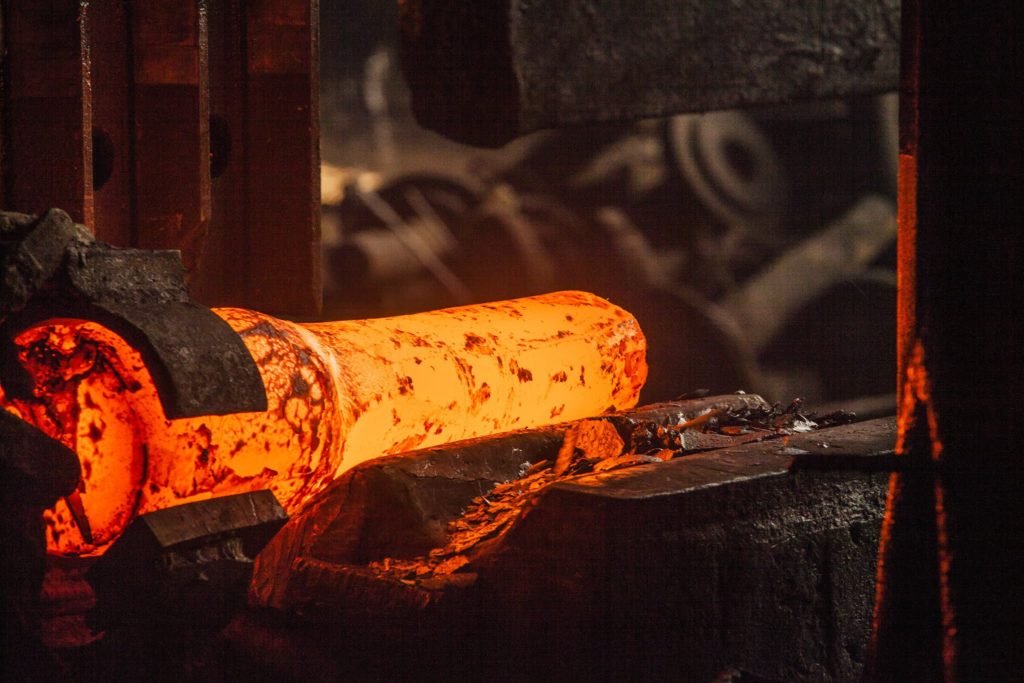
Forged aluminum experiences a more complex process compared to cast aluminum. In this method, a pure aluminum alloy is heated until it melts and then molded under high pressure to achieve the desired shape and size. It gives the metal enhanced strength, durability and mechanical properties that can sustain higher temperatures and pressures without breaking.
Forging helps eliminate defects and improves durability and toughness by optimizing the microstructure. Compared to castings of the same material, the forged aluminum is used in a wide range of industries due to its excellent strength-to-weight ratio, making it ideal for applications that require high performance and lightweight materials.
Forging includes both hot forging and cold forging, while hot forging can be accomplished through closed die forging, open die forging, and roll forging.
Advantages of Forged Aluminum
Forged aluminum offers many advantages over other manufacturing processes and materials, making it the preferred choice for critical applications in a wide range of industries.
High strength-to-weight ratio
Improved mechanical properties
Enhanced durability and reliability
Reduced material waste
Resistance to impact and fatigue
Consistent material properties
Disadvantages of Forged Aluminum
Often more expensive than other methods.
Requires multiple steps to get the desired end product.
Defects such as laps, piping and mold failures may prevail.
Shapes can be limited when core sections or undercuts are required.
Applications of Forged Aluminum
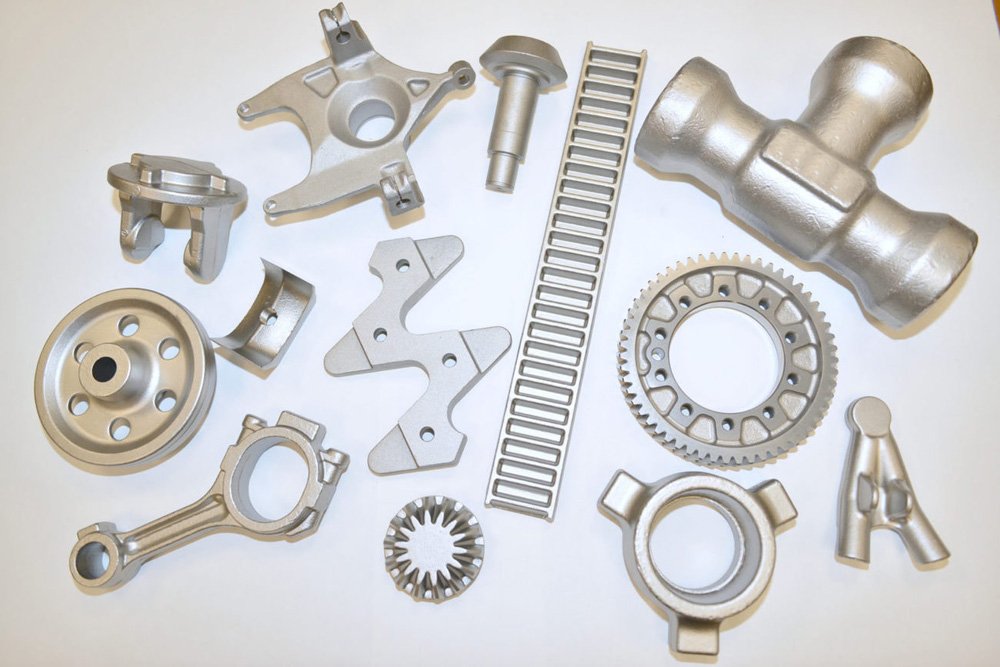
Aerospace: aircraft frames, landing gear, wing components and engine components.
Automotive: wheels, steering knuckles and transmission components.
Marine: ship hulls, propellers and marine engine components.
Defense: military vehicles, weapons systems and ammunition components.
…
Differences between Casting and Forging
Definition
Casting is the process of heating metal to its melting point and then pouring it into a mold to obtain the desired shape.
Forging is the process of using compressive forces on a solid material to achieve a desired shape.
Fabrication Processes
Forged aluminum requires several complex processing steps, including die forging, stretching and cutting. This eliminates the defects found in casting and achieves higher hardness, more stable mechanical properties and enhanced reliability and durability.
On the other hand, cast aluminum is produced through an injection molding process involving casting, injection, and cooling. This method is more productive but has relatively poor mechanical properties and is easily susceptible to deformation and defects.
Compressive Strength
Products manufactured by casting have a high compressive strength, while products manufactured by forging have a low compressive strength.
Size Limitations
In casting, the metal is heated until it is melted, so there are no restrictions on the size or shape of the desired product.
However, in forging, the metal is molded with or without heat, which is not ideal for large and heavy materials.
Mechanical Properties
Forged aluminum alloys experience multiple deformation processes during manufacturing, which refines the grain organization of the metal. As a result, forged aluminum parts have higher mechanical strength, toughness and ductility. They also have excellent corrosion resistance, making them ideal for the manufacture of high-quality automotive and aerospace components that are subjected to loads.
Although cast aluminum alloys are highly productive, they are prone to thermal cracking under pressure. In addition, cast products have lower strength and higher brittleness, making them more suitable for low-strength and low-cost applications.
Strength
Forged aluminum parts exhibit excellent mechanical properties when heat-treated, with excellent strength-to-weight ratios. Forging eliminates the presence of porosity, and heat treatment can further improve the strength of aluminum forgings, leading to improved performance and longer service life.
Cost
Cost is an important factor to consider when selecting manufacturing options for a particular application. The total cost depends on the specific method used.
In general, aluminum castings are less costly than forgings, which require more time and labor to fabricate. For medium to large scale production, aluminum forgings may be the most cost effective option.
Durability
Forged aluminum is stronger and more durable than cast aluminum. It is less likely to crack or break and offers better resistance to corrosion, wear and tear.
Surface Finish
When aluminum is forged, it often requires additional steps to refine and perfect the product to specific requirements. Cast aluminum, on the other hand, usually provides a finished product that requires minimal surface preparation.
However, certain forged aluminum alloys offer excellent corrosion resistance even without any surface preparation.
The following table summarizes the main differences in properties between forged and cast aluminum.
| Features | Forged Aluminum | Cast Aluminum |
| Chemical Composition | Al-Si-Mg-Cu alloy and Al-Cu-Ni-Fe alloy. | Al-Si series, Al-Cu series, Al-Mg series, and Al-Zn series. |
| Structural Integrity | Far superior in strength. | More porous and prone to breakage. |
| Durability | Excellent | High |
| Tolerance | Not suitable for complex shapes. | Can achieve a high level of detail and tight tolerances. |
| Product Size | Limited in size and thickness capabilities (larger sizes are more challenging). | Compatible with various sizes. |
| Secondary Operations | Usually requires additional operations to refine and finish the product. | Provides finished product that requires minimal post processing. |
| Cost | More cost-effective for medium to large production runs. | Generally less expensive than forging, but it depends on the specific casting method used. |
Conclusion
Both cast and forged aluminum offer unique advantages in metal fabrication projects. Castings are typically more affordable and versatile, while forgings offer superior strength and wear resistance.
If you prioritize low cost, the need for complex shapes and strong enough for outdoor use, then cast aluminum may be the preferred choice.
If you need an alloy with excellent strength and structural integrity for heavy-duty applications, forged aluminum may be a better choice.
Ultimately, whichever type of aluminum you choose, make sure it meets your specific needs and requirements!
Why CYCO
CYCO, with over 20 years of experience in machining and fabrication, specializes in providing services such as aluminum CNC machining, metal casting, and secondary machining.
We offer hands-on help to turn your ideas into reality, and our expertise ensures that you will receive a high quality product that meets your needs.
With our proven quality control and inspection systems, your parts will be delivered to tight tolerances and precise specifications.
Contact us today for customized solutions and instant quotes!