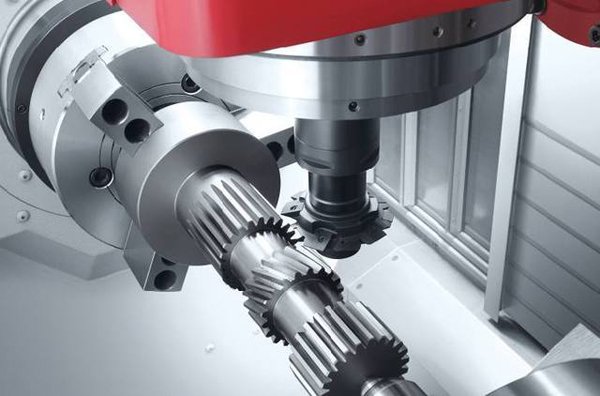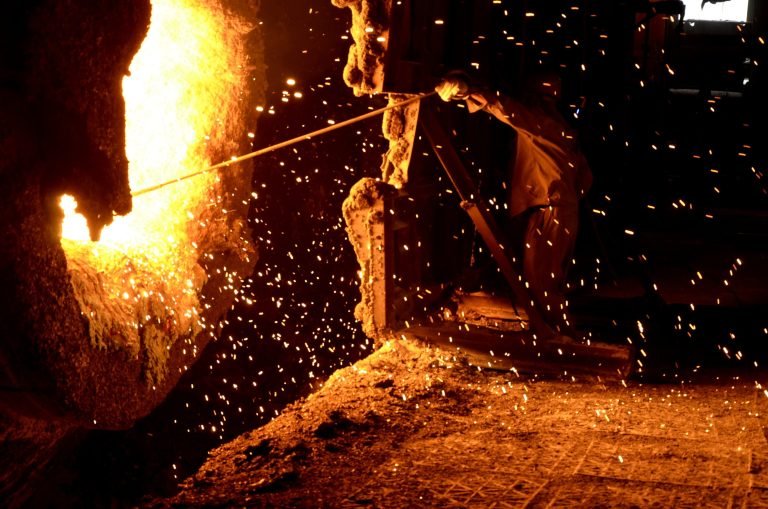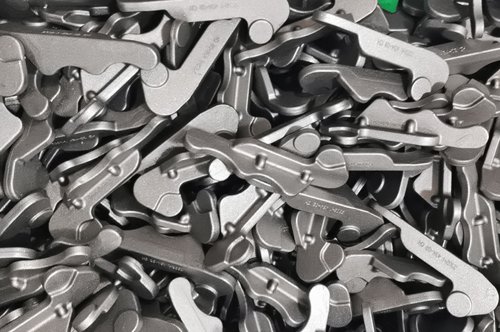
Generally, a shaft is a cylindrical object threaded between bearings, wheels or gears, but a small number are square. Shafts are very common and are used in a variety of CNC machining machines where shaft parts are universal.
Brief Introduction to Shaft Parts
Shaft parts are components that are often used in mechanical engineering facilities, and their main roles include supporting components used in transmissions such as gears and pulleys, as well as carrying loads. In addition, some shafts have keyways and splines to transmit torque.
Most of the shaft parts are stepped, and the length is much larger than the diameter. Usually we refer to shafts with an L/D ratio of less than 5 as short shafts, and those with a ratio of more than 20 as long and thin shafts. The majority of shafts on the market have an L/D ratio in between.
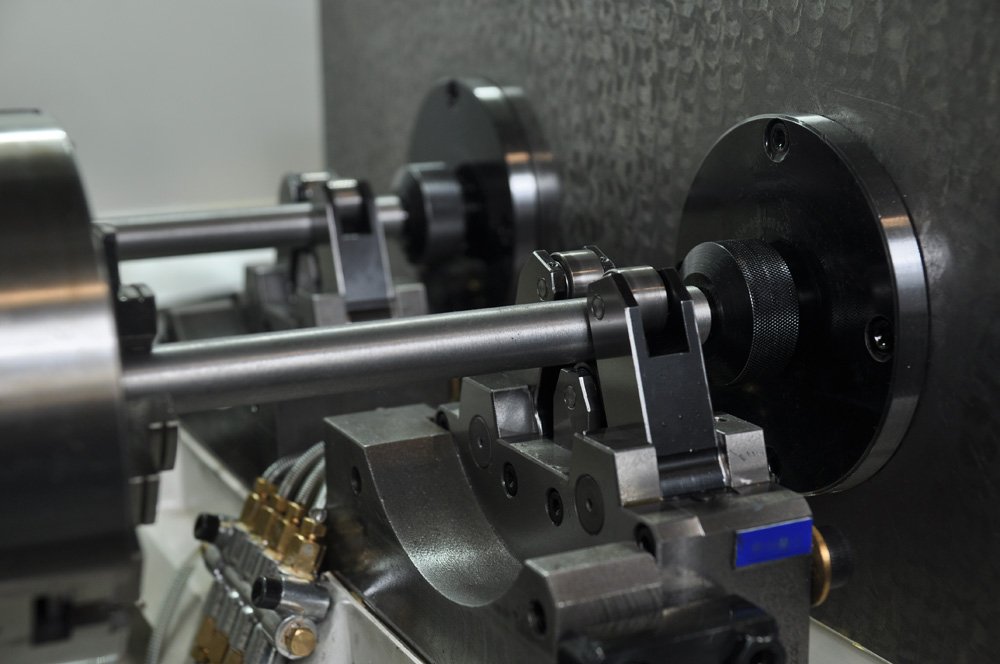
Materials for Shaft Parts
Because shaft parts are one of the most important parts on mechanical engineering facilities, the quality of a machine’s work is largely related to the shaft. If there is a problem with the shaft, it may cause serious consequences, so good materials are the key to ensure that the shaft can be used in normal operation.
The selection of materials is based on the following factors:
Working conditions:
- Load: materials should be selected according to the type of load to which the shaft is subjected (e.g. bending, torsion or shear) and the magnitude of the load.
- Speed: shafts rotating at high speeds may require the materials with good heat resistance and fatigue strength, such as alloy steel, bronze, silicon nitride or alumina ceramics.
- Environment: shafts in corrosive environments should be made of materials with excellent corrosion resistance, such as stainless steel or titanium alloys.
Performance requirements:
- Strength: select materials with appropriate strength based on the forces applied. High strength materials include carbon fiber reinforced polymers in addition to the common alloy steels.
- Toughness: for shafts where shock loading may occur, materials with good toughness are required to prevent fracture, such as stainless steel or alloys of copper and aluminum.
- Wear resistance: if the shaft is in contact with bearings or sliding parts, wear-resistant materials may be required, often silicon nitride or alumina ceramics are available.
Machinability:
Cutting: giving preference to materials that are easy to turn, mill and grind may reduce machining time and tool wear. Most non-ferrous metals are easy-to-cut materials, such as aluminum and aluminum alloys, copper and copper alloys.
Heat treatment: consider whether the material is easy to heat treat and whether the desired mechanical properties can be obtained after treatment, the general choice is carbon steel, alloy steel and stainless steel.
Besides the factors mentioned above, there are other factors that need to be taken into account, such as cost and material availability. It is generally accepted that priority should be given to materials that are cost-effective, while meeting performance requirements. In addition, the stable availability of the material also needs to be taken into consideration.
All in all, the selection of materials for manufacturing shaft parts is a complex decision-making process that requires a full understanding of the working conditions and performance requirements of the part, as well as a combination of factors such as economics.
Furthermore, the manufacturing process and the degree of machining difficulty should also be considered, as some materials may be more difficult to machine and more expensive than others.
Machining of Shaft Parts
Refers to removing material from a workpiece to obtain the desired shape and size. The exact method, process and tools used for machining will vary depending on the requirements.
Step 1 Design and planning
First, design the shaft in detail with respect to dimensions, tolerances and material.
Then, plan the machining process, including consideration of the type of material, the machining operations required and the sequence of operations.
Step 2 Material selection
Choose the appropriate material for the shaft based on the application requirements.
Step 3 Machining procedures
- Unloading: according to the drawing requirements.
- Rough turning: rough machining of the outer circle, end face and rebate groove, leaving the finishing allowance.
- Tempering: improve the mechanical properties of the parts.
- Semi-precision turning: further reduce the size and shape errors.
- Grinding: to achieve higher surface roughness and dimensional accuracy.
- Drilling and tapping: drill holes or tapping on shafts for various purposes according to design requirements.
- Milling: create keyways, slots or other features on the shaft.
Precision turning: ensure dimensional accuracy and form tolerances of shafts.
- Inspection: perform a full-size inspection to ensure that it meets design requirements.
Step 4 Heat treatment
Depending on the material and application, heat treatment may be necessary to enhance the mechanical properties of the shaft.
Step 5 Surface treatment
In view of the shaft surface finish, surface treatments such as polishing or coating may be required to achieve the desired surface quality.
Step 6 Assembly and Inspection
If the shaft is a part in another piece of equipment, we need to make an extra effort to ensure alignment and fit during assembly. After testing and inspection, the produced shaft parts should meet all standards and be able to work properly.
In addition to the above, quality control and documentation should not be disregarded in the machining of shaft components, and should be present throughout the entire shaft component machining process.
Quality control ensures that the produced parts are of high quality and comply with regulations and requirements. Documentation can also be used as an important reference when problems and deviations occur or adjustments need to be made during the machining process.
It’s important to note that the specific details of machining shaft parts can vary based on the unique requirements of each project. CNC machining is often used for precision and complex components, allowing for accurate and repeatable production processes.
Accuracy Requirements for Shaft Parts
The accuracy requirements for shaft components depend on the specific application of the shaft and the role of the shaft in the larger system. The required accuracy varies greatly with different considerations.
Below are some common shaft part accuracy requirements:
Dimensional accuracy:
Journal diameter: high accuracy is required, usually IT6-IT9 grade, precision journals can reach IT5 grade.
Shaft length: generally specified as the nominal size, each step length of the stepped shaft is given a tolerance according to the requirements of use.
Geometric accuracy:
Roundness: affects the rotational performance of the shaft and the service life of the bearings.
Cylindricity: a high degree of cylindricity ensures the stability of the shaft at high rotational speeds.
Mutual positional accuracy:
Coaxiality: the radial circular runout of the shaft with ordinary precision is generally 0.01-0.03mm; the high precision shaft is 0.001-0.005mm.
Shape error:
For special shaped journals, it is necessary to control the form error to ensure a good fit with other mating parts.
Surface roughness of the journal:
Directly affects the friction coefficient, heat generation and wear between the shaft and the bearing.
Importance of Shaft Parts Accuracy
- Ensure the accurate meshing of gears, pulleys and other transmission parts, so as to improve the efficiency of the whole transmission system.
- Accurate size and shape can keep the shaft stable when rotating at high speed, reduce vibration and noise, extend the service life of the equipment.
- Reduce bearing wear and maintenance costs.
- For some high-risk applications, the quality of shaft parts is directly related to personnel safety and facility integrity. High accuracy is one of the most important factors in ensuring safety.
- Although high-precision shafts may increase the initial manufacturing cost, in the long run, its characteristics of high performance, low failure rate and long life can significantly reduce the overall operating costs.
- Lower energy consumption and scrap generation help to achieve sustainable development.
- In a competitive market environment, high quality and accuracy are key to gaining customer trust and business growth.
Summary
As we mentioned earlier, shaft parts machining is a complex process involving a variety of process technologies. The accuracy and quality of shaft parts are critical to the equipment.
We, CYCO, have advanced CNC machines, precision tools and professional staff to help you machine shaft parts regardless of how precise you need them to be.
We can also provide you with professional advice on material selection. Our goal is always to produce the best quality products with the highest cost performance.
Feel free to contact us now!