

Polishing Finishing Services
CYCOSPRAY offers quality polishing services that smooth the surface of parts while improving durability and aesthetics.
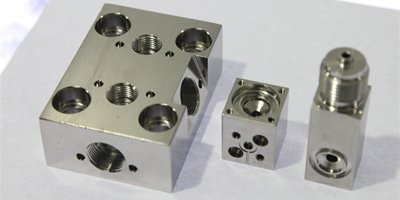
Overview of Polishing
Polishing is a surface treatment process that aims to improve the surface quality and appearance of a workpiece by physical or chemical means. Typically, polishing removes material to achieve a smooth and shiny finish, but sometimes it may be used to obtain a specific roughness or texture.
The main purpose of polishing is to improve the appearance of the object, enhance the surface quality, and remove surface defects, oxidized layers or inhomogeneities to make it more attractive and corrosion resistant.
Polishing not only improves the aesthetics and texture of the workpiece, but also enhances its corrosion resistance, abrasion resistance and fatigue resistance. Therefore, it has a wide range of applications in automobile manufacturing, aerospace, electronic equipment, furniture manufacturing and more.
Processes of Polishing
- Preparation: Before polishing, the workpiece needs to be cleaned to remove grease, dirt or other impurities from the surface of the workpiece.
- Rough grinding: Preliminary grinding with a grinding tool, the aim of this step is to create a flat surface for subsequent polishing steps.
- Fine grinding: Further fine grinding with finer grinding tools, which helps to further improve the surface finish and minimize the marks left by the grinding.
- Polishing: The surface is polished by using polishing compounds and polishing tools. Polishing compounds contain tiny abrasive particles that can remove minor imperfections, increase gloss, and make the surface smoother.
- Cleaning: After polishing, the workpiece is cleaned to remove residual polishing compounds and particles, which helps ensure the final surface quality.
- Protective coating (optional): A protective coating can be applied after polishing to prevent new contaminants from adhering and to increase corrosion resistance.
Benefits of Polishing
Improved Appearance Quality
Polishing significantly improves the appearance of a product by making the surface of an object smooth and polished and removing imperfections, scratches or oxidized layers.
Increased Gloss
The polishing process allows the surface to reflect more light, increasing the gloss level and making the object look brighter and more attractive.
Enhanced Corrosion Resistance
Polishing helps to improve the corrosion resistance of metal products by removing oxidized layers and other substances that can cause corrosion.
Reduced Friction
Polishing reduces surface roughness and lowers the friction coefficient, which improves product sliding and reduces energy consumption.
Improved Accuracy
In some applications where high precision is required, polishing removes surface irregularities to improve product accuracy and consistency.
Enhanced Optical Properties
For workpieces that require high precision and transparency, such as optical devices, polishing improves their optical properties, enabling them to better transmit and reflect light.
Types of Polishing CYCOSPRAY Offers
A type of polishing in which surface imperfections are removed and surface quality is improved by the physical force of mechanical equipment. This involves a continuous process of rough grinding, fine grinding and polishing.
Chemicals are used to dissolve or remove oxides, deposits, or other contaminants from a surface to improve surface quality. This usually involves immersing the workpiece in a bath containing a chemical solution.
A polishing method in which direct current is passed into an electrolytic solution to remove surface material through a chemical reaction, so as to improve surface quality. It is commonly used for metal products.
Removes surface dirt and improves surface finish by blasting high-speed flowing grit or other abrasive particles and impacting them onto the surface of the workpiece.
Utilizing ultrasonic vibrations to create tiny bubbles in the liquid, the shockwaves generated when they burst can remove dirt and imperfections from the surface.
Polishing the surface of an object by manual operation, suitable for small batches and complex shapes.