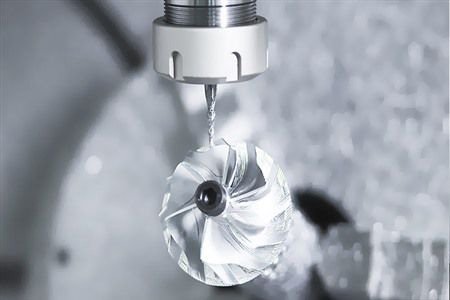
Polyoxymethylene (POM) has good physical, mechanical and chemical properties, especially excellent friction resistance. Because of its advantages, POM is widely used in CNC machining and is the third most versatile engineering plastic.
What is POM?
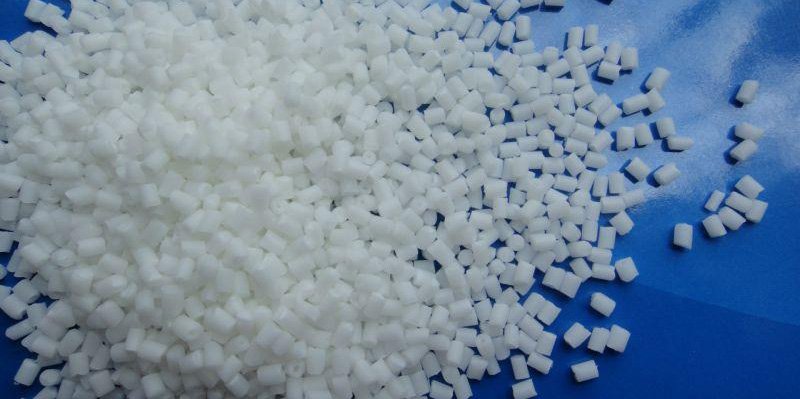
POM is an engineering thermoplastic with a variety of beneficial properties. Known as the “metal plastic” for its excellent stiffness, low friction and dimensional stability, it plays an important role in the manufacture of precision parts for various applications.
However, POM can be unstable and easily degraded when exposed to high temperatures or acidic conditions because of the high levels of oxygen in its molecular structure.
According to the different chemical structures in the molecular chain, POM can be divided into homoformaldehyde (POM-H) and copolyformaldehyde (POM-C) .
POM-H has high density, crystallinity and melting point, but poor thermal stability and low stability to acids and alkalis.
While the density, crystallinity, melting point and strength of POM-C are lower. However, it has good thermal stability, better stability to acid and alkali, and is not easy to be decomposed.
Strengths and weaknesses of POM
Strengths
-
Low friction and wear resistance
POM plastic is famous for its low friction coefficient, which can explain why it has such excellent self-lubricating properties. The less wear, the higher the total efficiency, so that fluid sliding or rotary movements are possible by reducing frictional resistance.
-
Heat insulation and electrical insulation
With its excellent heat insulation and strong mechanical properties, POM proves to be an excellent material for electronic components. Its ability to withstand considerable electrical stress makes it an ideal high-voltage insulator. Its low hygroscopicity even makes it an excellent choice for keeping electronic components free of moisture.
-
Low water absorption and dimensional stability
POM plastics have excellent dimensional stability, maintaining their size and shape even when humidity and temperature are constantly changing. Because of its extremely low water absorption, it is not easily affected by problems associated with moisture, such as swelling, warping and other dimensional changes.
-
Mechanical strength
The tensile strength of POM ranges from 7,000 to 9,000 psi. In addition, its density is lower than that of metals, making it a good choice for lightweight parts that need to be resilient under high pressure.
-
Chemical resistance
Excellent resistance to different chemicals, solvents and fuels makes it ideal for products that are in continuous contact with chemical solvents, such as pump parts, seals and components for fuel systems.It can resist contact with various organic chemicals, alcohols and oils without deterioration.
-
Fatigue resistance
POM exhibits excellent durability over a temperature range of -40°C to 80°C and has strong fatigue resistance, which makes it highly unaffected by water, chemicals or solvents. These compelling properties make POM an ideal material for parts designed to withstand repeated impacts and stresses.
-
Impact resistance
POM has extraordinary toughness, enabling it to withstand sudden impacts without deflection. And its impact resistance can be further enhanced by special treatment.
-
Creep resistance
POM is able to withstand great pressure without deformation, making it the first choice for parts that require high durability and creep resistance.
-
Ease of machining
Easily molded, machined, turned, and drilled so that complex parts and intricate designs can be made simply, POM resins are often used in applications that require complex geometries and high precision.
Weaknesses
Although it has higher machinability for CNC machined parts than most plastics, it also has some weaknesses:
-
Low adhesion
Its chemical resistance makes adhesives work poorly with POM, which leads to challenging bonding.
-
Flammability
POM does not have self extinguish ability, it will keep burning until there is no oxygen.
-
Heat sensitive
Risk of deformation at high temperatures.
Benefits of CNC machined POM parts
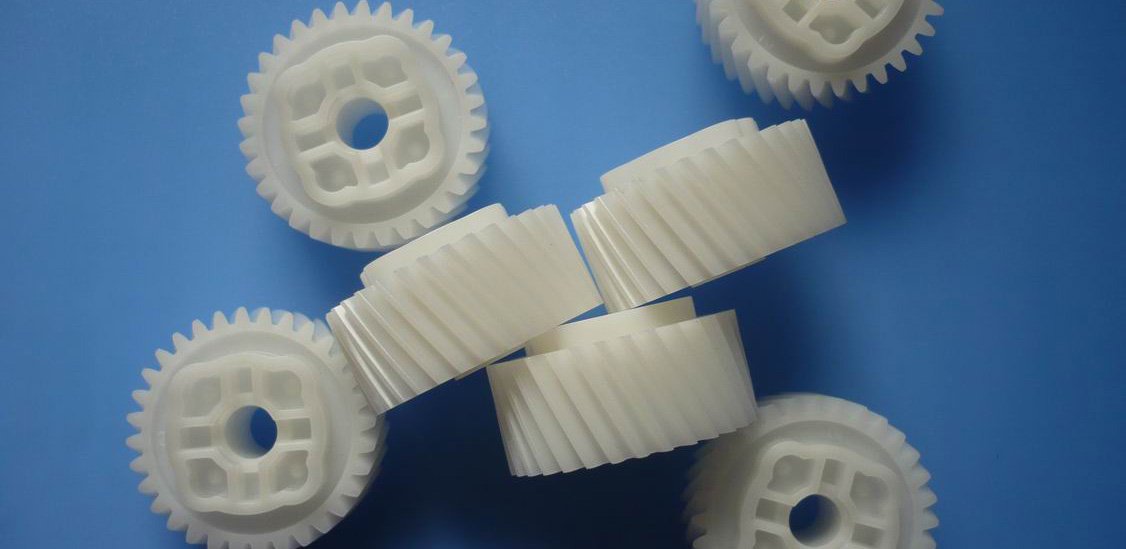
POM CNC machining is an excellent choice for producing high-quality customized parts in many areas because of the following benefits of the machined product:
Uniformity
CNC machining provides consistently high quality POM components for mass manufacturing. This automated method ensures that the specifications of each component are precise and is suitable for industries that require reliable and accurate POM parts, such as medical or aerospace.
Rapid prototyping
Prototyping is an important step in product development as it often shows manufacturers how the final product will look. POM prototypes can be created quickly through CNC machining, which helps to shorten the time it takes to get a new product to market.
High precision
Precision, accuracy and tight tolerances are the hallmarks of CNC machining. As a result, POM components can be manufactured with extreme precision and accuracy by CNC machining because it supports complex geometries and tight tolerances.
Design flexibility
POM components can be modified during the development process without the need for expensive tools.
Reduce post-treatment time
Due to the high precision of the manufacturing process, POM products manufactured by CNC machining often require less post-treatment, which can reduce manufacturing costs and shorten turnaround times.
Difficulties and solutions in POM CNC machining
The main problems during CNC machining are deformation and cracking of the material. These problems can lead to two types of fracture – direct cracking during CNC machining and hidden cracks caused by internal stresses. The latter can cause significant damage.
The choice of POM material used for CNC machining is critical as the use of good quality materials can help to avoid deformation, and POM materials may have different qualities, as well as impurities, craters and crack-like structures can affect the degree of deformation.
Regardless of the type of POM material, a trial production is required prior to CNC machining and when using different batches of the same material before machining.
Main causes of deformation and solutions
Cutting heat
POM material has low thermal stability and is sensitive to heat, it will deform rapidly if it is not cooled sufficiently after manufacturing. To combat the heat, it should be:
- The tool must be sharp in order to minimize the amount of heat generated during cutting.
- The amount of cutting can be reduced and divided into many cuts.
- Increase the amount of coolant used.
This will minimize the formation of heat or quickly eliminate the heat generated during the cutting operation.
Internal Stress
Engineering plastics have a high coefficient of thermal expansion, so eliminating internal tension can lead to distortion when machining allowances are large. To solve this problem:
- Select and prepare the material correctly.
- Utilize symmetrical POM machining to counteract the stresses and deformations caused by machining when the material removal is large.
- Adjust the margins and try to insert the thickest material as possible.
Clamping
When POM material is clamped, it deforms and returns to its original shape once released. The solution to this problem is to increase the contact surface of the workpiece in the following ways:
- Modify the form of clamping. For example, use a bench vise to cushion or glue it in place.
- Vacuum chucks can be used for large and flat blanks.
- After fixing one side with adhesive then clean and use the suction cup to fix the smooth surface.
Elasticity
The POM material exhibits significant elasticity, which causes the part in contact with the tool will bend internally during the cutting process. Once the tool is removed, the cut and pressed part will deform a little.
For this reason, it is vital to make several tool adjustments based on the actual cutting results. By dividing the cutting task into multiple cycles and reducing the amount of cutting per tool travel, any dimensional deformation caused by the elasticity of the material can be minimized during machining.
Other causes of deformation
- Extensive material removal during CNC machining.
- Large cutting forces due to direct drilling with larger drills.
- Inadequate chip removal when drilling deep holes during CNC machining.
- Insufficient cooling during drilling.
- High feed rates can cause internal stresses that can lead to cracking.
- Failure to repair worn drill bits in time.
Applications of POM parts
-
Electrical and electronic parts
POM is electrical isolation and is used to produce switches and connectors that are utilized for the protection of electronic parts.
-
Medical devices
Due to its biocompatibility, POM is used in the manufacture of surgical tools, medication delivery systems and other medical devices.
-
Automotive
Used in various automotive interior and exterior parts, including fuel system components and window lift gears.
-
Household goods
Often used to make handles, buckles, zippers and other components for household goods and appliances.
Conclusion
In summary, POM is an excellent plastic material for CNC machining. Although POM is easy to machine, it is easily deformed during machining. By utilizing the recommended machining process, which includes adequate cooling, reducing tool consumption, and ensuring tool sharpness, deformation can be minimized.
Why CYCO
While POM can be easily machined into the desired part, as mentioned previously, there can be some distortion during CNC machining. We, CYCO, are a CNC machining service provider with over two decades of experience and are highly skilled in minimizing distortion during POM machining. CYCO’s POM plastic machining services include precision CNC machines and a team of highly skilled professionals.
We are committed to providing quality components with tight tolerances, and we can meet the diverse requirements of various industries from prototyping to part production.
We are dedicated to quality control and fast delivery times to help your product get to market quickly.
Please feel free to contact us if needed!