What is a milling cutter?
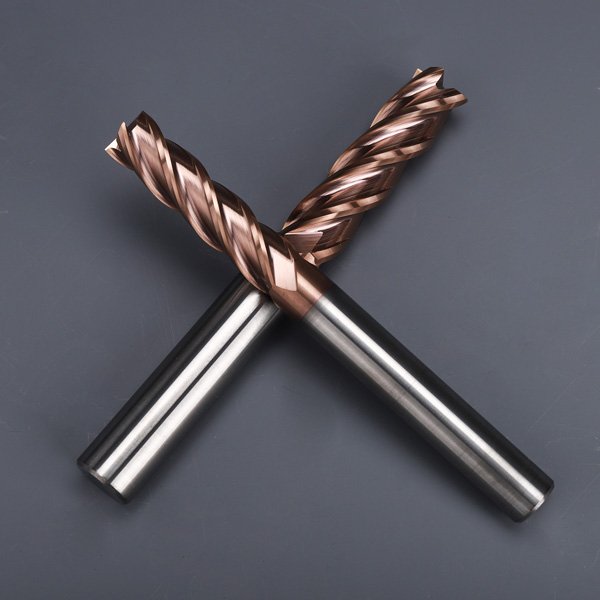
A milling cutter is a rotary tool with one or more bits used in milling operations, each of its bits is equivalent to a turning tool fixed to the rotary surface of the milling cutter. During a typical milling operation, a cutter in a milling machine moves perpendicular to its own axis, allowing it to remove surplus material from the workpiece around itself. Milling machines are versatile, they can be used to machine and fabricate parts of various shapes and sizes and perform a wide range of operations. A milling cutter is essential to carry out these tasks.
Types of milling cutters
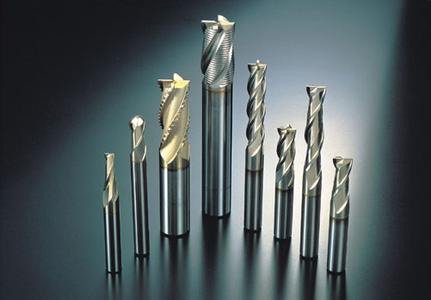
Cylindrical milling cutter
Used for machining flat surfaces on horizontal milling machines. The teeth are distributed on the circumference of the milling cutter. According to the tooth shape, it can be divided into straight teeth and spiral teeth, it can also be divided into coarse teeth and fine teeth according to the number of teeth. Spiral teeth and coarse teeth milling cuttershave high strength teeth, and are suitable for rough cutting while fine teeth milling cuttersare suitable for finishing machining.
End milling cutter
End mills are made of high-speed steel or hardened material with one or more junk slot.With cutting teeth on both sides of the end mill, it can cut in all directions, so this tool can be used for a wide range of drilling operationsvery successfully. There are usually two variants of this tool, one with cutting teeth on both sides and the other with cutting teeth on one side only.
Face milling cuter
Used for the operation table of vertical milling machine, face milling machine and gantry type milling machine. There are cutter teeth on the pedion and circumference, which are also divided into coarse teeth and fine teeth.
Side milling cutter
Used for machining various ditch grooves and ledge surfaces, with cutter teeth on both sides andcircumference.
Angle milling cutter
Used for milling grooves at specific angles, can be categorized into single-angle milling cutter and double-angle milling cutter.
Metal slitting saw
Used for machining deep pool and cutting off workpiece, it has many teeth on its circumference. In order to minimize friction during milling, the cutter teeth have a 15′~1°tool minor cutting edge angle on both sides.
T-slot cutter
For T-slot machining.
Basic requirements for milling cutter materials
High hardness
The tool must be hard enough to cut into the workpiece at room temperature.
Good wear resistance
Cutters with good wear resistance do not wear out easily, it also can extend the service life of the cutter.
Excellent thermal endurance
The cutting process results in a lot of heat, especially at higher cutting speeds, so the material of the cutter should have good heat resistance to maintain high hardness at high temperatures to continue to work.
High strength
The tool has to withstand a lot of impact force in the machining process, so the material should have high strength, otherwise it will break and damage simply.
Nice toughness
Since the milling cutter will be subjected to shock and vibration, the milling cutter material should also have good toughness in order to be less prone to chipping and shattering.
Commonly used materials for milling cutters
High speed steel (HSS)
1. With high content of tungsten, chromium, molybdenum, vanadium and other alloy elements, the quenching hardness can reach HRC62-70. HSS can still maintain a high hardness at a high temperature of 6000℃.
2. With high strength and toughness of the edge and strong vibration resistance, the HSS milling cutters can still cut smoothly for the machine tools with poor rigidity of steel.
3. Great performance, easy to forge, machining and sharpening, can make cutters with complex shape.
4. Lower hardness, poorer red-hardness and wear resistance than cemented carbide materials.
Cemented carbide
1. Manufactured from metal carbide and metal binder by powder metallurgy technology.
2. The hardness of cemented carbide at normal temperature can reach 86 ~ 93HRA (equivalent to 69 ~ 81HRC), it can maintain high hardness and has excellent wear resistance at 900 ~ 1000℃.
3. The compressive strength of cemented carbide is 6000MPa, and the modulus of elasticity is (4 ~ 7) ×105MPa. However, its bending strength is low, generally 1000 ~ 3000MPa.
4. Resist atmospheric, acid, alkali and other corrosion well, not easy to oxidize.
5. Keep shape and size stable while working.
Name of each part of the milling cutter
Tool reference plane: The plane past the selected point of the cutting edge. It is parallel or perpendicular to a plane or axis suitable for mounting or positioning the cutter during manufacture, sharpening and measurement. It is usually oriented perpendicular to the assumed direction of primary motion.
Tool cutting edge plane: A plane tangent to the cutting edge and perpendicular to the tool reference plane at a selected point through the cutting edge.
Rake face: The plane from which chips flow out.
Flank face: A face opposite to the machined surface.
Geometric parameters of milling cutters
Cylindrical milling cutter
Tool normal rake: The angle between tool reference plane and rake face. The function is to sharpen the edge of the cutter, which can reduce the distortion of the metal during cutting.
Clearance angle: The angle between tool cutting edge plane and flank face. It can reduce the friction between the flank face and the tool cutting edge plane and also can reduce the surface roughness of the workpiece.
Helical angle: The angle between the tangent line of the cutting edge and the cutter axis. The role is to improve cutting smoothness.
End milling cutter
The end milling cutter has an extra minor cutting edge, so besides the tool normal rake and clearance angle, it still has:
Tool major cutting edge angle: The angle between the tool major cutting edge plane and assumed working plane. It can change the width and thickness of the chips.
Tool minor cutting edge angle: The angle between the tool minor cutting edge plane and assumed working plane. The function is to reduce the friction of the minor cutting edge and the machined surface.
Tool cutting edge inclination angle: The angle between the major cutting edge and tool reference plane. It mainly serves as a beveled edge for cutting.
Protection methods for milling cutters
The situation will be serious when the milling cutter axis line and the edge line of the workpiece are close to or coincide. How can we protect the milling cutters?
1. Check the power and stiffness of the machine to ensure that the required milling cutter diameter can be used on the machine.
2. Use the correct milling cutter tooth pitch for the operation.
3. Ensure the feed rate of each cutter to minimize tool wear.
4. Select a milling cutter diameter that is appropriate for the width of the workpiece.
5. Selection of the correct tool major cutting edge angle.
6. Place the milling cutter correctly.
7. Use the cutting fluid only when necessary.
8. Follow the rules for tool maintenance and repair.
Solutions to common milling cutter problems
1. Overcutting: reduce the depth and width of cutting.
2. Lack of accuracy of machines or fixtures: repair faulty machines and fixtures.
3. Lack of rigidity of machines or fixtures: change the cutting setting of machines or fixtures.
4. Low number of edges: use multi-edge end milling cutters.
Phenomenon after milling cutter passivation
1. From the shape of the chip, it becomes coarse and flaky, and due to the increase in temperature, the chip turns purple and is smoky.
2. The surface of the workpiece is roughwith bright spots, nibble marks or ripples.
3. The milling process produces severe vibration and unusual noise.
4. When milling steel parts with carbide cutters, a large amount of fire mist often flies out.
5. When milling steel parts with HSS milling cutters that are cooled with oil lubrication, a large amount of smoke will be generated.
Choosing the right milling cutter can be challenging, which is why you need to outsource to a specialized CNC service provider like CYCO. CYCO offers a wide range of CNC machining services and can help you choose the most suitable milling cutter according to your needs, which can help you improve machining efficiency.
We specialize in CNC machining processes for all types of materials.CYCO can select the most appropriate machining method for your needs and materials, and our dedicated team can provide expert advice on the selection of technologies.
Upload your design to get a instant quote now and feel free to contact us for more information.