Metal inert-gas welding (MIG) welding — Also known as semiautomatic welding
1. Maintain 1/4-3/8-inch welding wire rod extension (length of wire extending from the welding gun head).
2. Use small-diameter wire for thin plates, large-diameter wire and a high-current welder for thick plates.
3. Utilize the correct wire to weld the workpiece. Stainless steel wire for stainless steel, aluminum wire for aluminum, and steel wire for steel.
4. Select the correct protective gas. Carbon dioxide is well suited for welding steel, but may be too hot for welding thin plates; a mixture of 75% argon and 25% carbon dioxide should be used to weld thinner materials. For welding aluminum, you can only use argon. When welding steel, you can also use a mixture of 3 gases (helium + argon + carbon dioxide).
5. To achieve the best results in controlling the bead, the wire should be held directly aimed at the bonding edge of the molten pool.
6. When the welding operation is in an abnormal position (like vertical position welding, horizontal position welding and overhead position welding), keep the melt pool small to achieve optimal control of the weld bead and use the smallest diameter welding wire as possible.
7. Make sure the wire size matches the conductive nozzle, liner tube, and drive roller.
8. Clean the liner tube and drive rollers frequently to keep the welding gun muzzle free of spatter. Replace the welding gun muzzle if it is clogged or jammed.
9. Keep the welding gun as straight as possible when welding to avoid wire delivery problems.
10. Use both hands at the same time during the welding operation to ensure the stability of the welding gun.
11. Adjust the looseness of the wire delivery machine’s wire tray and drive rollers, it should not be too tight.
12. When the wire is not being used, store it in a clean and dry area to avoid contamination which could affect the welding results.
13. With direct current electrode positive (DCEP) power supply.
14. Drag welding for deeper melting and narrower welds. Push welding results in shallower melting and wider welds.
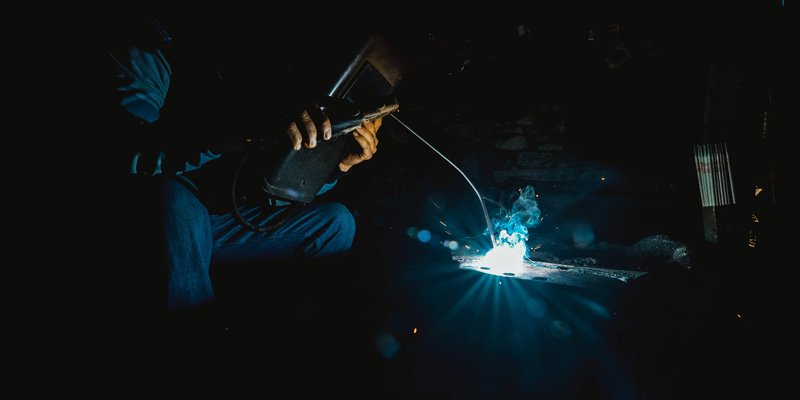
Aluminum welding
1. The most suitable welding gun for aluminum is the wire-drawing welding gun, and if you can’t use this type of gun, try to use the shortest gun to keep the gun straight.
2. Only argon can be used as a protective gas.
3. Use only the push gun technique.
4. If you have wire delivery problems, then try a conducting tip that is one size larger than the wire.
5. The most commonly used wire for welding aluminum is the softer standard wire.
6. To remove the oxide layer on the surface of the aluminum before welding starts, you can use a special stainless steel brush to remove the oxide layer.
7. Fill the arc crater well at the end of the weld to prevent cracking, and for reference, you can leave the welding gun in the molten pool for a few seconds after the weld.
Self-shielded fluxcored welding wire semi-automatic welding
1. Use the pull (or drag) gun technique when welding.
2. Keep the wire clean and dry for optimum welding quality.
3. The molten slag layer on the surface of the post-weld must be cleaned off after the welding is completed. A chipping hammer and wire brush can be used for slag removal.
4. No need for extra containers of protective gas. (The protective agent is inside the welding wire). This trait makes it ideal for use in outdoor operations, where protective gases can be easily blown away.
5. Welding thin plates is more difficult than MIG welding.
Tungsten inert gas (TIG) welding– The most commonly used method of welding.
1. Ideal for thin plate welding – a clean weld procedure results in a beautiful weld appearance.
2. Argon is used as a protective agent when welding steel and aluminum.
3. Use direct current electrode negative (DCEN) for welding steel and stainless steel, and alternating current (AC) for aluminum.
4. Always use the push-gun technique.
5. Match the size of the tungsten electrode to the size of the conductive nozzle.
6. Use pure tungsten electrodes for aluminum welding.
7. Steel and stainless steel should be welded using tungsten electrodes containing 2% thorium.
Shielded metal arc welding (SMAW)
1. Majority use the drag gun technique.
2. Be prepared to prevent welding slag flying.
3. Keep the covered electrode clean and dry, as recommended from the manufacturer.
4. Fusion: direct current electrode negative – maximum
alternating current – medium(may also have more flying spatter)
direct current electrode positive – minimum
Resistance welding
1. Only for welding steel and stainless steel, not suitable for welding aluminum, copper or copper alloys.
2. Use shorter horns for greater heat.
3. For welder without a heat control function, the length of the horn should be utilized.
4. The longer horns may be bent.
5. Make sure that there are no gaps between the welded workpieces, or the welding result will be greatly affected.
6. Keep the two horns in line to make it easier for the electrodes to align with each other.
7. Clean the electrodes frequently, otherwise the output current will be reduced. The electrodes should also be given a suitable protective cover.
Summary
With over 20 years of experience in mechanical manufacturing and machining, CYCO have advanced technology and professional staff. If you have any questions about CNC machining service, feel free to contact us, upload your design to get a instant quote now!
CYCO, a reliable and trustworthy partner. Choose CYCO, no worries.