Powder coating is a popular surface treatment for CNC machining that confers improved physical and mechanical properties on custom machined parts.
What is powder coating?
It is often used to create a harder surface than traditional liquid coatings and can be used on plastic, glass or metal surfaces.
Powder coatings are usually finished by electrostatic spray deposition (ESD) or fluidized bed, both of them providing great gloss, texture, various colors, and high-quality surfaces, allowing them to be used in all kinds of products, including medical, architectural, automotive and even avionics.
Types of powder coating
Powder coatings are usually divided into two main categories: thermoplastic and thermoset powder coatings.
There are also three categories, including thermoplastics, thermosets and UV-curable powder coatings, with UV curing being the most advanced technology.
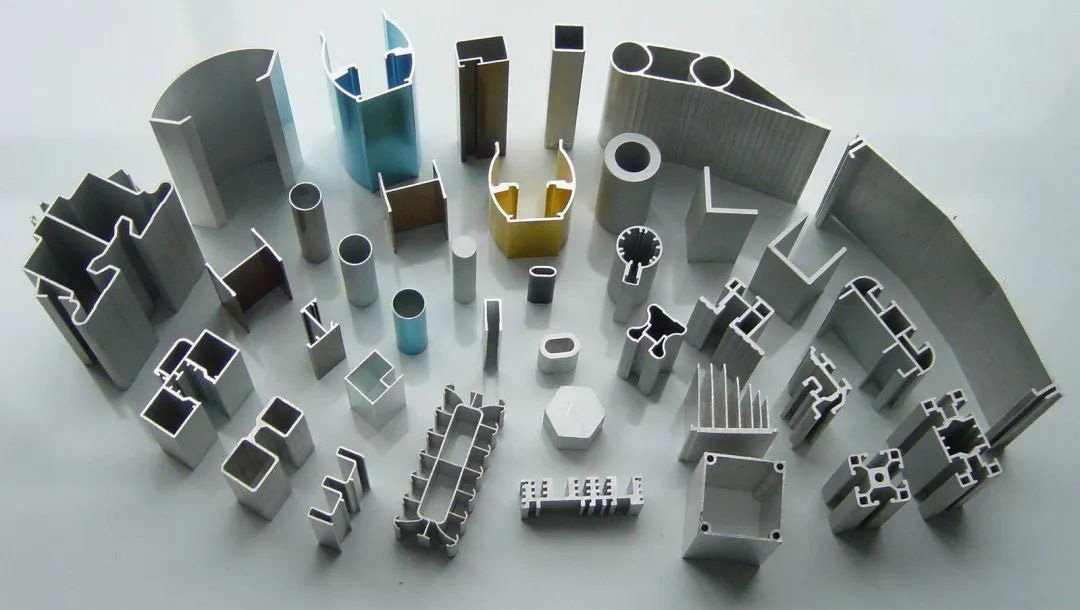
Materials for surface treatment of thermoplastic powder coatings
Refers to plastics that will soften when heated.
When heated and softened, it can be coated on the desired part to cover it and gain specific mechanical strength on cooling.
In industry, thermoplastic coatings are often used for durability, aesthetic and safety purposes.
Below are some of the types of thermoplastic powders used in industry:
Nylon
An excellent thermoplastic powder coating material with good durability and good impact resistance. It also has a low coefficient of friction, which makes it ideal for gears and machine tool finishes.
PVC
Introduced to the market during the initial phase, these coatings are flexible, smooth, durable and resistant to most solvents. The basic benefits of this coating are in chemical and electrical insulation.
Polyester fiber
Known for its durable finish, nice appearance and good wear resistance. For these reasons, it is mostly used for outdoor automotive and avionics components, and is also ideal for construction.
Acrylic
High quality finish and high impact resistance, this process requires high curing temperatures, which is why it is considered an expensive powder coating. Its excellent alkali resistance is ideal for parts such as washing machines and marine structures.
Acrylic powder coatings can be electrostatically sprayed for ideal chemical resistance, excellent physical strength and durability.
Materials for surface treatment of thermosetting powder coatings
Thermoset resins are broken down into powdered materials that are applied as a film over the desired part. They offer better chemical and physical properties in terms of aesthetics and are more resistant to corrosion than regular oil coatings.
In modern times, thermoset technology has improved considerably with enhanced physical and chemical properties.
The following are common thermoset materials:
Epoxy resin
A thermosetting powder coating that uses an epoxy resin as a binder.
The surface is hard and brittle, does not have good weatherability, and will dull with time. Because of these factors, they are primarily used for materials that do not interact with UV light directly. However, because of their excellent durability, chemical resistance, and adhesion, they are often used in industrial and commercial applications that require these properties.
Epoxy-polyester fiber blend
Offers the benefits of epoxy and polyester fibers with excellent chemical resistance and durability, making it ideal for a variety of applications.
These powder coatings are also resistant to UV rays and abrasion, making them an excellent choice for outdoor applications.
Surface treatment of UV-curable powder coatings
A coating that cures under ultraviolet light. Unlike traditional methods that require heat to cure, UV-cured powder coatings can cure at much lower temperatures, which makes them ideal for fragile or heat-sensitive materials, and it also has a shorter cure time than traditional powder coatings.
UV-cured powder coatings offer many advantages over traditional powder coatings, including faster cure times, better durability, and greater flexibility in color selection. However, they are typically more expensive than traditional methods, but the improved performance makes the extra cost reasonable.
How does the powder coating process work?
Powder coating is divided into different stages which are essential for obtaining a high quality coating. The whole working process can be divided into three steps:
Pre-treatment
Application of powder coating methods (fluidized bed and electrostatic spray deposition)
Curing process
Pretreatment
The presence of dust and grease can affect the coating of the material so the workpiece should be cleaned if you want your workpiece to have a smooth and high quality finish.
If your workpiece is covered with rust, you need to treat it in a sandblasting room, which uses compressed air to blow away all the debris from the workpiece.
If your workpiece contains oil or other chemical solvents, it will have to be cleaned with some chemicals, such as iron phosphate for steel.
In addition to these common pre-treatment procedures, there are many new techniques available today that are ideal for reducing costs and obtaining a low uniformity surface.
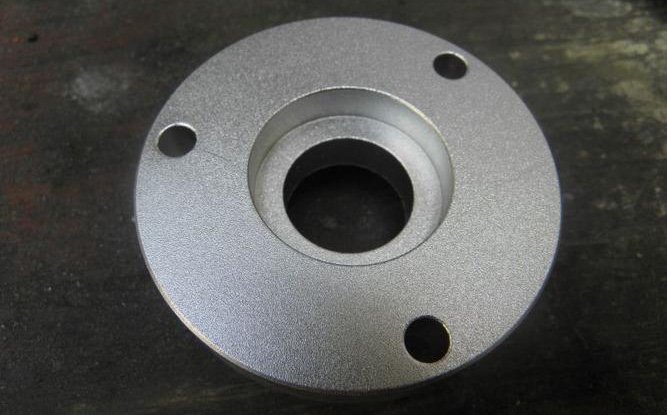
Application of powder coating method
There are various ways to decide based on production needs, price and material selection.
The two most common methods are electrostatic spray deposition (ESD) and fluidized bed powder coating.
ESD
Charged powder particles are deposited on the workpiece by electrostatic deposition.
When the application starts, the electrostatic gun starts spraying negatively charged powder and these charged particles are thrown towards the positively charged workpiece where they are stuck to the surface of the workpiece due to the electrostatic attraction.
After powder deposition the workpiece is heated for some time to obtain a smooth surface. In order to produce a thicker coating, the coating process must be repeated or cycled and adjusted. It has many advantages compared to traditional methods, including better durability, greater resistance to chipping and scratching, and a smoother appearance.
Electrostatic powder coated parts are used in a wide variety of industries including automotive, construction, furniture and appliances.
Fluidized bed powder coating
Powder coatings are applied to workpieces by using a fluidized bed.
The workpiece is placed in the fluidized bed, the powder is applied to the workpiece with a spray gun, and then the powder is cured by heat or UV light. The fluidized bed helps in even distribution of the powder on the workpiece while the spray gun ensures even adhesion of the powder.
Fluidized bed powder coating is a durable finish that resists chipping, scratching and fading. It is also a low-maintenance finish that does not require polishing or waxing.
Curing Process
Curing time depends on the part, material and finish requirements, for example, thick film parts require more time than thin film parts. Typically, the ideal cure time is 10 to 20 minutes at temperatures of 350-400 °C. Under these conditions, the powder melts and presents a smooth, high quality surface.
Powder coating is a type of paint that uses finely ground pigments and resin particles to give the surface a glossy and consistent finish. It provides a more durable finish than traditional paint and is available in a wide range of colors and finishes.
Pros and cons of powder coating treatments
Pros
Durability
Critical benefits.
Most powder coating materials are resistant to fading, chipping, scratching and abrasion.
They offer ideal physical strength and a durable finish compared to paint. Unlike traditional liquid paints, they do not fade in open environments, which is why it is used in most automotive and aerospace industries.
In addition, the problem of rust is very common for metal parts and powder coatings prevent them from rusting. Rust prevention is the most famous property of powder coatings as compared to conventional coatings.
Cost effective
A more cost effective option compared to liquid coatings.
Although it has a higher initial cost, it requires less energy to cure. Additionally, powder coatings offer a more durable finish than liquid coatings, which means products with powder coatings will last longer.
High quality surface coatings
Powder coating treatments produce high-quality parts with clean surfaces and modern aesthetics, as well as improved physical strength, wear resistance and other properties of the product.
Environmentally friendly
An ideal method for the environment.
It is free from all forms of harmful chemicals and solvents. In addition, excess powder will be recycled, so the process produces very little waste.
Cons
Higher initial cost
High cost of equipment and raw materials leads to high initial setup cost. In the long run, the cost is much lower than conventional paints, which degrade after 1 or 2 years, while powder coatings last for years and decades.
Powder cannot be mixed
Wet paint can be mixed with different colors to create a new color for the desired effect, but this is not possible with powder coatings. Powders cannot be mixed, they have to be used separately, but there is a wide range of colors to choose from.
Difficult to repair
Paints are easy to repair, but powder coatings are a different deal because the repair must complete the entire process.
Tips for the perfect finish
Treat the surface well
The most important step.
If the surface is not prepared well, the powder will not stick well and will not provide the desired results. Before you start powder coating, make sure the surface is polished smooth and free of any contaminants.
Choose the right powder material
Different types of powders are used for different purposes, make sure you choose the right powder coating material for your project. If you’re not sure, consult a specialized machining company like CYCO.
Use paint guns correctly
Make sure the gun bit is the right size for the task.
A too-small gun bit can result in powder not flowing properly and uneven coverage, while a too-big gun bit can lead to overspray.
In addition, the powder coating gun should have the correct voltage setting. Too much voltage will cause the powder to bead up and won’t adhere properly, while too little voltage will result in poor coverage.
Ensure that the powder is cured
Make sure the powder is cured according to the manufacturer’s instructions, this step is usually done in an oven at a specific temperature and for a specific time. After the powder has cured, an inspection of the powder coated surface will be required to ensure that there are no defects on the surface.
Conclusion
If your CNC machined part needs a coating, you may need to spend a lot of time to choose, and it may be a little difficult.
With over twenty years of experience, we specialize in all types of CNC machining including powder coating, you can fully trust our CNC machining services.
In order to avoid wasting your valuable time, you can choose CYCO as your partner without any hesitation!
Work with us for a worry-free experience now!