Why do materials need a surface treatment?
The answer is quite simple: to enhance the adaptability to the working environment as well as to add aesthetic value to the appearance.
Would you like to know what surface treatments are available and which one best suits your needs?
Keep reading for more information.
Concept of Surface Treatment
Surface treatment is the process of artificially forming a surface layer on the surface of a substrate material with mechanical, physical and chemical properties different from those of the substrate.
The purpose of surface treatment is to meet the corrosion resistance, wear resistance, decoration or other special functional requirements of the product.
Classification of Surface Treatment
There are many different surface treatment processes for materials, in this article, we categorize them according to whether or not there is an added or removed material: additive processes, subtractive processes and printing processes.
Additive Processes
Create a better surface by adding materials.
Painting
A fast and efficient means of applying adhesives, primers, coatings, paints, oils, sealants and enamels. It is currently the most common surface treatment, suitable for both plastics and metal. The surface of the object determines the final spray effect and the time required for the process. There are usually two coats, the one presenting the color is called the top coat and the outermost transparent layer is called the protective coat.
Process Flow
Pre-cleaning: for example, electrostatic dusting.
Top coat spraying: the color visible on the surface.
Top coat drying: room temperature natural drying or special oven drying.
Top coat cooling: cooling is required for special oven drying.
Spray protective paint: generally used to protect the top coat, most of the protective paint is transparent.
Curing protective paint.
Quality control check.
Powder Coating
The process is a dry spraying method in which a number of metal workpieces are coated by electrostatic powder coating or fluidized bed coating of powder. The powder is electrostatically attracted to the surface of the workpiece and is heated so that it flows and forms a surface film on the metal. When it is completely dry, it forms a protective film on the surface.
Although suitable for some metal parts, plastics and glass, powder coating is mainly used to protect or color aluminum and steel.
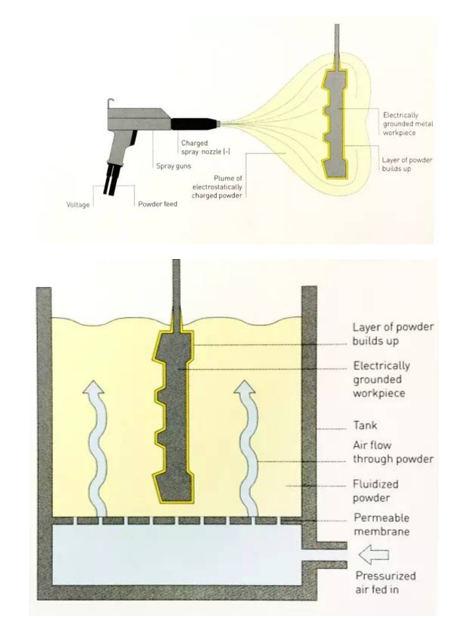
Compared to painting, powder coating uses static electricity to adsorb the powder particles and has a higher material utilization rate, which can reach 95%. However, the cost of powder coating equipment is higher.
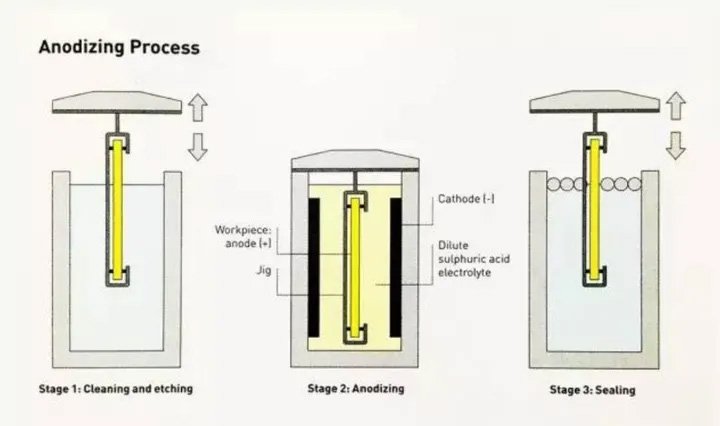
Anode Coating
A chemical plating surface coverage treatment that changes the appearance, surface color, and texture structure of a product. And different voltages can produce different colors, the higher the voltage, the deeper the color. This process is only suitable for surface plating of aluminum metal, titanium metal and magnesium metal.
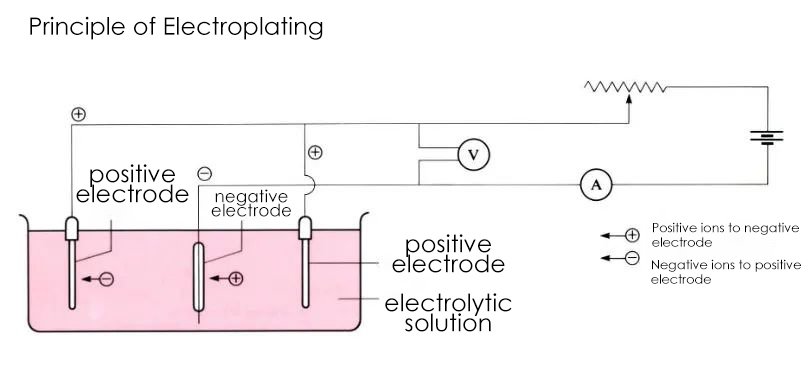
Electroplating
The process of using electrolysis to attach a metal film to the surface of a part, which prevents oxidation of the metal, improves wear resistance, electrical conductivity, reflectivity, corrosion resistance and enhances aesthetics.
Most metals can be electroplated, many of the outer layers of coins are also electroplated, and different metals have different levels of purity and plating efficiency. In addition, nickel metal should not be used for plating products that are in contact with the skin, as nickel is irritating and toxic to the skin.
Galvanizing
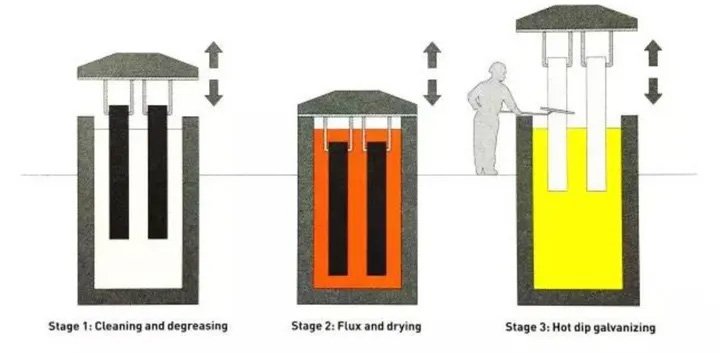
A surface treatment technique in which a layer of zinc is plated on the surface of a steel alloy material to provide aesthetic appeal, rust prevention, and other benefits. The galvanizing process relies on metallurgical bonding technology, so it is only suitable for surface treatment of steel and iron.
The zinc layer on the surface is an electrochemical protective layer that prevents the metal from corrosion, and the main methods used are hot-dip galvanizing and electro-galvanizing.
Galvanized workpieces can be returned to the galvanizing bath at the end of their service life, and the repeated use of liquid zinc produces no chemical or physical waste.
Vacuum Metalizing
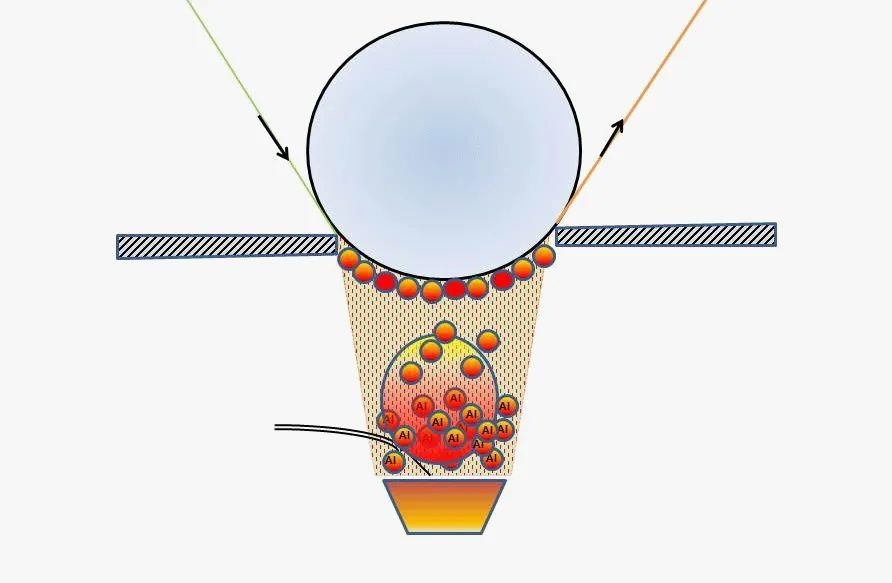
Also known as physical vapor deposition (PVD). Vacuum metalizing is the process of injecting argon gas under vacuum to impact a target material, which separates into molecules that are adsorbed by conductive goods to form a uniform, smooth, metal-like surface layer.
Many materials can be vacuum metalized, including metals, hard and soft plastics, composites, ceramics and glass. One of the most common surfaces used for vacuum metalizing is aluminum, followed by silver and copper.
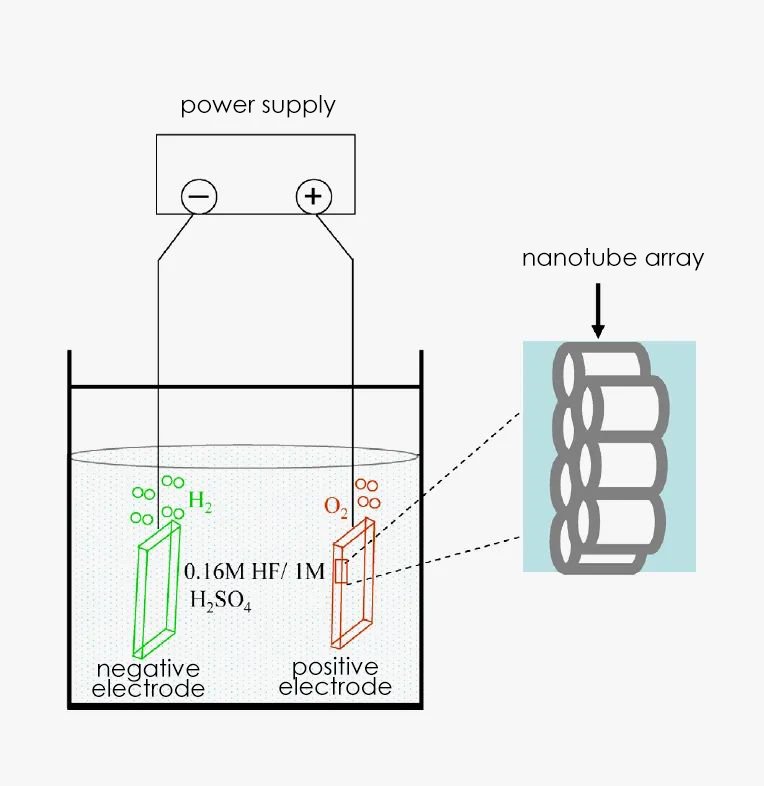
Anodic Oxidation
The process by which aluminum and its alloys form a layer of oxide film on the aluminum product (anode) as a result of the action of an applied electric current under the corresponding electrolyte and specific process conditions. This oxide film has special characteristics such as protective, decorative, insulating and wear-resistant properties.
If not specified, it usually refers to sulfuric acid anodic oxidation.
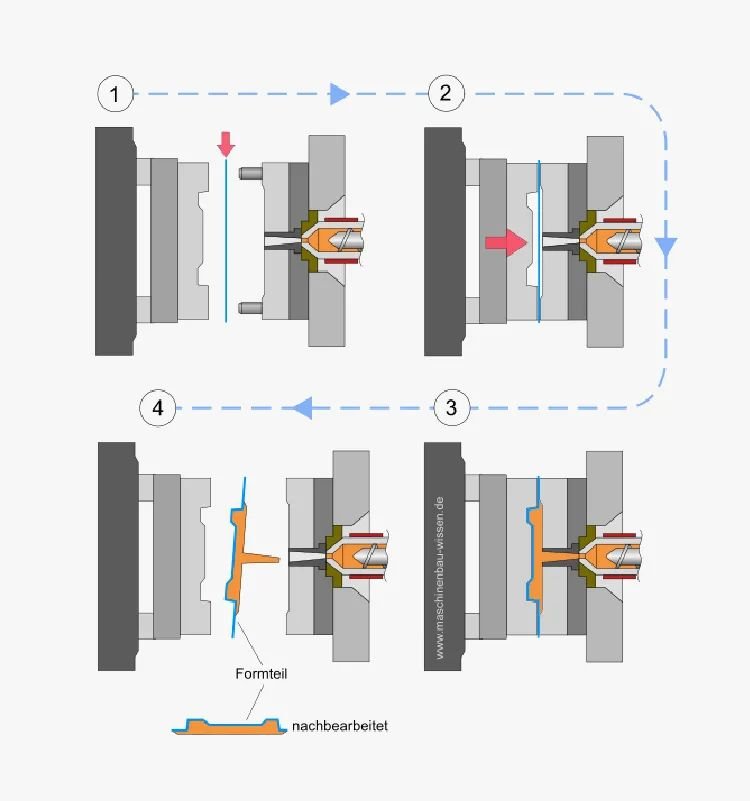
In Mold Decoration (IMD)
First, put the film with printed pattern into the metal mold, and then inject the molding resin into the metal mold, so that the patterned film and resin are formed into a single piece.
This technology is green and environmentally friendly which avoids the pollution caused by traditional painting and electroplating.
Subtractive Processes
Remove material to create the desired product.
Grinding
Through the use of grinding machinery, the surface of an object is eroded by abrasive particles. The surface finish varies from rough to mirror-like and can yield uniform textures or patterns.
Grinding can be used to process a wide range of metallic or non-metallic materials, and the shape of the processed surface varies depending on the requirements.
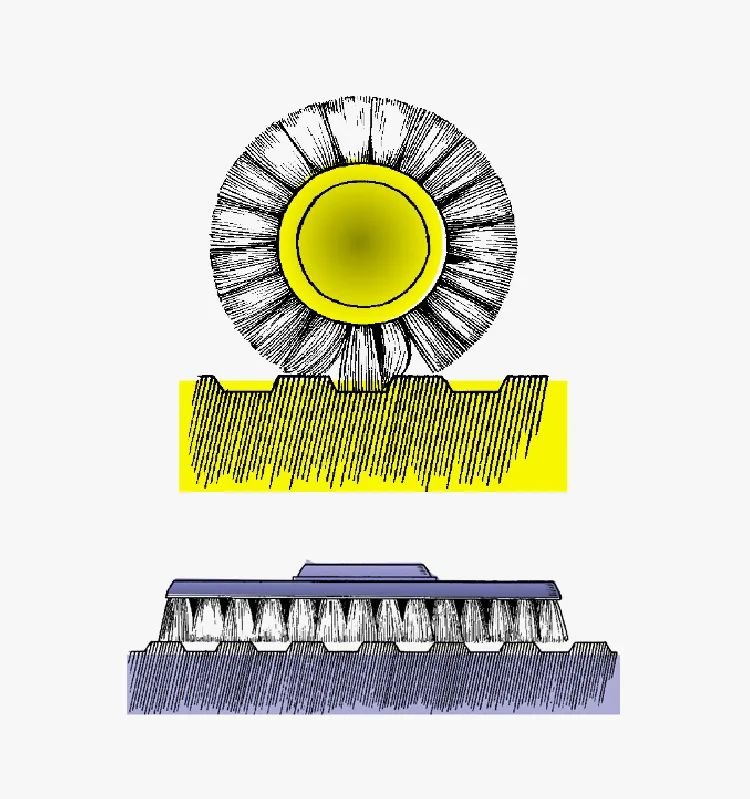
Metal Wire Drawing
A kind of surface treatment means by grinding on the surface of the workpiece to form a line pattern, which plays a decorative effect. According to the different patterns after drawing, it can be divided into straight drawing, messy drawing, corrugated drawing and spinning drawing.
Wire drawing gives the metal surface a matte metallic luster and also eliminates minor imperfections on the metal surface.
Electropolishing
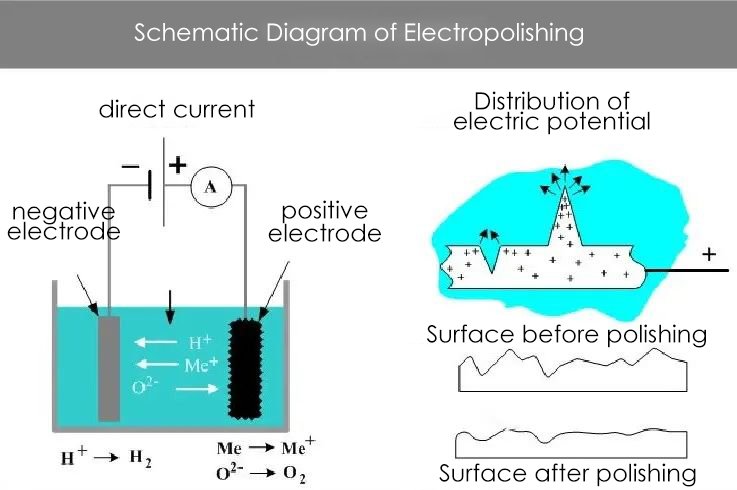
With the polished workpiece as the anode and the insoluble metal as the cathode, both poles are immersed into the electrolyzer at the same time. The reaction with direct current produces selective anodic dissolution, achieving the effect of removing fine burrs on the surface of the workpiece and increasing the brightness.
Most metals can be electrolytically polished, with the most common use being the surface polishing of stainless steel, especially for austenitic nuclear grade stainless steel.
However, different materials should not be electropolished at the same time or even in the same electrolytic solvent.
Sand Blasting
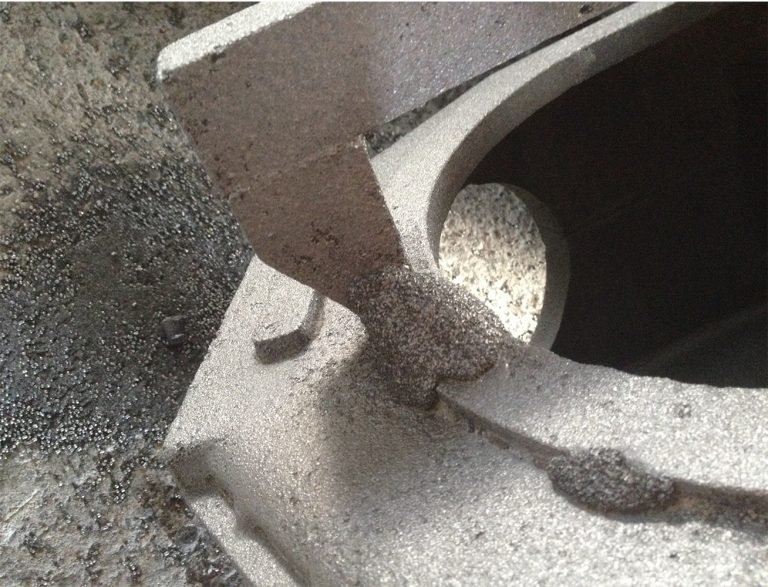
Cleaning and roughening the surface of the substrate by the impact of a high-speed sand stream. Sandblasting uses a high-speed jet beam powered by compressed air to blast the blast material onto the surface of the workpiece. Commonly used blast materials include copper ore sand, quartz sand, diamond sand and iron sand.
Due to the impact and cutting of the blast material on the surface of the workpiece, it makes the surface of the workpiece obtain a certain degree of cleanliness and different roughness, which improves the mechanical properties of the surface of the workpiece, enhances the fatigue resistance of the workpiece, increases the adhesion between the workpiece and the coating, prolongs the durability of the coating film, and is also conducive to the leveling of the coatings and the decoration.
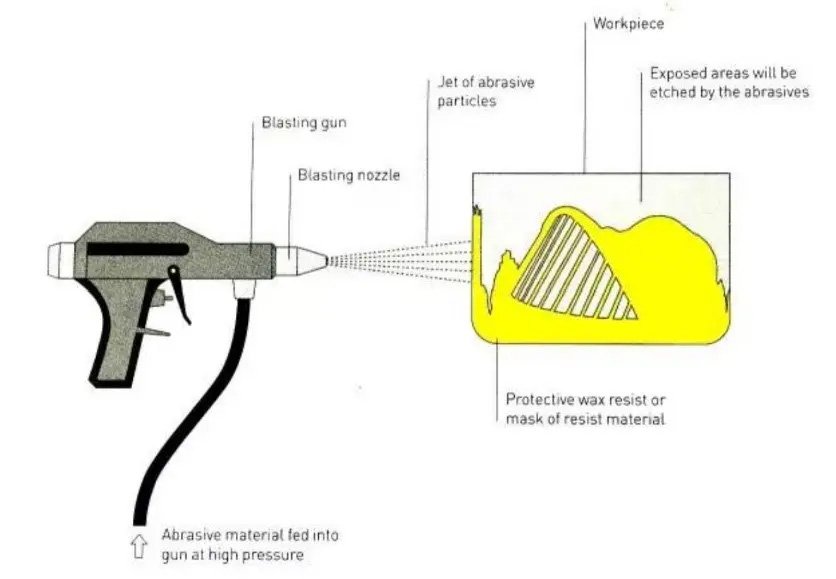
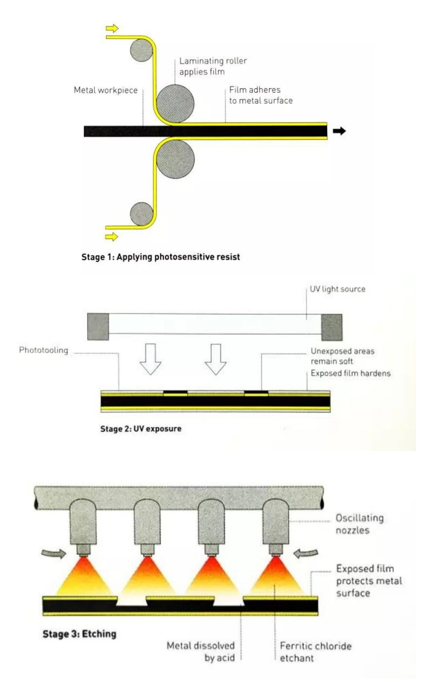
Photo Etching
This is a method of producing a photographic resist image to protect a surface, and then etching the surface of a metal or plastic with the aid of a chemical etchant to produce a surface texture.
Mostly metals are suitable for photo-etching surface treatment, the most common are stainless steel, soft steel, aluminum, brass, nickel, tin, copper and silver.
Aluminum has the fastest speed of photo-etching, while stainless steel is the slowest.
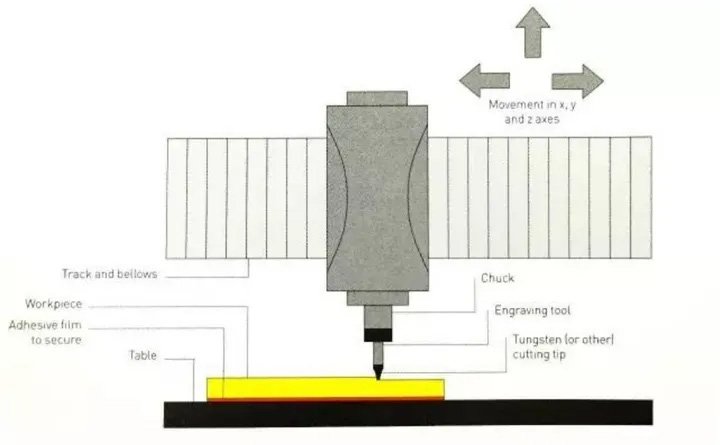
CNC Machining
Used to engrave the 2D or 3D surface of a product, it is a high quality and repeatable precision process.
Almost all materials can be CNC cut, such as plastic, foam, wood, metal, stone, glass, ceramics and polymers.
Printing Processes
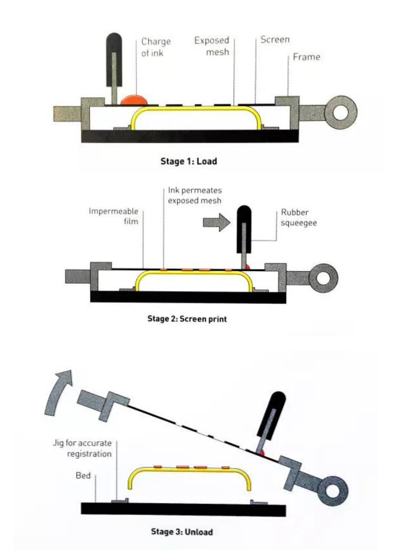
Screen Printing
Through the squeezing of the squeegee, the ink is transferred to the substrate through the mesh of the graphic part, forming the same graphic as the original. Screen printing equipment is simple, convenient to operate, easy to print and make plates, low cost and strong adaptability.
Almost all materials can be screen printed, including paper, plastic, metal, pottery and glass.
Pad Printing
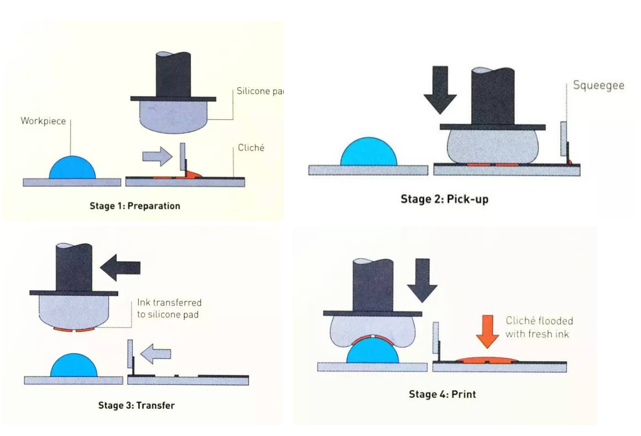
Printing technology that transfers the graphics on the intermediate carrier to the substrate by applying the appropriate pressure. Pad printing is an important type of specialty printing that can print text, graphics, and images on an irregular and alien surface.
This printing method is used for text and graphics on the surfaces of cell phones, as well as the surfaces of many electronic products such as computer keyboards, instruments, and meters. The pad printing process can be used on almost all materials, except for those softer than silicone mats, such as PTFE.
Hydro Transfer Printing
It is a way that uses water pressure to print color patterns on transfer paper to the surface of three-dimensional products. With the improvement of people’s requirements for product packaging and surface decoration, hydro transfer printing is more and more widely used.
All hard materials are suitable for hydro transfer printing, and materials suitable for spraying must also be suitable for hydro transfer printing. The most common are injection molded parts and metal parts.
Summary
Surface treatment is not a staple of industrial manufacturing, but only through surface treatment can the value of the finished part be more fully realized.
Parts are always damaged from the surface, and surface treatment not only improves the quality of the parts, but also gives the surface an aesthetic appearance.
The above describes some common surface treatment processes, hopefully it can help you choose the right one according to your material and needs.
If you still have questions about the choice of surface treatment process, you can choose a machining expert like CYCO for help.
In order to avoid wasting your valuable time, you can choose CYCO as your partner without any hesitation!
Work with us for a worry-free experience now!