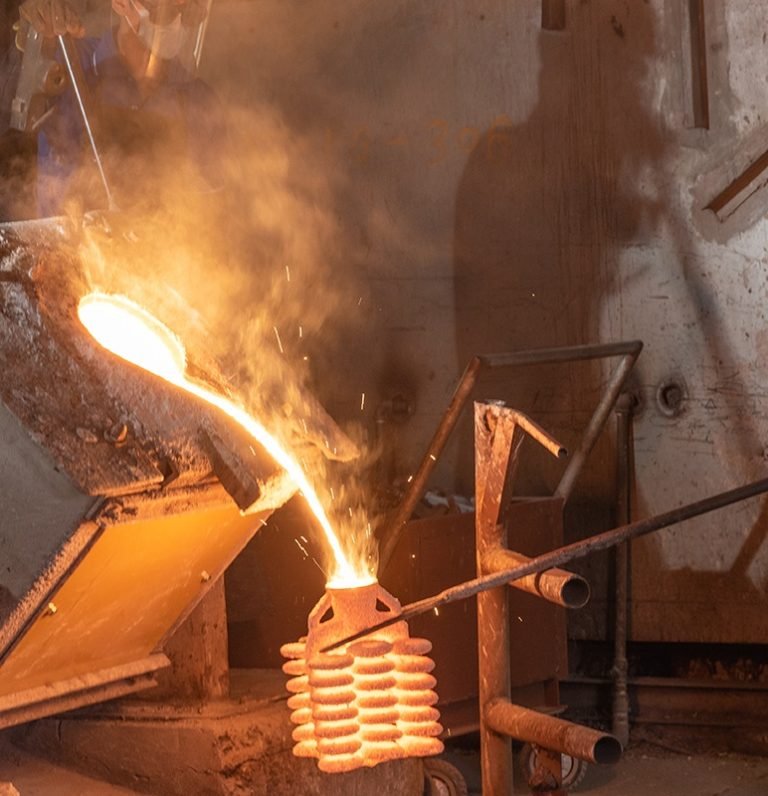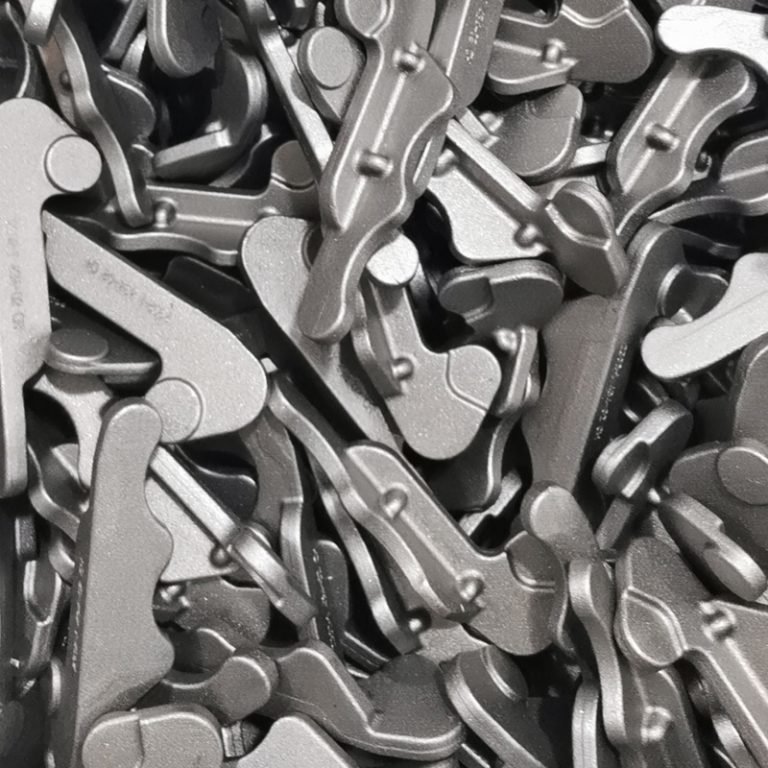
Permanent mold casting, also known as hard mold casting or gravity casting, is a process where molten metal is injected into a pre-made metal mold under the action of gravity, and then cooled and solidified inside the mold to form a casting of the desired shape and size.
Introduction to Permanent Mold Casting
Permanent Mold Casting (PMC) is the process of transferring molten metal into a metal mold with the help of gravity and ensuring that the metal solidifies in the mold. The molds are usually made of metallic materials such as iron, steel, aluminum or copper. These materials have excellent thermal stability and wear resistance, are able to withstand the impact of high-temperature molten metal, and can effectively transfer heat to promote rapid cooling and uniform solidification of the casting. If a sand or plaster core is used in permanent mold casting, it is called semi-permanent mold casting.
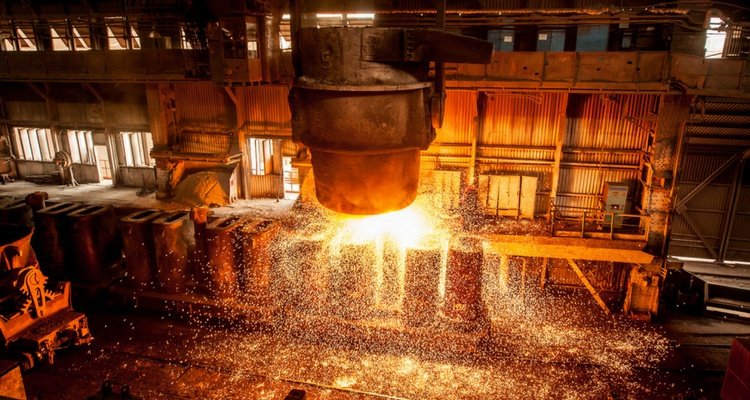
PMC is particularly suitable for high-volume casting production, which produces parts with more precise dimensional tolerances, superior surface quality and mechanical properties. Depending on the working conditions of the mold, PMC can be divided into manual, semi-automatic and automatic systems. In manual systems, the mold components are separated by hand and the product is removed from the mold manually. In semi-automatic systems, the mold is automatically controlled by a hydraulic or pneumatic system equipped with production-appropriate software that opens and closes the mold faster. In this type of mold, the two halves are mounted on a pin and aligned. There is no mechanical connection between the mold parts and they can be completely separated after pouring. When the two halves of the mold are closed, the liquid metal enters the mold cavity through the gate and riser, and the space between the closed mold parts is the shape of the casting.
The mold cavity should be well designed so that air can escape from the mold during the pouring process. In the PMC method, correctly determining the optimum casting temperature is very important to ensure the accuracy and quality of the casting. Like all casting methods, the pouring temperature for PMC depends primarily on the chemical composition of the metal. Other factors include the size and weight of the casting, the wall thickness of the casting, the mold cooling application, the mold coating, and the gating system used.
Working Process of Permanent Mold Casting
- Mold preparation: Design metal molds according to the shape, size and performance requirements of the required castings. Metal molds are usually made of iron, steel, aluminum or copper, through cutting, welding, machining or casting and other methods. The mold usually includes two parts: the fixed mold and the moving mold, which form a closed cavity when the mold is closed, and the shape of the cavity is the same as the final casting.
- Coating: A special coating, usually a heat-resistant coating, is applied to the surface of the mold. This helps improve the flow of the metal and reduces adhesion to the mold surface.
- Preheating: To ensure that the metal is fluid enough to fill the shape of the mold when it is poured, the metal mold is preheated to the proper temperature. In addition, preheating reduces the temperature difference between the mold and the molten metal to prevent excessive thermal stresses and cracks inside the casting.
- Pouring: Liquid metal is injected into the preheated metal mold, and the pouring system can provide space for venting. Pouring can be done by gravity, pressure or vacuum to ensure that the metal fills the entire mold chamber. The pouring rate and temperature need to be precisely controlled to avoid casting defects such as porosity, cold segregation and inclusions.
- Cooling: Once the metal has filled the mold and achieved the desired shape, the mold begins to cool. The rate and manner of cooling may affect the microstructure and properties of the final product.
- Solidification: The casting gradually solidifies and forms a solid structure inside the cavity that is identical to the shape of the cavity. The cooling process contributes to the formation of a dense, uniform internal organization and improves the mechanical properties of the casting.
- Holding: Keep the mold closed until the casting is completely cooled and has a certain strength so that the casting continues to cool slowly inside the cavity, which helps to reduce thermal stresses and distortion.
- Mold Opening: Separate the mold after the metal has cooled completely. This reveals the molded metal part, but careful separation of the mold is required before this to prevent damage to the part or mold.
- Post-processing: After the mold is removed, the casting is cleaned and machined, including deburring, resizing, and surface preparation to meet the quality requirements of the final product. After use, metal molds may need to be cleaned, polished and repaired to maintain their accuracy and service life.
Metals Commonly Used in Permanent Mold Casting
Used to make molds
- Tool steel: A mold material with high wear and heat resistance. Commonly used tool steels include H13 (hot tool steel), which maintains hardness and strength at high temperatures.
- Alloy Steel: Alloyed for superior hardness, strength and wear resistance, P20 is a common alloy steel used in the manufacture of plastic injection molds.
- Copper alloys: Such as brass and bronze. Due to their excellent thermal conductivity and corrosion resistance, they are commonly used in the production of castings that require rapid cooling and high precision. Copper alloy molds are particularly suitable for the casting of aluminum alloys, magnesium alloys and other non-ferrous metals with low melting points.
- Cast iron: Gray iron and ductile iron are commonly used casting mold materials, they have high wear resistance and thermal conductivity. Gray iron is mainly used for the production of large cast iron parts, while ductile iron is suitable for the production of complex shapes and high-precision requirements of the parts.
- Cemented carbide: Such as tungsten-cobalt alloy, tungsten-titanium-cobalt alloy. With extremely high hardness and wear resistance, they are commonly used to make key parts of molds, such as cavities and gates, to extend the service life of the molds.
- Cobalt-based alloys: Excellent high-temperature strength and corrosion resistance, suitable for permanent mold casting in high-temperature environments, such as molds for casting high-temperature alloys.
- Nickel-based alloys: Superior corrosion resistance and high temperature, suitable for some requirements for high temperature stability requirements.
- Titanium alloys: Provide good strength and corrosion resistance, suitable for permanent mold casting in some special environments, such as the aerospace field.
- Ceramics: High temperature ceramic materials, such as alumina ceramics, can be used to make high temperature permanent mold casting molds. They have excellent wear resistance and high temperature stability.
- Steel alloys: Mold materials with high strength and wear resistance, suitable for manufacturing metal molds of various shapes and sizes.

Used to make parts
| Metals | Advantages | Applications |
| Aluminum alloy | Good flowability, light weight, nice thermal conductivity and corrosion resistance | Automotive and aerospace components, electronic housings |
| Copper alloy | Excellent electrical and thermal conductivity, well wear resistance and corrosion resistance | Cable glands, electronic components, radiators, bearings, marine propellers, valves |
| Zinc alloy | Great fluidity and corrosion resistance, excellent castability and compressive strength | Small and complex parts, such as hardware, zippers and toys |
| Magnesium alloy | High specific strength and corrosion resistance, very low density, favorable strength-to-weight ratio | Lightweight design for aerospace, automotive, electronics, and more |
| Titanium alloy | High strength, low density, excellent corrosion resistance | Applications requiring high strength and low density such as aerospace, medical, chemical |
Merits and Limitations of Permanent Mold Casting
Merits
- High precision: High dimensional accuracy and low surface roughness can preserve the details and high-precision features of the parts, meeting the needs of applications with high requirements for precision and quality.
- Excellent mechanical properties: Due to the high thermal conductivity of the metal mold, the casting cools quickly and has a dense internal organization, resulting in high strength, hardness, wear resistance and corrosion resistance.
- Reusability: Molds can be reused thousands or even tens of thousands of times, which greatly reduces the production cost of individual castings and is particularly suitable for mass production.
- Rapid production: Despite the long initial mold making time, once the mold is ready, permanent mold casting can be produced relatively quickly, enabling efficient mass production.
- Good dimensional stability: The small deformation of the metal type at high temperatures is conducive to maintaining the dimensional accuracy and consistency of the castings, which reduces the scrap rate and improves production efficiency.
- Shape complexity: Allow the manufacture of parts with complex geometries and a high degree of precision to meet diversified design needs.
- Environmental protection: Generate less waste, and usually do not need to use binder and paint, reducing environmental pollution.
- Adaptability: Through rational design and manufacturing, it can be used to produce small and medium-sized castings of various shapes and sizes, including thin-walled and complex structural parts.
Limitations
- High initial investment: The initial cost of manufacturing metal molds is relatively high. This may not be economical for small scale production or production of a single part.
- Long manufacturing lead time: Although metal molds can be reused, they take a long time to manufacture, which can result in a long overall production cycle. This may not be optimal for projects that need to start production quickly.
- Mold maintenance costs: Molds may require regular maintenance and repair due to wear and tear, fatigue, or other factors during production, which can increase operating costs and production lead times.
- Limitations on shape and size: Better suited for producing small to medium-sized castings with relatively simple shapes. For very complex or large castings, alternative casting methods may be required due to the increased difficulty and cost of mold manufacturing.
Solutions
- Optimize the mold design and manufacturing process to reduce mold costs, or use cost-effective mold materials.
- Under the premise of quality assurance, reasonably plan the production scale and cycle time to improve the return on investment of the mold.
- Adopt combined or modular mold design to facilitate the manufacture and assembly of complex castings.
- Develop new mold materials and manufacturing technologies, such as additive manufacturing (3D printing), to enable the manufacture of large and complex molds.
- Adopt wear-resistant and high-temperature-resistant mold materials and surface treatment technologies to extend mold life.
- Formulate reasonable mold maintenance and repair plans to detect and repair mold wear and damage in a timely manner.
- Adopt advanced mold monitoring and management system to prevent mold failure.
Applications for Permanent Mold Casting
- Automotive: engine parts, driveline components, brake system parts and other critical automotive components. This includes engine blocks, cylinder heads, crankshaft housings, etc.
- Aerospace: aircraft engine parts, turbine blades, spacecraft components and so on. Their high precision and lightweight properties make them an important manufacturing process for the aerospace industry.
- Electronics: housings, heat sinks, connectors and other critical components for electronic equipment. Aluminum is a common choice because of its good thermal conductivity and lightweight properties.
- Energy: components for energy equipment such as generator parts, turbomachinery parts and heat exchangers. This helps improve the efficiency and performance of energy equipment.
- Military: parts for tanks, missile and artillery. These parts usually require high strength and abrasion resistance.
- Manufacturing: pump bodies, valve bodies, gears and mechanical parts, which provide high-precision and cost-effective solutions.
- Construction: various structural and support components such as bridge parts, building connectors and decorative elements.
- Medical: surgical tools, implants and medical devices.
- Rail transportation: train wheels, braking system components and other key parts.
- Shipbuilding and marine engineering: marine engine parts, propellers, hull structural parts, pipe joints, etc.
- Petrochemical industry: reactors, heat exchangers, storage tanks, pipe fittings and other corrosion-resistant and high-pressure parts.
- General machinery: various complex small and medium-sized castings, such as machine tool parts, agricultural machinery parts, construction machinery parts, etc.
Summary
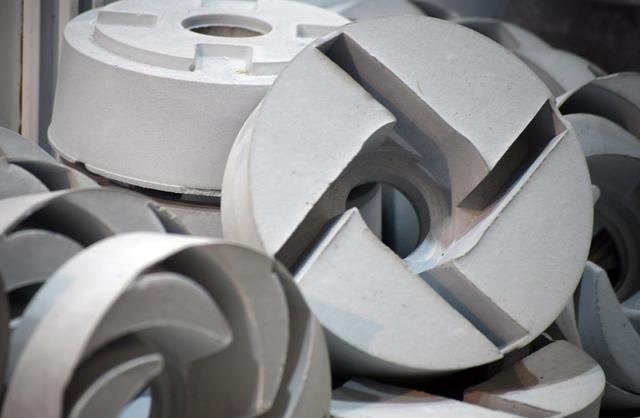
Permanent mold casting, as an old and classic manufacturing process, still plays an irreplaceable role in modern manufacturing today. With its high precision, excellent mechanical properties and reusability, it plays a key role in several fields. However, the process also faces several challenges. To face these challenges, researchers and engineers at CYCO have proposed and implemented a series of solutions.
If you need precision casting services, CYCO is your best choice!
We are constantly exploring new technologies and materials, as well as improving our processes to provide better and more innovative permanent mold casting services.
We focus on cost-effectiveness and strive to reduce manufacturing costs with competitive prices.
We strictly control the manufacturing process to ensure product quality that meets relevant industry standards and regulatory requirements.
We have extensive experience and expertise in permanent mold casting to provide our customers with high quality services and products.
Work with us for a worry-free experience!