Lost foam casting is an advanced modern precision casting technology. It uses combustible or gasable materials to make molds, pouring high-temperature metal liquid to make the model disappear and fill its space, precisely casting complex shaped parts.
Introduction of Lost Foam Casting
Lost foam casting is an advanced manufacturing technology that uses combustible or dissolvable molds to make metal parts. It makes the mold disappear by ablating or dissolving it, and can be applied to make highly complex parts with high precision requirements.
The process is usually divided into three steps:
- First, make a mold based on the design of the desired part. The material is usually flammable or dissolvable.
- Then, pour metal to ablate or dissolve the mold.
- Finally, the mold disappears, leaving the metal part behind.
The technology is widely used in aerospace, automotive manufacturing and medical devices, providing an efficient and viable solution for producing parts with precision structures.
Principle of Lost Foam Casting
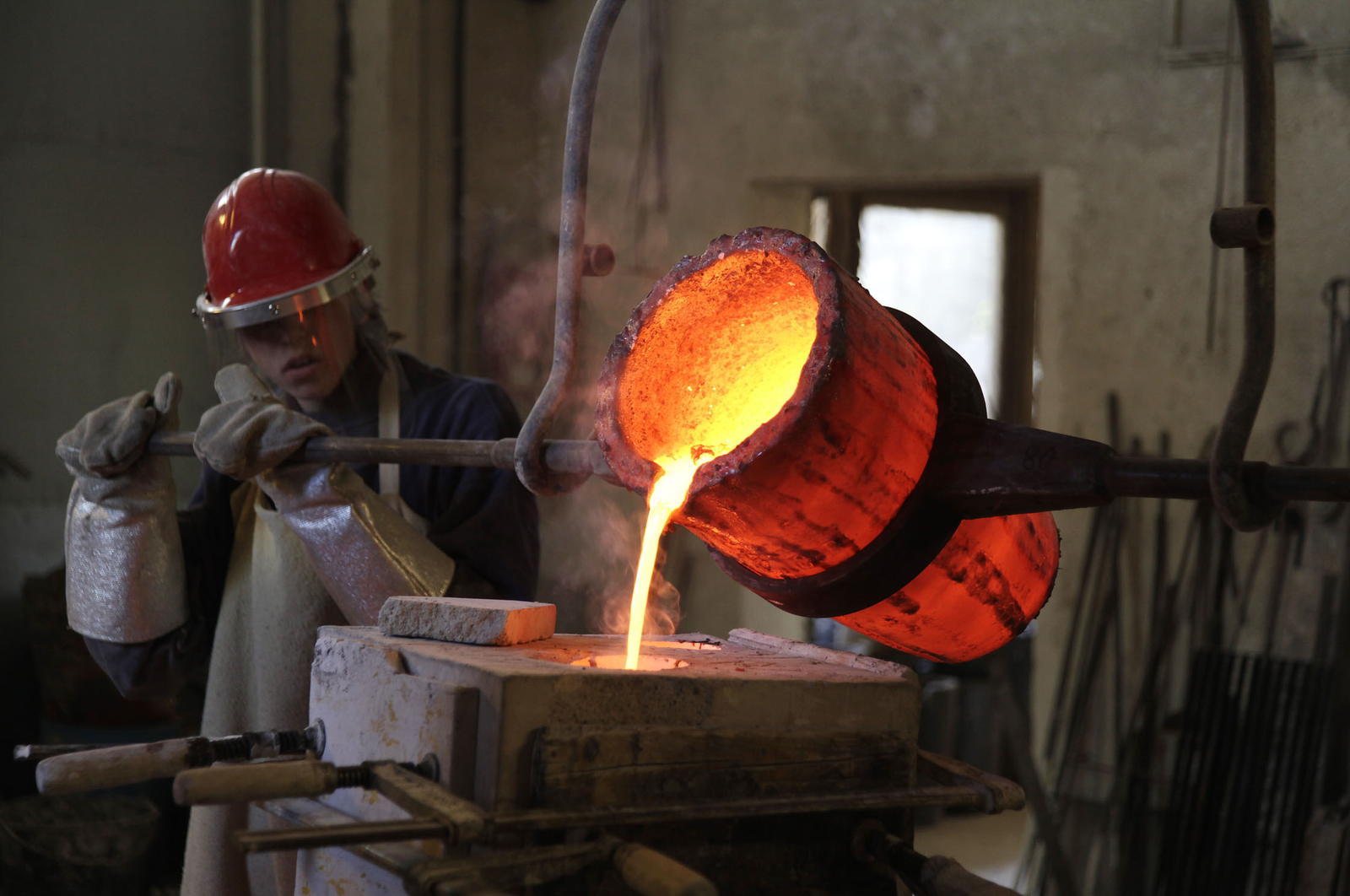
The basic principle is to use combustible or dissolvable models to form metal castings.
Workflow
- Model preparation: A combustible or vaporizable material ( such as polystyrene foam, paraffin, or resin) is used to create models that are exactly the same size and shape as the desired casting. These models can be single or multiple models combined by bonding.
Attention: If wax models are used, a degreasing process is required to remove the wax from the models. This step ensures that no residue is left behind during the subsequent sintering process. - Model treatment: One or more layers of refractory coating or ceramic paste are applied to the surface of the finished model. The main purpose of the coating is to protect the model from direct contact and damage by the hot metal liquid during the casting process. At the same time, it provides a certain degree of permeability so that the gases generated by the model during combustion or vaporization can be smoothly discharged.
- Drying and preheating: The coated model needs to be dried to remove moisture from the coating. It may also need to be preheated to make it easier to gasify during the casting process.
- Sandbox preparation: The treated model is placed in a sandbox, surrounded by dry sand and compacted by vibration or other means to form a stable cast. This process ensures that the model maintains its position during the casting process and that the liquid metal flows accurately into the spaces of the model.
- Pouring: Molten liquid metal (e.g. steel, iron, aluminum) is poured into a sand box at a certain temperature and pressure. When the liquid metal comes into contact with the model, the model material starts to burn or vaporize due to the high temperature effect.
- Molding: As the model burns or vaporizes, the space left behind is filled with the hot metal liquid. The liquid metal cools and solidifies in the original position of the model, forming a casting that exactly matches the shape of the model.
- Post-processing: After the liquid metal has completely cooled and solidified, the sand box is opened and the casting is removed. The final casting is obtained by cleaning off the sand and coating debris remaining on the surface of the casting. Follow-up treatment of the casting, including removal of surface residues, polishing, and coating, is performed to meet the requirements of the final product.
Possible Problems
- The performance of the model material directly affects the quality of the casting. If the model material is improperly selected or insufficiently processed, it may lead to incomplete combustion or slow vaporization of the model during the pouring process of metal liquid, which will affect the shape and dimensional accuracy of the castings.
- The quality and thickness of the coating have a great influence on the surface quality and internal quality of the casting. If the coating is too thin, it may not be able to effectively protect the model from the erosion of high temperature metal liquid. If the coating is too thick, it may affect the dimensional accuracy and air permeability of the casting.
- The burning or gasification of the model during lost foam casting will produce gases. If these gases are not discharged in time, they may lead to defects such as porosity, inclusions and porosity inside the casting.
- The fluidity of the metal liquid, filling capacity and cooling speed may affect the shape and dimensional accuracy of the castings. If the fluidity of the metal liquid is not good or the filling capacity is insufficient, it may lead to insufficient filling in some areas of the casting or defects such as cold segregation and shrinkage holes.
- Inadequate mold burning or dissolution, or excessive adhesion of the metal to the mold, may result in difficulty in removing the mold completely.
- The surface quality and dimensional accuracy of the casting may be affected by residual sand and coating debris when the casting is removed from the sand box.
Material Selection for Lost Foam Casting
Model Materials
- Polystyrene (PS) foam: Light weight, low cost, easy to process and fully vaporized.
- Polyurethane foam: Compared with PS, PU has higher strength and toughness, which is more suitable for modeling complex shapes and large castings.
- Plaster and wax: Mainly used for modeling fine and intricate details, but they are more costly and more complicated to handle.
Coating Materials
- Fire-resistant coating: Used to protect the model from destruction at high temperatures and to allow the gas to be discharged smoothly. It should have good fire resistance, air permeability and adhesion. Common coating materials include water-based coatings, alcohol-based coatings and ceramic pastes.
Attention: Select the appropriate spray equipment and process to ensure a uniform and moderately thick coating.
Dry Sand Materials
- Natural quartz sand: It has good fire resistance and air permeability. Quartz sand should be cleaned and screened to remove impurities and excessive fine particles.
- Artificial silica sand: In some special applications, artificial silica sand or other specialty sands may be required to meet specific performance requirements.
Metal Materials
| Metals | Advantages | Applications |
| Aluminum Alloys | Low melting point, easy to cast, light weight, corrosion resistant. | Aerospace, automotive, electronics |
| Magnesium Alloys | Extremely light weight, excellent mechanical properties. | Aerospace, automotive , medical devices |
| Copper Alloys | Excellent thermal and electrical conductivity, corrosion resistant. | Electrical components, artwork |
| Steel | High strength and strong abrasion resistance. | Construction machinery, parts and components |
| Stainless Steel | Excellent corrosion resistance and high strength. | Medical equipment, food processing equipment |
| Alloy Steel | Specific mechanical properties for high temperature and high pressure environments. | Energy, aerospace |
| Precious Metals | Great corrosion resistance and aesthetics. | Jewelry, medical device |
Factors to Consider in Selection
- Cost and availability of the material.
- Physical and chemical properties of the material, such as melting point, thermal stability, refractoriness, permeability.
- Environmental impact and safety of the material.
- Compatibility of the material with the casting process.
- Influence of the material on casting quality, such as dimensional accuracy, surface roughness, internal defects.
Advantages and Disadvantages of Lost Foam Casting
Advantages
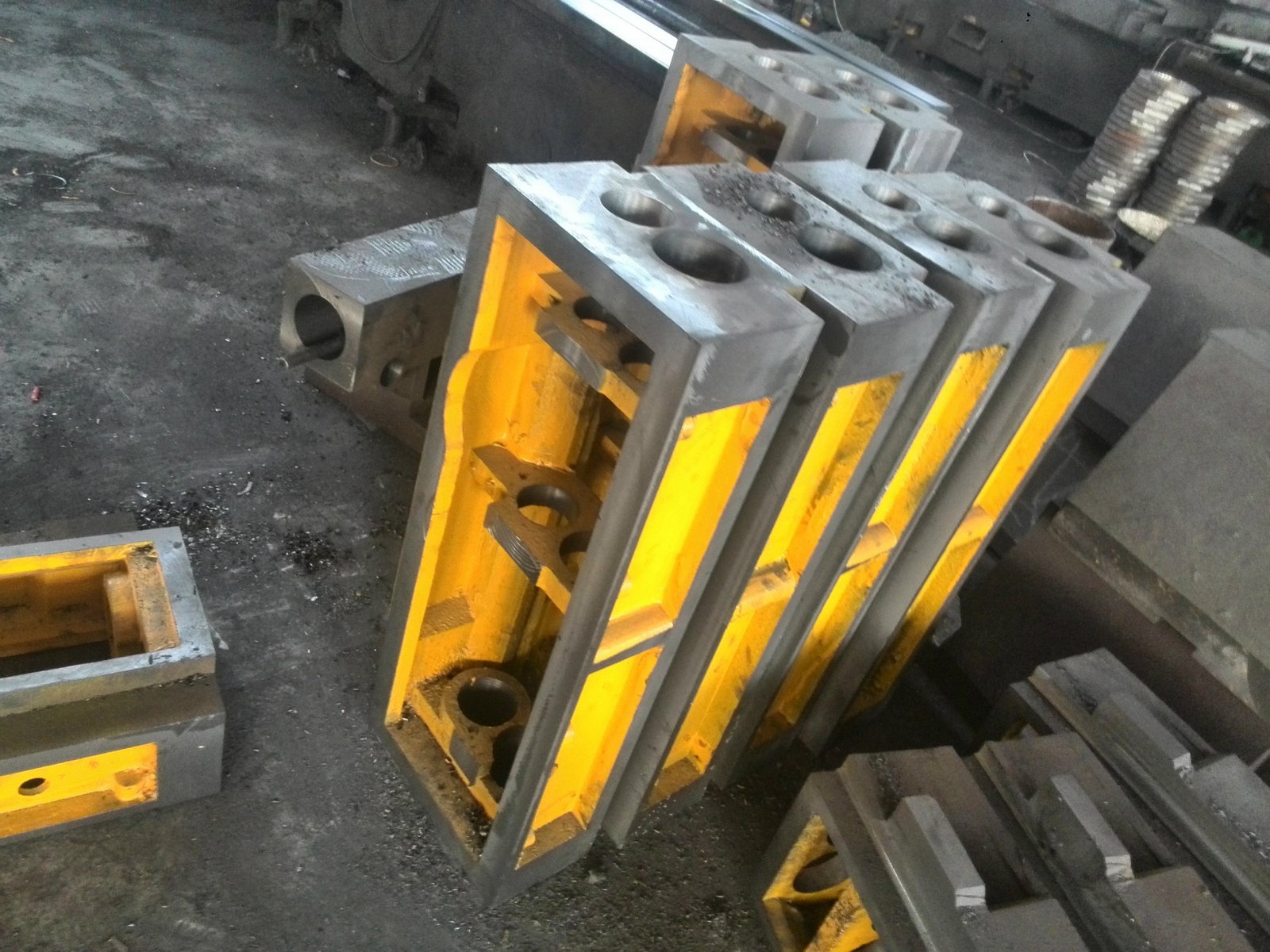
- High freedom of design: Castings with complex shapes and diverse internal structures, including parts with holes, slots and other features, can be manufactured.
- Excellent surface quality: Due to the use of combustible or vaporizable models and the protection of the models by coating technology, the dimensional accuracy and surface finish of the castings are significantly improved, reducing the workload of subsequent processing.
- Reduction of material waste: Gases generated by the combustion or gasification of the model can be expelled through the coating. The direct contact and reaction between the metal liquid and the model material is decreased, which reduces the scrap rate and material consumption.
- High production efficiency: Suitable for mass production and small batch customization. The production cycle is relatively short, which improves the production efficiency.
- Strong adaptability: Applicable to various metal materials, and has good applicability for castings of various sizes and weights.
- Simplified process: No need to start the mold and close the box, simplifying the molding process to reduce the labor intensity and technical requirements of workers.
- Cost-effective: Because of the reduced scrap rate, improved production efficiency and material savings, the overall cost-effectiveness of lost foam casting is better than many traditional casting methods.
- Rapid prototyping: Suitable for making rapid prototypes, resulting in shorter product development cycles.
- Superior environmental performance: Compared with traditional sand casting, lost foam casting produces less waste and has less impact on the environment.
- Good casting consistency: Using the same model to replicate multiple castings, the castings have good size and shape consistency.
Disadvantages
- The performance of modeling materials directly affects the quality of castings. Combustible or vaporizable model materials such as polystyrene foam may produce harmful gases when burned or vaporized at high temperatures, which have a negative impact on the environment and operator health.
- The quality and uniformity of the coating is critical to the surface quality and internal quality of the casting. Too thin a coating may lead to incomplete ablation of the model, while too thick may affect the dimensional accuracy and air permeability of the casting. In addition, the choice of coating material and the spraying process need to be finely controlled.
- Burning or gasification of the model generates gases. Poor venting may lead to defects such as porosity and inclusions inside the casting, affecting the mechanical properties and reliability of the casting.
- The flow characteristics of the metal liquid are more complicated, and it is easy to have problems such as flow turbulence, gas rolling and slag wrapping. Optimization of pouring system design and negative pressure casting can be improved.
- Compared with traditional sand casting, lost foam casting requires specialized production equipment and supporting facilities, such as vacuum pumps, coating equipment, drying furnace, which will increase the initial investment and operation and maintenance costs.
- It involves several technical aspects, including model making, coating treatment, sand box filling, and metal liquid pouring, which requires a high level of skill and experience from the operators.
- Although lost foam casting can produce castings of various shapes and sizes, it may not be as productive and economical as other casting methods for particularly large and heavy castings.
Applications of Lost Foam Casting
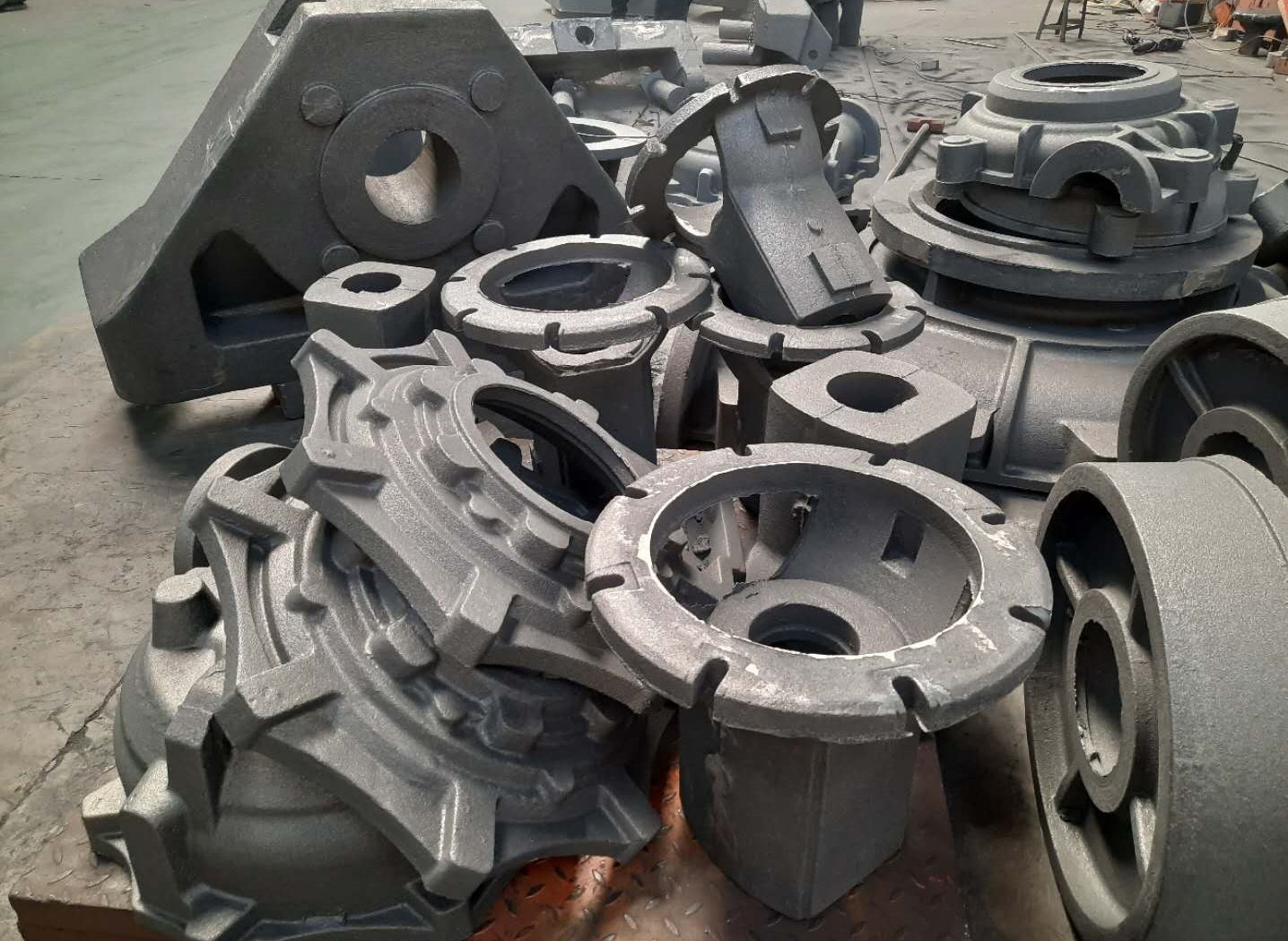
- Aerospace: Manufacture of complex engine components such as blades, magazines, turbines. Production of aircraft structural parts, including frames, brackets, hatches and other complex shaped parts.
- Automotive: Casting of automotive engine parts, such as cylinder blocks, cylinder heads, intake and exhaust manifolds. Manufacture driveline components, such as transmission cases, differential cases. Produce body structure parts and suspension system parts.
- Power equipment: Make stator and rotor parts for generators and motors. Produce structural parts for transformers, switchgear and other power equipment.
- Mechanical equipment: Casting shells, cases, brackets and connectors for various mechanical equipment. Manufacture complex parts for agricultural machinery, construction machinery, mining machinery and other industries.
- Ship: Produce parts for ship engines and propulsion systems. Manufacture of marine equipment and marine engineering structural parts.
- Medical devices: Manufacture high-precision and complex-shaped medical device parts, such as implantable devices, surgical tools and trays.
Conclusion
As an advanced precision casting technology, lost foam casting plays an important role in modern manufacturing industry with its unique features and advantages. It has demonstrated significant advantages and wide application value in several industrial fields.
If you are looking for a one-stop precision casting machining service provider, CYCO is your best choice. We not only provide precision casting services, but also offer comprehensive consultation and technical support to our customers.
In order to save your valuable time, contact us now!