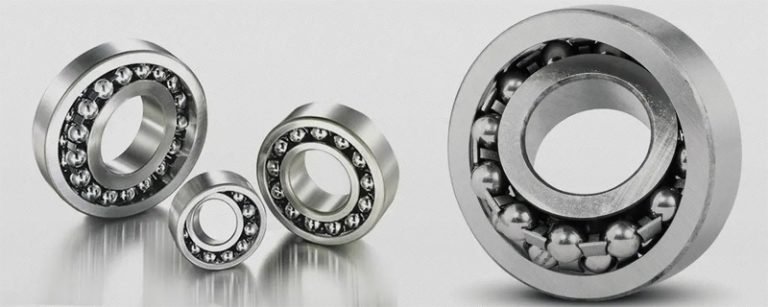
Vacuum casting is an advanced casting process, mainly used to produce high quality and high precision metal castings, especially for those alloy materials with strict requirements for purity, microstructure and properties.
Introduction of Vacuum Casting
An advanced metal casting process, which is carried out in a vacuum environment or under low air pressure conditions. By melting the metal and pouring it in a vacuum chamber, the effect of gases (such as oxygen and nitrogen) on the molten metal can be significantly reduced. This process is designed to improve the quality, density and performance of metal products. By casting the molten metal in an atmosphere-free or very low air pressure environment, defects such as porosity and inclusions are avoided, and the homogeneity and purity of the metal material is improved.
Vacuum Casting vs Other Casting
Vacuum casting has some significant advantages and differences compared to traditional casting methods. The following is a comparison of vacuum casting with other casting methods:
| Vacuum casting | Other casting methods | |
| Gas removal effect | Effective removal of gases from molten metals. | Easy to be affected by gases in the air. |
| Grain structure | More precise control of the metal’s cooling rate, helping to regulate grain size and shape. | The cooling rate is constrained by environmental factors and the grain structure is relatively difficult to regulate. |
| Purity and homogeneity | Atmosphere-free or low-pressure conditions improve the purity and homogeneity of metal materials. | Influenced by oxygen, nitrogen and other gases, the material is relatively low in purity and poor in homogeneity. |
| Costs and equipment | Higher equipment and process requirements result in relatively high manufacturing costs. | The equipment is simple and less expensive, but sacrifices some of the quality and performance benefits. |
| Applicable fields | Areas where extremely high metal quality is required, such as aerospace, automotive manufacturing, and medical devices. | Used in general engineering and manufacturing applications for situations that require relatively low material properties. |
Procedures of Vacuum Casting
- Mold preparation: Make the mold according to the casting design, the mold material should have good heat resistance, wear resistance and gas permeability. Set up the pouring system and exhaust channels in the mold to ensure that the molten metal can be filled smoothly and exhaust gas.
- Creation of a vacuum environment: At the start of the process, the first thing that needs to be done is to create a vacuum or low-pressure environment in the casting work area. This is usually achieved by a vacuum pump or other vacuum equipment.
- Preparation of metal raw materials: Choose suitable metal raw materials, clean and pre-treat them according to the requirements of the casting to remove surface impurities and oxides. The raw metal is placed in a melting crucible in the vacuum furnace and heated to its melting point to form a molten metal pool. This can be achieved by induction heating, electric arc heating or other suitable heating methods. The melting temperature and time are controlled to ensure that the metal is sufficiently molten and not excessively oxidized.
- Pouring: Place the mold in the vacuum furnace, connect the pouring system and the venting channel, then adjust the vacuum to the appropriate level (typically between a few tens and a few hundred Pascals). Slowly and steadily pour the molten metal into the mold while maintaining the vacuum environment. Ensure that the molten metal is able to fill the mold completely and remove gas or slag through the venting channels.
- Cooling and solidification: Control the cooling rate to allow the metal to solidify gradually. Through precise cooling control, the size and shape of the grains can be adjusted to optimize the microstructure and properties of the casting.
- Demolding and cleaning: When the casting is cooled to sufficient hardness, the vacuum is lifted and the mold is opened to remove the casting. The castings are ground, cleaned and inspected to remove burrs, flying edges and defects.
- Post-processing (optional): For specific application requirements, several post-processing steps, such as heat treatment,, machining and surface treatment, can be performed to further improve the material properties.
Role of Vacuum Environment
Creating and maintaining a vacuum environment plays an important role in the vacuum casting process, which has a direct impact on the quality of the metal and the manufacturing process.
- Reduction of gas inclusions: One of the most significant effects is the removal of gases from the metal during the melting process. In conventional casting processes, the molten metal comes into contact with atmospheric gases such as oxygen and nitrogen, which tend to form gas inclusions that affect the mechanical properties and corrosion resistance of the castings. A vacuum environment can significantly reduce the gas content and gas inclusions, which improves the purity and quality of the castings.
- Prevent oxidization: Metals at high temperatures are prone to react with oxygen to form oxides, which can change the chemical composition and physical properties of the metal. The vacuum environment reduces the presence of oxygen and other gases, slowing down the reaction between the metal and the gas, which effectively prevents the oxidation of the metal during the melting and pouring process. The vacuum environment is especially important for some metals that are susceptible to oxidation, such as titanium and zirconium.
- Optimize microstructure: The vacuum environment helps to control the cooling rate and crystallization process of the molten metal, which in turn affects the microstructure and properties of the castings. In a vacuum environment, cooling is more uniform as there is no influence of external gases. It is conducive to the formation of a finer grain structure and improves the mechanical properties of the material. By adjusting the vacuum degree and pouring conditions, the grain size, shape and distribution can be optimized to improve the strength, toughness, wear resistance and fatigue resistance of the castings.
- Improvement of surface quality: Castings made under vacuum environment usually have higher surface finish and densification than conventional casting methods. This is because the vacuum environment reduces the generation of gas bubbles, inclusions and cracks, making the casting surface smoother and more uniform.
- Reduced Impurities: In conventional casting, impurities and slag in the molten metal can become encapsulated inside the casting, leading to defects and quality issues. The vacuum environment can effectively discharge these slag and inclusions through the exhaust channel, improving the internal quality and stability of the casting.
- Improvement of casting accuracy: Since the vacuum environment reduces the influence of gases and the generation of turbulence, the dimensional accuracy and shape complexity of castings can be improved. Through the vacuum pumping system, the impurities in the metal can be effectively removed and the purity of the metal can be improved. This is particularly important for applications where purity is critical, such as aerospace.
Equipment for Vacuum Casting
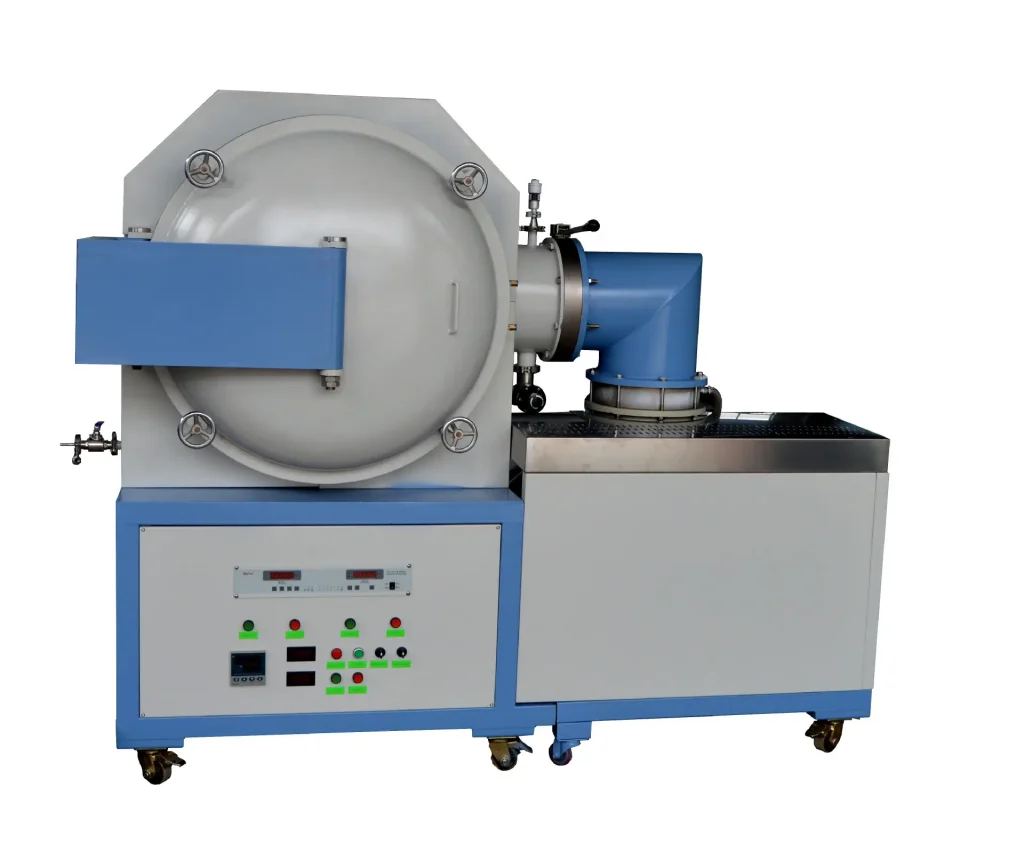
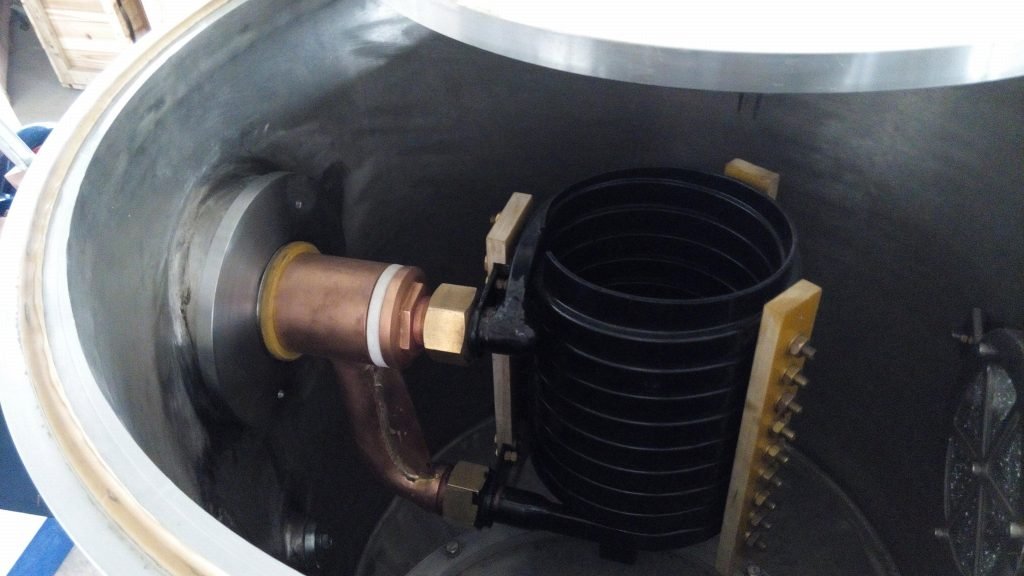
- Vacuum furnace: Core equipment for the entire vacuum casting process. Vacuum melting furnaces are responsible for heating the metal to its melting point and forming a pool of molten metal. These furnaces are usually capable of operating in a vacuum or low air pressure environment and are equipped with appropriate heating elements and temperature control systems. Vacuum furnaces usually use electric induction or resistance heating for melting, with good temperature control and holding properties.
- Vacuum pumping system: Including vacuum pumps, vacuum measuring instruments, vacuum piping and other components. It is used to extract gases from the working area in the molten metal state, including oxygen and nitrogen in the air. The vacuum pumping system ensures that a good vacuum environment is maintained throughout the casting process. The choice of vacuum pump depends on the required vacuum level and pumping rate, common types are mechanical pumps, diffusion pumps and turbomolecular pumps.
- Vacuum chamber: This is a closed container for vacuum casting, usually made of high-temperature resistant alloys or ceramic materials. Vacuum chambers are able to withstand high temperatures and vacuum environments while allowing the metal to be cast and solidified.
- Molds: Designed and made according to the shape and size of the casting, the mold material should have good heat resistance, air permeability and wear resistance. The mold system also includes a pouring system and venting channels to ensure that the molten metal can be filled and outgassed smoothly.
- Pouring systems: Equipment used to control the flow and pouring of metal, usually including pouring pipes, sprues, and nozzles. These systems are designed to ensure that the metal flows evenly into the mold under vacuum.
- Temperature control systems: Used to accurately control the temperature of the molten metal. Temperature control is critical to achieving the desired grain structure and material properties.
- Cooling Systems: Devices used to control the cooling rate and method of the casting, such as water cooling, oil cooling, or other cooling media. The setting of the cooling system has a significant impact on the microstructure and properties of the casting and needs to be adjusted according to the casting material and process requirements.
- Control system: Including vacuum control, temperature control, pressure control, motion control and other automation systems, used to accurately monitor and regulate the parameters of the entire casting process. The precision and stability of the control system is crucial to casting quality and production efficiency.
Materials for Vacuum Casting
| Metals | Advantages | Applications |
| High temperature alloys
(nickel-based, cobalt-based) |
Excellent performance in high temperature, corrosive and oxidizing environments. | Aerospace engine components such as turbine blades, combustion chamber assemblies. |
| Titanium alloys | Superior strength, corrosion resistance and light weight. | Aerospace, medical and automotive. |
| Aluminum alloys | Lightweight, high strength and good thermal conductivity. | Automotive, aerospace and electronics. |
| Tungsten alloys | High melting point and good heat resistance. | Aeroengine fuel nozzles |
| Copper alloys | Great conductivity, thermal conductivity and abrasion resistance. | Electrical, electronic and mechanical. |
| Precious metals | High purity and excellent corrosion resistance. | Jewelry, electronic components and catalysts. |
Advantages of Vacuum Casting
- Reduction of porosity and inclusions: The vacuum environment effectively reduces the effect of gases on the molten metal. This reduces the generation of porosity and inclusions and improves the compactness of the metal.
- Improved material purity: The vacuum environment effectively removes gases, oxides and other impurities from the metal. The purity of the metal is improved, making it particularly suitable for the manufacture of high purity metal products.
- Refined grains: Control of the cooling rate of the metal helps to regulate the size and shape of the grains. It improves the lattice structure of the metal and enhances mechanical properties.
- Superior temperature control: The ability to control the temperature of the metal more accurately helps to avoid overheating or overcooling, and improves product uniformity and stability.
- High-quality products: The produced metal items have high density, low porosity and excellent mechanical properties, which are suitable for some fields with very high quality requirements, such as aerospace and medical devices.
- Ideal for high-temperature alloys: For some high-temperature alloys, vacuum casting is an effective way to ensure high quality and purity.
- Customized and small batch production: Suitable for small batch and customized production, it provides flexibility to meet different product and customer needs.
- Less defects: The reduction of gas inclusions and oxides reduces internal and surface defects such as porosity, cracks, slagging as well as reduces scrap rates and rework costs.
Limitations of Vacuum Casting
- High cost: The acquisition and maintenance cost of equipment is relatively high, including vacuum furnace, vacuum pump, precision molds and other supporting equipment.
- Process complexity: The process is relatively complex and requires precise control of factors such as vacuum environment, temperature and pressure. This requires highly specialized operators and advanced equipment.
- Slower production rates: Compared to some continuous or high volume production casting methods, such as die casting or sand casting, vacuum casting can be less productive because each casting requires a separate vacuum treatment process.
- Limitation of material selection: Special equipment and process conditions may be required for specific materials, such as high melting point metals or refractory alloys.
- Limitations in size and shape: Vacuum casting is generally more suited to the manufacture of small to medium sized castings. For very large castings, vacuum equipment may be less suitable due to size limitations and economics.
- Energy consumption: Creating and maintaining a vacuum environment and melting the metal requires a significant amount of energy, which can increase production costs and environmental impact.
- Mold life: Molds may suffer from high temperatures and stresses in a vacuum environment, resulting in shorter mold life and the need for more frequent replacement and maintenance.
Applications of Vacuum Casting
- Aerospace: Widely used in the manufacture of a variety of aero-engine components, including turbine blades, turbine disks, combustion chamber walls and so on. These parts require high temperature, high pressure and high performance, vacuum casting can ensure the quality and performance of the material.
- Medical devices: Can be used to produce high-precision, biocompatible parts, such as artificial joints, implantable devices.
- Automotive manufacturing: Commonly used in the manufacture of engine parts, such as intake manifolds, exhaust manifolds and so on. This helps to improve the strength, heat resistance and light weight of the parts.
- Industrial valves: High corrosion resistance requirements of industrial valve parts can be manufactured through vacuum casting to ensure high quality and durability of the parts.
- Shipbuilding: To make high-performance, corrosion-resistant parts, such as propellers and motor parts.
- Energy: Used in the manufacture of gas turbine parts to improve the heat resistance and mechanical properties of the parts.
- High-tech: Such as semiconductor manufacturing and optical engineering. Vacuum casting is used to manufacture precision parts such as mirrors and optical mounts.
Summary
Vacuum casting is a precision casting process performed in a vacuum environment that plays a key role in the production of high-performance and high-quality parts. The process has achieved a wide range of applications in several fields, including aerospace, medical devices, and automotive manufacturing. Despite the significant advantages of vacuum casting, there are some limitations.
To overcome these limitations, the engineers at CYCO are constantly exploring and developing new solutions.
The following are the advantages of our precision casting services:
In-depth knowledge of a wide range of materials, processes and applications, enabling us to provide expert advice and solutions.
Always adhere to a high standard quality control system to ensure that each casting meets the strict requirements of dimensional accuracy, surface quality and internal structure.
Perfect after-sales service, including product inspection, quality tracking, technical support and maintenance, ensures long-term customer satisfaction and partnership.
With successful vacuum casting cases and good customer reputation in many industries and fields, we have excellent technical strength and market competitiveness.
Contact us now to start a new casting project!