Titanium, an amazing material, has some truly remarkable properties. It is very strong, lightweight, corrosion and chemical resistant, even retaining its strength when exposed to incredibly high temperatures.
Unfortunately, some of these unique and valuable properties also make titanium machining incredibly difficult.
In this article, we will provide valuable information on how to choose the right tools for machining titanium as well as helpful tips to ensure successful machining.
Why Titanium for CNC Machined Parts?
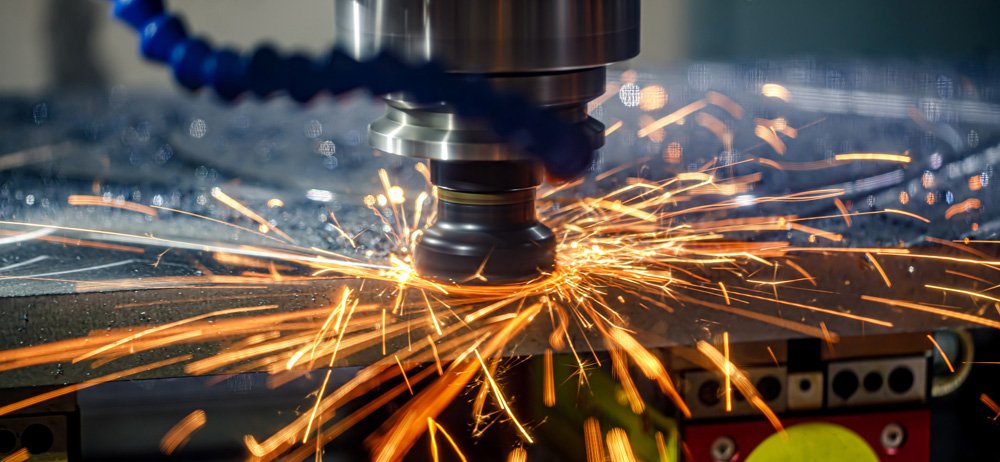
The main benefits of titanium as a manufacturing material include excellent biocompatibility, great corrosion resistance, and the highest strength-to-weight ratio of any metal. In addition, it has excellent ductility and favorable machinability.
Besides the mentioned above, other reasons for choosing titanium for CNC machined parts include:
Durability
Titanium is extremely durable, making it ideal for CNC machined parts that need to withstand harsh or extreme working conditions.
Non-Magnetic
Titanium is non-magnetic, it also has excellent oxidation resistance, so it is highly resistant to corrosion.
Non-Toxic
Titanium is corrosion resistant, highly biocompatible and non-toxic, making it well-suited for use in the medical industry.
Why is Titanium Hard to Machine?
It is not a single property that makes titanium more difficult to machine than other materials. Instead, it is the combination of different properties that makes most conventional machining strategies ineffective.
By understanding these challenges, metallurgists and machinists can find machining solutions to produce high-quality CNC machined titanium parts.
These challenges include:
Heat Buildup
One of the biggest obstacles to machining titanium is keeping it cool.
The low thermal conductivity of titanium allows the metal workpiece to rapidly build up heat at the mold location, which increases wear on the machining tool. If left unaddressed, it could have an adverse effect on the quality of the cut surface.
High pressure coolants can help your cutting tools work more efficiently and produce higher quality titanium parts.
For tougher titanium alloys, it is essential to use greater chip loads and lower RPMs on a CNC machine.
High Chemical Reactivity and Wear
When machining titanium alloys, some gases can react with them, leading to surface oxidation and embrittlement, which can weaken components and reduce their corrosion resistance.
In addition, it has a low modulus of elasticity compared to its high strength, making it a sticky material to machine. As a result of its stickiness, titanium may adhere to CNC cutting tools, leading to malfunction and damage. Besides tool damage, abrasion usually affects the surface finish quality of titanium.
Cutting Force
Titanium alloys require high cutting forces, which makes them difficult to cut. These cutting forces often lead to tool wear, part failure and high vibration, which can affect product quality and surface finish.
Residual and Hardening Stresses
Because of their crystal structure, titanium alloys are not very flexible, which can cause problems during machining. Their crystal structure may increase cutting forces during machining, reduce machining ease and increase the chance of residual tensions. These tensions may result in posture distortion, rupture or shortened duration.
Useful Tips for Machining Titanium
The challenges of machining titanium are enough to make many machine shops wary of using this advanced material. But its outstanding properties mean that more and more product designers want superior parts made from titanium.
Fortunately, professional machinists and tool suppliers have come up with some key ways to make machining titanium at least a little easier.
Use the Right Tool
With the increasing popularity of titanium, tool designers are coming up with unique solutions to improve the machinability of titanium. Choosing tools with heat-resistant titanium aluminum nitride (TiAlN) or titanium carbon nitride (TiCN) coatings can have a longer life.
As a whole, machinists should choose high-quality tools designed specifically for titanium as well as frequently inspect and replace dull tools. In addition, consider using tools with more cutting edges and smaller diameters, which can help maintain metal removal rates and minimize heat buildup.
Hold the Parts Firmly
Any measure to reduce vibration will make titanium machining easier, as titanium is prone to tool chatter. To prevent the workpiece from deflecting, hold the part firmly in place. Additionally, to minimize tool deflection, consider using shorter cutting tools.
Adjust the Cutting Parameters
Machining titanium requires careful temperature management. One of the most obvious ways to keep workpieces and tools cool is to apply high-pressure coolant to the cutting area. Spraying chips away from the cutting area also prevents them from sticking to the machining tool.
With titanium, it is also important to be very conscious of feed rates, spindle speeds and chip loads. This means preventing excessive stress on the tool and equipment, while also avoiding staying in the same position for too long.
It is also worth evaluating whether different cutting methods can improve cutting efficiency and reduce machining temperatures, such as increasing the axial depth of cut while reducing radial engagement.
Different Titanium Grades For CNC Machining
Titanium comes in different grades and types of titanium alloys, each with their ideal applications, advantages and disadvantages.
| Description | Advantages | Disadvantages | Applications | |
| Grade 1
Commercially pure titanium with low oxygen content. |
One of the most commonly used grades of titanium. It is the most ductile and the softest titanium alloy. | Excellent relative formability and machinability, corrosion resistance, and impact toughness. | Lower strength compared to the other titanium grades. | Chemical processing, desalination, medical industry, automotive parts, airframe structure. |
| Grade 2
Commercially pure titanium with standard oxygen content. |
Pure titanium, known as the workhorse of the titanium industry. | High corrosion resistance, good weldability, strength, ductility, and formability. High relative machinability. | Not as strong as other titanium grades, but stronger than grade 1 | Aircraft engines, hydrocarbon processing, chlorate manufacturing, medical industry. |
| Grade 3
Commercially pure titanium with medium oxygen content. |
Grade 3 is the least commercially used, but it possesses good mechanical properties. | High strength and corrosion resistance. Good relative machinability. | Less formability than grades 1 and 2. | Medical industry, marine industry, aerospace structures. |
| Grade 4
Commercially pure titanium with high oxygen content. |
Known as the strongest of the four commercially pure grades. | Very high strength and corrosion resistance. Okay relative machinability. | Hard to machine, requires slow speeds, high coolant flow, and high feed rates. | Cryogenic vessels, heat exchangers, CPI equipment, surgical hardware, airframe components. |
| Grade 5
Titanium alloy – Ti6Al4V |
This is the most commonly used alloy of titanium. It contains 6% aluminum and 4% of vanadium. | High corrosion resistance and high formability. Poor relative machinability. | Less strong than the other alloys. | Critical airframe structures, power generation, marine & offshore applications. |
| Grade 6
Titanium alloy – Ti5Al-2.5Sn |
The most commonly used for airframe and jet engine applications. | Good weldability, stability, and strength at elevated temperatures. | Intermediate strength for titanium alloy standards. | Airframe & jet engine applications, liquid gas & propellant containment for rockets and space vehicles. |
| Grade 7
Titanium alloy, sometimes considered “pure” – Ti-0.15Pd |
Similar to grade 2, but this one contains small quantities of palladium, enhancing corrosion resistance. | Extremely good corrosion resistance, excellent weldability, and formability. | Not as strong as other titanium alloys. | Chemical processing & production equipment components. |
| Grade 11
Titanium alloy, sometimes considered “pure” – Ti-0.15Pd |
Similar to Grade 7, but with a lower tolerance for other impurities. | Excellent corrosion resistance, optimum ductility, and formability. | Even lower strength relative to grade 7. | Marine applications, chlorate manufacturing, desalination. |
| Grade 12
Titanium alloy – Ti0.3Mo0.8N |
This highly durable alloy contains 0.3% of molybdenum and 0.8% of nickel. | Great weldability, excellent strength at high temperatures, excellent corrosion resistance. | It costs more than the other alloys. | Shell and heat exchangers, hydrometallurgical applications, aircraft & marine components. |
| Grade 23
Titanium alloy – T6Al4V-ELI |
Also known as TAV-EIL in the market, which stands for Extra Low Interstitial. It is similar to Grade 5 but with higher purity. | Great ductility and formability, good fracture toughness. Optimum biocompatibility. Poor relative machinability. | Has a lower strength than the other Titanium Alloys. | Orthopedic pins & screws, orthopedic cables, surgical staples, orthodontic appliances. |
How to Choose the Right Tool for Machining Titanium?
Using any cutting tool when CNC machining with titanium is usually a bad idea.
The following is how to choose the right cutting tool for milling titanium or using other
CNC machining techniques
Consider the Number of Chip Flutes in the Cutting Tool
The number of end mill flutes must be increased to gain product cycle time. For titanium, more teeth equals less chatter. For example, 10-flute end mills, while tight for the ideal chip load for most materials, are ideal for use with titanium. This is primarily due to the need for reduced radial engagement.
Avoid Cutting Interruptions and Keep Cutting Edges Sharp
Due to its low Young’s modulus, titanium is strong and flexible. This means that in order to remove chips from a surface efficiently with no friction, we need a sharp tool. In addition, interrupted cuts should be avoided if possible, as they hammer chips into a sharp tool.
Consider Cutting Tool Coatings
Coatings can greatly improve the ability of a tool to withstand the heat generated by titanium. TiAlN (Titanium Aluminum Nitride) is a suitable coating, with lubricating properties to combat chip-accumulation edges, wear and chip welding, which are particularly well suited to the temperatures involved in machining.
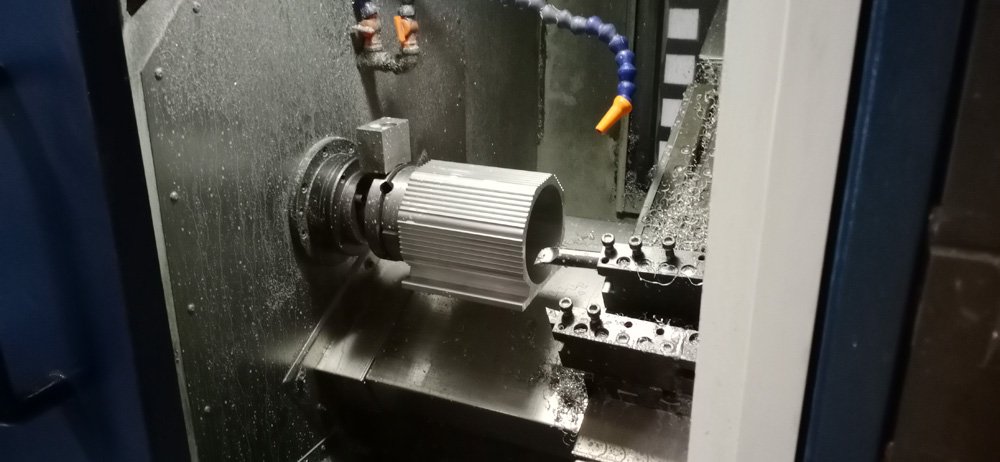
Applications Of Titanium Machined Parts
Titanium machined parts are durable, corrosion-resistant and aesthetically pleasing, which makes them useful in a variety of industries.
Marine/Navy
Titanium has a higher corrosion resistance than most naturally available metals, making it ideal for use in the production of propeller shafts, underwater robots, rigging equipment, ball valves, marine heat exchangers, fire protection system piping, pumps, exhaust liners, and onboard cooling systems.
Aerospace
Titanium is a sought-after material in the aerospace industry because of its numerous desirable qualities. These qualities include its high strength-to-weight ratio, excellent corrosion resistance, and ability to perform in extremely hot environments. Titanium parts in the aerospace industry include seating components, turbine components, shafts, valves, housings and filter components, as well as components for oxygen generation systems.
Automotive
In the automotive industry, titanium and aluminum is a hotly contested debate, with aluminum taking the upper hand due to its availability and cost-effectiveness. Despite this, titanium is still present in the production of automotive components. The main uses of titanium and its alloys in automobiles are the production of valves, valve springs, retainers, automotive stop brackets, suspension lug nuts, engine piston pins, suspension springs, caliper pistons, engine rockers and connecting rods for internal combustion engines.
Medical and Dental
The medical industry has found multiple applications for titanium due to its high corrosion resistance, low conductivity and high biocompatibility. Titanium parts used in the medical industry include tapered, straight or self-tapping bone screws, dental implant screws, cranial screws for cranial fixation systems, spinal fixation rods, connectors and plates, orthopedic pins and more.
Conclusion
Titanium and its alloys require careful machining for optimal part production, and it is quite different from metals such as steel and brass. It requires the use of the right tools, expertise, and patience.
That’s why it is best to outsource titanium CNC machining projects to professionals like CYCO, as they guarantee high precision and high quality parts.
Why CYCO
CYCO is a professional CNC machining company with strong expertise in titanium machining.
We provide high quality CNC machining titanium services to the industry with sincere service and advanced technology.
With 5-axis machine tools and precision machineries, our team can process your order in the shortest time possible, helping you save time and cost.
In order to avoid wasting your valuable time, you can choose CYCO as your partner without any hesitation!
Work with us for a worry-free experience now!