Hole machining has several difficulties caused by the following reasons:
1. The size of the cutter used for hole machining is limited by the size of the hole to be machined.
2. The size of the hole machining is often directly dependent on the size of the cutter, the manufacturing error and wear of the cutter will directly affect the accuracy of the hole machining.
3. When machining holes, the cutting zone is inside of the workpiece, which leads to poor chip removal and heat dissipation conditions, making it difficult to control both machining accuracy and surface quality.
Hole drilling
Drilling is the first process of machining holes in solid material, and the diameter of drilled holes is generally less than 80mm. There are two ways of drilling process, one is rotating the drill bit and the other is rotating the workpiece.
The errors produced by the two drilling methods mentioned above are different. When the drill bit rotates, the centerline of the machined hole is deflected but the hole diameter is basically unchanged, while it is opposite in the method of workpiece rotating drilling.
Commonly used drilling tools are twist drills, center drills and deep hole drills.
Due to the limitations of the construction, the accuracy of the drilling machining is low, generally can only achieve IT13 to IT11. The surface roughness is also large, Ra is generally 50~12.5μm. However, the drilling has a large metal removal rate and high cutting efficiency.
Drilling is mainly used for machining holes with lower quality requirements, such as bolt holes, threaded bottom holes, and oil holes. For holes requiring high machining accuracy and surface quality, they should be reached by counterboring, reaming, boring or hole grinding in further machining.

Counterboring
Counterboring is the further machining of an existing hole with a core drill to enlarge the diameter of the hole and improve the quality of the hole. It can be used either as a pre-machining before finishing or as a less demanding final machining. Core drills are similar to twist drills, but have a higher number of teeth and no cross edge.
Compared to hole drilling, counterboring has the following characteristics:
1. The core drill has a large number of teeth (3~8), is well guided, and more stable in cutting.
2. No cross edgewith favorable cutting conditions.
3. Smaller machining allowance, better strength and rigidity of the cutter body.
4. The accuracy is generally IT11~IT10 and the Ra is 12.5~6.3.

Reaming
One of the finishing methods for holes and is widely used in production. For smaller holes, reaming is a more economical and practical method of machining. There are generally two types of reamers: hand reamers and machine chucking reamers.
The reaming allowance has a significant impact on the quality of the reamed hole. The larger the allowance, the greater the load on the reamer. It will also cause the cutting edge to be dulled very quickly, and it is not easy to obtain a smooth machined surface, and the dimensional tolerance is not easy to guarantee. If the allowance is too small, it will not be able to remove the tool marks left by the previous machining process, and will not improve the quality of the hole machining. Generally, the rough reaming allowance is taken as 0.35~0.15mm, and the fine reaming is taken as 01.5~0.05mm.To avoid chip collection, reaming is usually done at lower cutting speeds and it must be cooled, lubricated and cleaned with cutting fluids.
Reaming has high productivity and is easy to ensure the accuracy of the hole, but reaming cannot correct the positional error of the hole axis, which should be ensured by the previous working procedure.
The accuracy of reaming is generally IT9~IT7 , Ra is generally 3.2~0.8 .
For medium-sized holes with high accuracy requirements ( such as IT7 accuracy holes), the hole drilling – counterboring -reaming process is a typical machining solution that is commonly used in production.
Boring
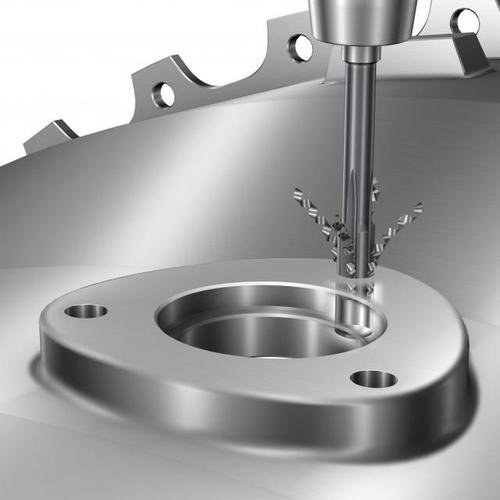
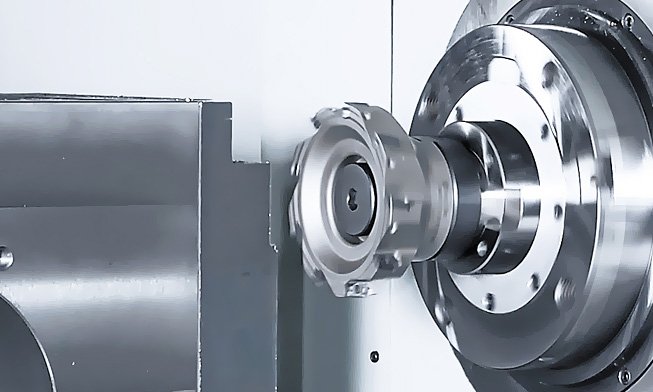
Boring is a machining method of expanding a prefabricated hole with a cutting tool. Boring can be done either on a boring machine or on a turning machine.
There are three different ways of boring.
1. Rotation of workpieces: the roundness of the hole mainly depends on the rotary accuracy of the machine tool spindle, and the axial geometry error of the hole mainly depends on the positional accuracy of the tool feed direction relative to the rotary axis of the workpiece.
2. Rotation of tools: the spindle of the boring machine drives the boring tool to rotate, and the table drives the workpiece to make a feed movement.
3. Rotation of tools with feed motion: only suitable for machining shorter holes.
Boring tools can be divided into single-edge boring tools and double-edge boring tools. Hole size is not limited by the size of the tool, and boring has a strong error correction ability, can be corrected by multiple moves to modify the error, and can keep a high positional accuracy with the positioning surface.
Boring has a wide range of machining, can be processed with different sizes and accuracy of holes, for holes with large diameter and high requirements for size and positional accuracy, boring is almost the only machining method.And boring can be done on boring machines, turning machines, milling machines and other machine tools, which is very flexible.
Honing
A method of machining holes by utilizing a honing head with an oil stone. When honing, the workpiece is fixed, and the honing head is driven by the machine spindle to rotate and make reciprocating linear motion.
Honing can get high dimensional accuracy and shape accuracy, the machining accuracy is IT7~IT6, but honing can not improve the positional accuracy of the machined hole. And honing achieves high surface quality with Ra of 0.2-0.025. Due to these merits, honing is widely used in mass production for precision hole machining in engine cylinder holes and various hydraulic devices.
Hole broaching
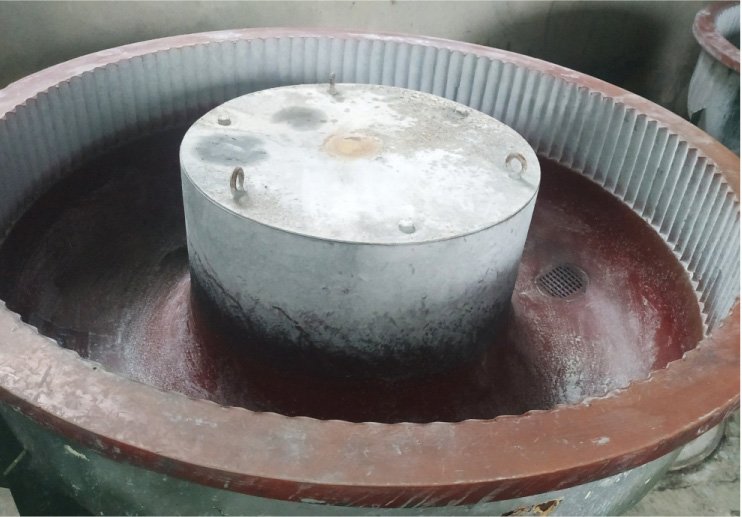
Hole broaching is a highly productive finishing method that is carried out on a broaching machine with special broaches. The teeth of the broach should not be less than 3 at the same time, otherwise the broach will not work smoothly and will easily produce annular waves on the surface of the workpiece. However, in order to avoid excessive broaching force to break the broach, the teeth of the cutter should not be more than 6~8 teeth while working at the same time.
There are three different ways of broachingas follows:
1. Layered broaching: remove the machining allowance of the workpiece layer by layer in turn.
2. Skip stepping: remove the metal from the machined surface by a set of cutter teeth with nearly the same size but staggered with each other.
3. Integrated broaching: has the advantages of both the above. It can shorten the broach length, increase productivity and get better surface quality.
The accuracy of broaching can reach IT9~IT7 and Ra can reach 6.3~1.6μm in normal conditions. Because broaches are fixed-size tools with complex shapes and are expensive, they are not suitable for machining large holes.
Summary
No tool can join parts together without holes, which is enough to see the importance of hole machining.
CYCO, with more than 20 years of experience in CNC machining, we have various kinds of imported machine tools and professional staffs who are good at operating them, which can provide you with good hole machining service.
In order to avoid wasting your valuable time, you can choose CYCO as your partner without any hesitation!
Contact us for a worry-free experience now!